
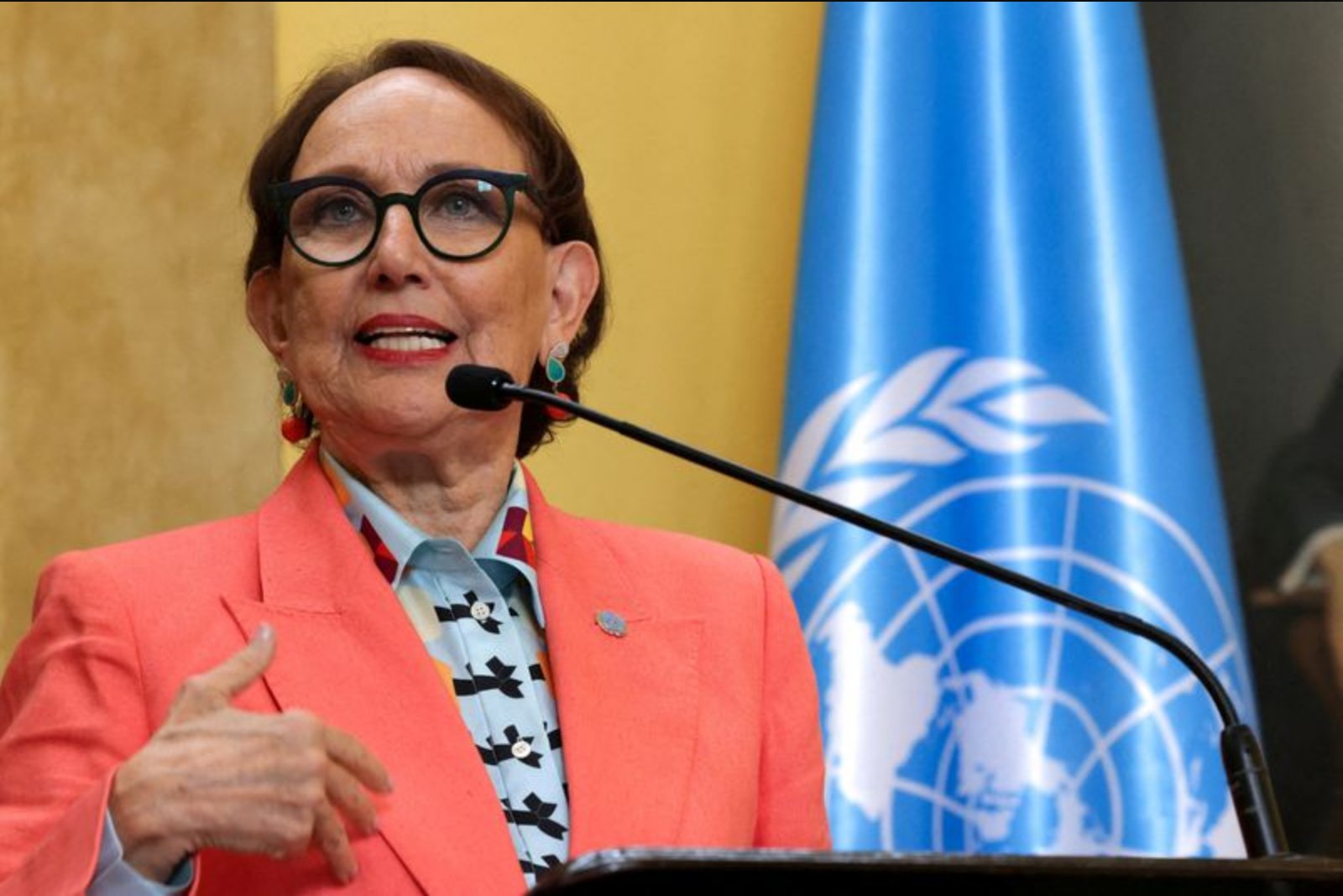
Rebeca Grynspan, the former vice president of Costa Rica and current head of the United Nations Conference on Trade and Development, presented peacemaking as the central mission of her campaign to lead the United Nations, telling a hearing in New York that stopping conflicts before they erupt would be her immediate focus if chosen.
Addressing representatives of U.N. member states and civil society, Grynspan said that peacemaking must be the core purpose of the organization and laid out an active posture she would take. "Peacemaking is the purpose of this organization," she said. "I will be a peacemaker. I will land before conflicts erupt, be the first to pick up the phone. I will travel to where the wars are. I will speak to every party. I will work with the Security Council, with the member states, and will mediate among the mediators."
The role on offer is a five-year term to replace Antonio Guterres of Portugal, with the possibility of a five-year extension. Grynspan is one of four declared candidates competing for the post, which comes at a moment when the U.N.'s standing has been described by her as diminished and in need of renewal.
She warned that trust in the institution is deteriorating, and said action is required to restore it. "To defend the United Nations today is to have the courage to change it. Reform for delivery will be my second priority," she told the hearing, adding that "trust in the organization is waning, and ... time is running out to restore it."
Grynspan's personal background was part of her appeal during the hearing. Born to parents who fled Europe after World War Two, she said their experience and her own career were demonstrations of what peace can enable. An economist by training, she leads the U.N. trade and development agency and framed both peacemaking and institutional reform as complementary objectives.
Her candidacy is part of a four-person field that includes former Chilean president Michelle Bachelet, Argentina's Rafael Grossi - currently the head of the U.N. nuclear watchdog - and Senegal's former leader Macky Sall. Grynspan, 70, is seeking to make history as the first woman to lead the institution in its 80-year existence.
At a hearing on Tuesday, Michelle Bachelet, 74, emphasized her commitment to women's rights while facing criticism from some conservative U.S. lawmakers who have urged Washington to oppose her because of her support for abortion. Rafael Grossi, in his own hearing, described U.N. reform efforts as moving in the right direction but cautioned that they represent only an initial step.
Observers note there are fewer contenders in this selection round than in 2016, when Antonio Guterres emerged from a field of 13 candidates. The current slate could still expand, as others may announce their candidacies in the coming months.
One longstanding, though unwritten, convention in the selection process is that the secretary-general is not chosen from among the five permanent members of the U.N. Security Council - Britain, China, France, Russia, and the United States - a practice intended to avoid concentration of power even as those countries' support remains important through a complex and lengthy selection mechanism.
Grynspan combined a pledge to be a hands-on peacemaker with a promise to press for reforms intended to make the U.N. more effective. Her remarks at the hearing underscored two priorities she set out for the office: intervene early in conflicts to prevent escalation, and pursue structural change to rebuild trust in the organization.
Contextual note: The selection will determine who leads the United Nations into its next term and whether the institution's leadership will change direction in prioritizing peacemaking and reforms.