
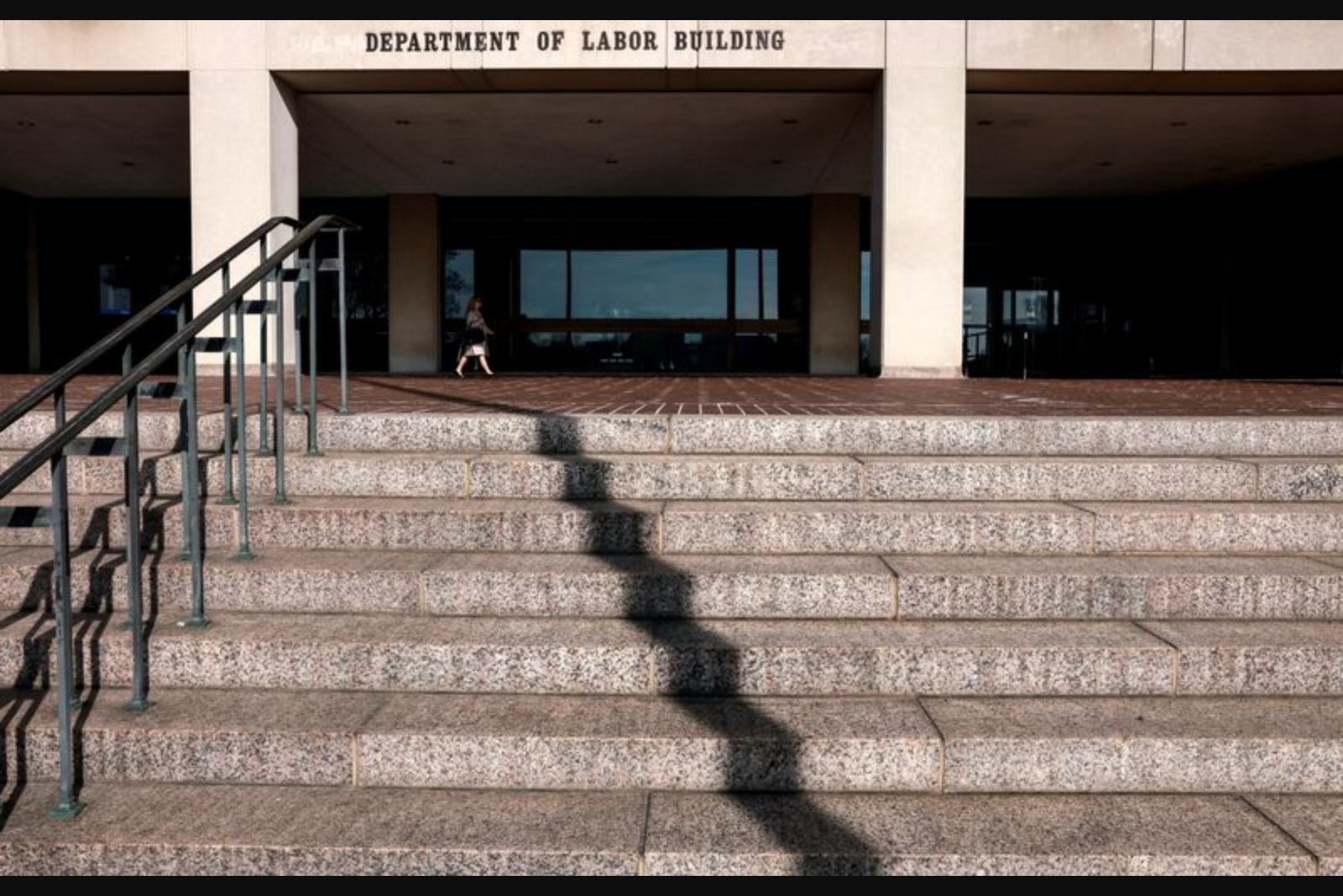
The U.S. Department of Labor on Wednesday put forward a proposed regulation that would tighten the criteria for finding that one business is a "joint employer" of another firm’s workforce under federal wage and hour statutes governing minimum wage and overtime pay. The proposal, announced by the department, would narrow the situations in which a company can be held liable when contractors or franchisees violate wage laws.
The draft mirrors a rule previously issued during President Donald Trump’s first term that had the support of business groups and was later rescinded by Democratic former President Joe Biden. Under the new proposal, companies would meet the joint-employer threshold only when they exercise direct control over fundamental employment decisions - including hiring, supervision, payroll and employee records.
Acting Labor Secretary Keith Sonderling said the intent behind the rule is to create a clearer standard that makes it simpler for employers to comply with the law and, in the department’s view, ultimately benefits workers. "A clear standard on joint employment would give businesses more confidence to invest in partnerships, help employees understand their rights, and make the department’s investigations more efficient," Sonderling said in a statement.
The department said the proposal would shape how it enforces wage and hour rules and could be relied upon in private litigation, although federal courts would not be strictly bound to adopt the department’s interpretation. The proposal is scheduled for formal publication on Thursday, after which the Labor Department will accept public comments for 60 days. A final regulation could be issued later this year.
The issue of joint employment has been highly contested in labor law over the past decade and has prompted competing rulemakings across agencies that enforce different federal statutes. In a related development earlier this year, the National Labor Relations Board - an agency separate from the Labor Department that enforces collective bargaining and organizing rights - repealed a Biden-era joint-employment rule in February and restored the test that was in place during the Trump administration.
The Labor Department’s proposed approach follows that same pattern, tying joint-employer status to direct, concrete control of hiring, supervision, pay and personnel records. Worker advocacy organizations have criticized such an approach. The Economic Policy Institute, for example, said in 2020 that the Trump-era rule would hamper efforts to address wage theft and estimated it could raise costs to workers by more than $1 billion annually.
Separately, the department noted a recent personnel development: Trump-appointed U.S. Labor Secretary Lori Chavez-DeRemer resigned this week amid allegations of misconduct, including claims she had an affair with a member of her security detail and used department resources for personal travel. Chavez-DeRemer did not address those allegations in the statement announcing her resignation.
The department’s proposal arrives amid ongoing debate over how broadly to assign responsibility for labor-law compliance across corporate and contracting relationships. The rulemaking will proceed through the formal notice-and-comment process before the Labor Department decides whether to finalize the proposed standard.
Key Points
- The Labor Department proposed a rule limiting joint-employer liability to circumstances where a company directly controls hiring, supervision, pay and employee records.
- The proposed rule echoes a Trump-era standard rescinded by the Biden administration and follows a similar reversal by the National Labor Relations Board in February.
- The proposal will be published for 60 days of public comment and could be finalized later this year; it may be cited in private lawsuits though courts are not required to follow it.
Impacted sectors - franchise-heavy industries and businesses relying on contract labor, legal and human resources functions, and enforcement agencies that interpret wage and hour laws.
Risks and uncertainties
- Court discretion - The department’s guidance could be cited in private litigation but federal courts may choose not to adopt the rule’s interpretation when deciding cases.
- Enforcement and accountability - Worker advocates warn the narrower standard could make it more difficult to address wage theft, potentially affecting workers’ pay in industries reliant on contractors or franchise models.
- Leadership disruption - The recent resignation of the Trump-appointed Labor Secretary introduces uncertainty about departmental leadership during the rulemaking process.