
World May 6, 2026 06:17 AM

Venezuela Rejects World Court Authority in Dispute Over Oil-Rich Esequibo

Caracas argues the International Court of Justice lacks jurisdiction as Guyana presses for a binding border ruling over a territory with major hydrocarbon finds

By Maya Rios

Venezuela told the International Court of Justice it does not accept the court's jurisdiction in a long-running border dispute with Guyana centered on the Esequibo region, a 160,000-square-km area onshore and offshore where significant oil and gas discoveries have been made. Guyana has asked the court to uphold an 1899 arbitration that assigns the territory to Guyana. Venezuela says the matter must be resolved through bilateral talks and has dismissed the 1899 award as fraudulent. A final judgment is expected in months, though the court lacks direct enforcement powers.

Venezuela Rejects World Court Authority in Dispute Over Oil-Rich Esequibo

Key Points

  • Venezuela informed the International Court of Justice that it does not accept the court's jurisdiction over its border dispute with Guyana.
  • The contested area is the 160,000-square-km Esequibo region, including offshore zones where significant oil and gas discoveries have been reported - impacting the oil and gas sector and related investment decisions.
  • Guyana seeks a ruling to confirm an 1899 arbitration that it says places the territory within its borders; Guyana argues Venezuela's claim covers over 70% of its territory and poses an existential threat.

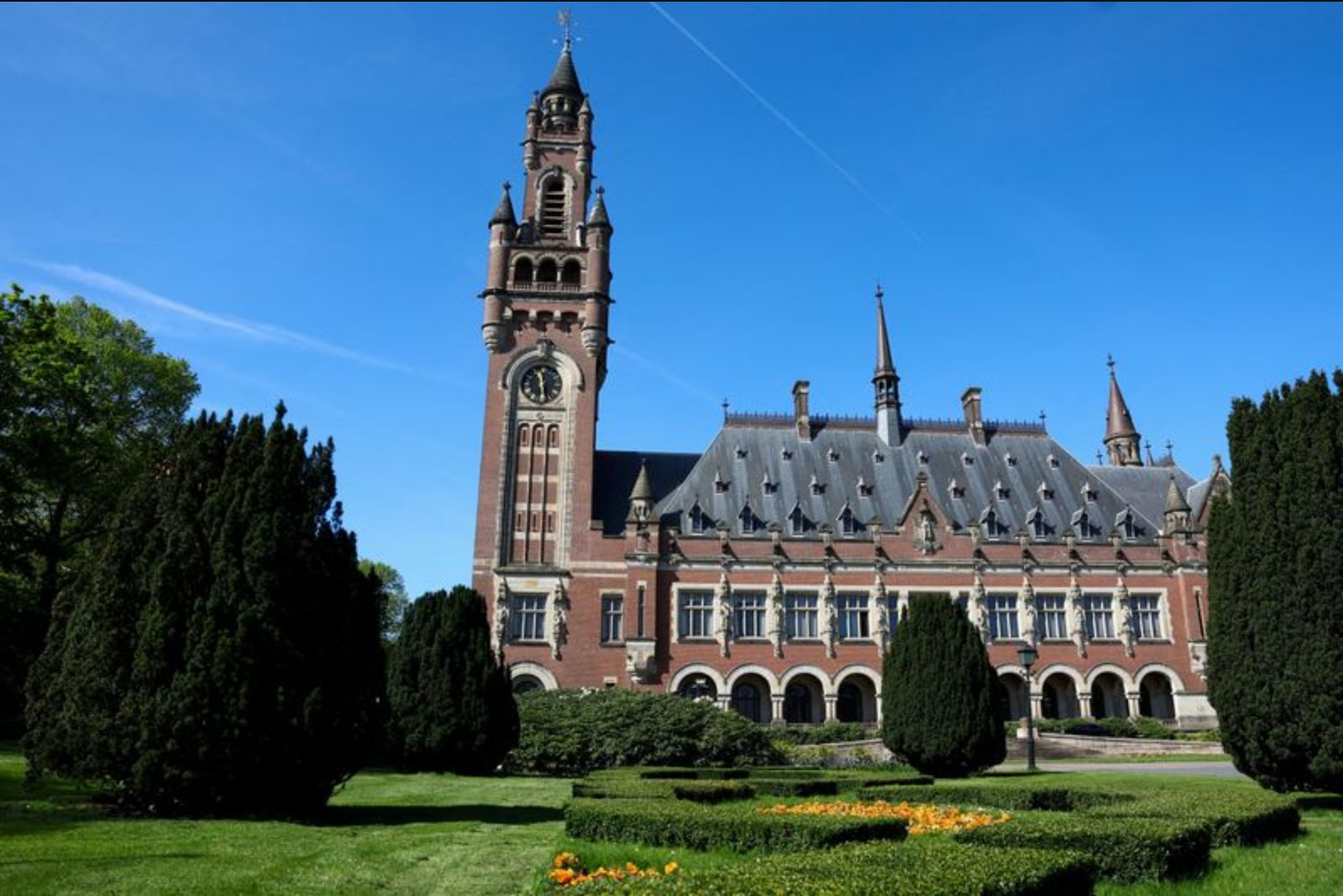
At hearings in The Hague on Wednesday, Venezuela formally told judges at the International Court of Justice that it does not accept the court's authority to rule on its long-standing boundary dispute with neighbouring Guyana. The disagreement centers on the Esequibo region, an area of roughly 160,000 square kilometres that includes inland jungle and an offshore zone where significant oil and gas discoveries have been reported.

Guyana initiated proceedings at the World Court in 2018, asking the tribunal that resolves inter-state legal disputes to confirm a boundary established by an 1899 arbitral award. That award, according to Guyana, places the Esequibo territory within its sovereign borders.

Speaking to the court, Venezuelan representative Samuel Reinaldo Moncada Acosta stated plainly: "Venezuela does not accept the jurisdiction of the International Court of Justice." He reiterated Caracas's position that the border issue cannot be resolved by the court and instead must be the subject of direct negotiations between the two states.

Moncada dismissed the 1899 arbitral award as fraudulent and said it had been imposed by colonial forces as an example of gunboat diplomacy. He said Venezuela remains "committed to continuing to act in good faith in direct negotiations with Guyana to achieve a mutually beneficial agreement."

On the other side, Guyana told judges earlier in the week that Venezuela's claim reaches into more than 70% of Guyana's territory and described the claim as an existential threat to the country. Guyana is asking the court to uphold the 1899 award and confirm the border in its favour.

The hearings come amid an unusual political situation in Caracas. After the capture of President Nicolas Maduro and his wife by U.S. forces in January, Venezuela is being run by an interim government that continues to assert the country's claim on the Esequibo region.

A final judgment in the case is expected in months. While rulings of the International Court of Justice are binding and final, the court has no direct mechanism to enforce them and must rely on the United Nations Security Council to implement decisions.

Venezuela has previously sought to block the court's authority on this matter through a national referendum. In 2023 Venezuelan voters rejected the ICJ's jurisdiction over the territorial dispute in that referendum.


The outcome of the court proceedings and Venezuela's refusal to accept jurisdiction underscore continuing uncertainty over the legal and political framework governing the Esequibo area, which has become economically significant following offshore hydrocarbon discoveries.

Risks

  • Jurisdictional rejection by Venezuela increases legal uncertainty over rights to offshore oil and gas resources, affecting the oil and gas sector and investors in regional exploration and production.
  • The International Court of Justice cannot directly enforce its rulings and must rely on the U.N. Security Council, creating an enforcement gap that could prolong disputes and affect regional stability.
  • Political instability in Venezuela - currently run by an interim government after the capture of President Nicolas Maduro and his wife in January - adds uncertainty to the negotiation dynamics and potential for bilateral resolution.

More from World

Pope to Visit Canary Islands and Multiple Spanish Destinations on June Trip May 6, 2026 Japan Launches Type 88 Anti-Ship Missile During Multinational Drill Off Northern Philippines May 6, 2026 U.S. and Iran Near One-Page Memorandum to Halt Fighting, Open Path to Nuclear Talks May 6, 2026 South Africa Confirms Andes Hantavirus in Two Cruise Ship Passengers May 6, 2026 Iran Insists on a 'Fair and Comprehensive' Deal as U.S. Signals Pause in Hostilities May 6, 2026