
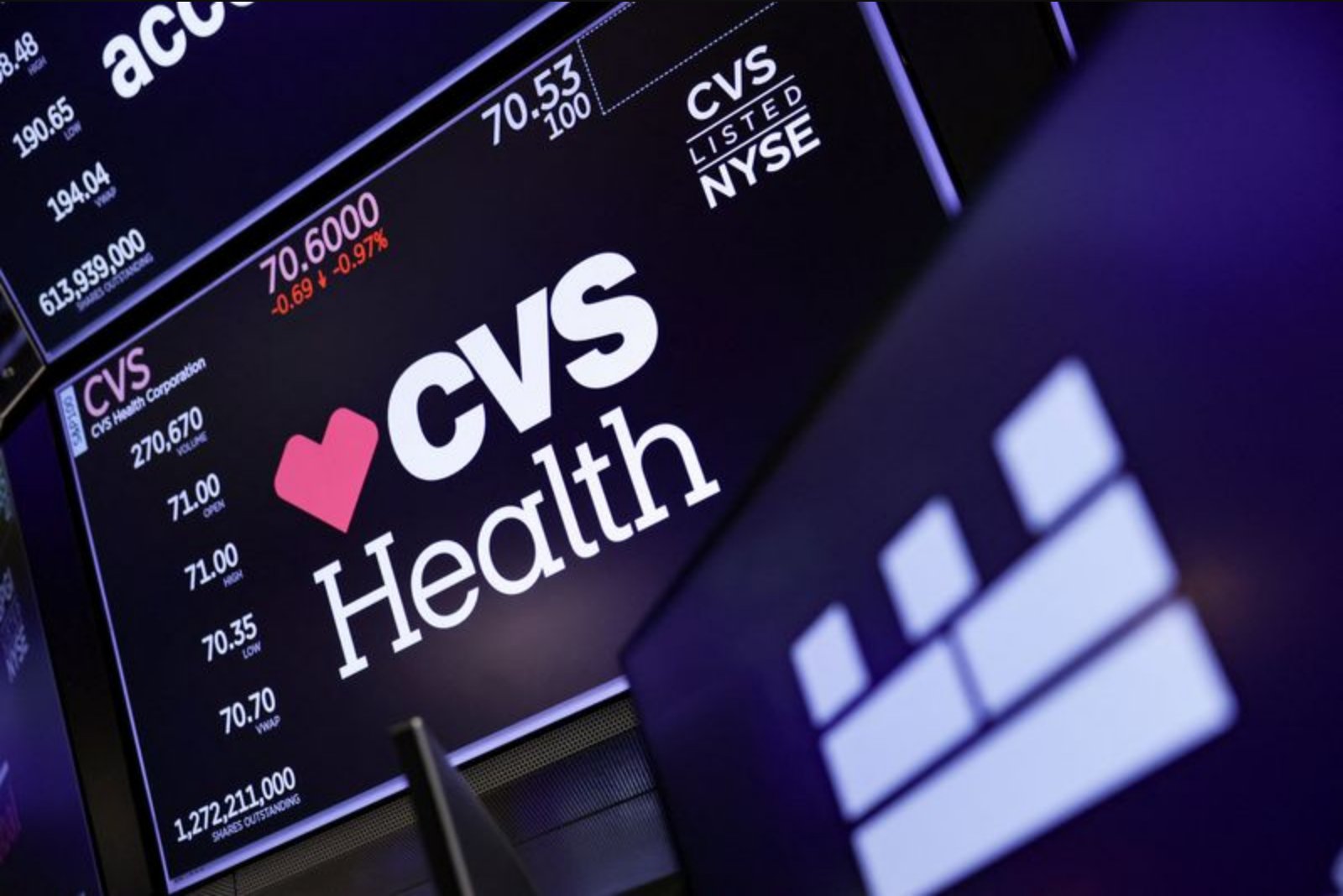
CVS Health said it has increased its full-year 2026 adjusted profit-per-share guidance following a first quarter that outperformed analyst expectations, citing stronger earnings from its pharmacy management operations and improved control of medical costs in its government-sponsored insurance plans. The company's stock climbed 4% in premarket trading on the news.
The updated outlook sets 2026 adjusted EPS in a range of $7.30 to $7.50, lifted from a prior range of $7.00 to $7.20. Analysts surveyed by LSEG had been projecting full-year EPS of $7.16.
Management attributed the guidance increase primarily to lower-than-anticipated medical spending within CVS' health insurance business. "We’re improving our capability of forecasting, so the cost trend did not surprise me," said Chief Financial Officer Brian Newman in an interview.
Caremark, CVS' pharmacy benefit manager, delivered higher earnings driven in part by a more profitable drug mix, the company said. For the quarter, CVS reported adjusted earnings of $2.57 per share, topping the LSEG analyst consensus of $2.20 per share. The company also reported total quarterly revenue of $100.4 billion, exceeding expectations of $95.1 billion.
Segment performance and medical cost trends
CVS' Aetna insurance business posted a medical loss ratio of 84.6% for the quarter, meaning that percentage of premiums was spent on medical services. That result was below analysts' expectations of 87.58% and an improvement from a reported 87.3% in the prior year.
The company reported an 11% year-over-year increase in revenue for its health services segment, which includes Caremark, and a 3% increase in revenue for its health benefits business. CVS' Aetna unit focuses on Medicare Advantage plans for adults aged 65 and older and people with disabilities.
Executives acknowledged broader industry pressure in Medicare Advantage, noting rival insurers have reported rising medical costs and a mismatch between government payments and insurer expenditures. In April, the U.S. government said it would raise 2027 payments to insurers managing Medicare Advantage plans by an average of 2.48% for beneficiaries aged 65 and older or with disabilities. Newman said that increase still does not align with the company’s cost estimates for next year and indicated CVS may focus on pricing or benefit changes to address the gap.
Pharmacy operations and near-term headwinds
CVS' retail pharmacy business expanded in 2025, reporting 5% growth after the company acquired pharmacies from former rival Rite Aid and added 9 million customers after completing that deal. The company filled more prescriptions and dispensed higher-priced drugs during the quarter.
Despite higher volumes and a richer drug mix, operating income for the pharmacy unit declined 8.8% compared with the prior year's first quarter. Management pointed to several operational pressures that raised costs for the unit: regulatory changes affecting the price of certain drugs, a smaller proportion of cold and flu illnesses being treated this season and weather disruptions that interrupted store operations. "We had a number of stores that were closed due to snow," Newman said.
Context on quarterly performance
This quarter marked CVS' fifth straight quarter of beating Wall Street estimates. The company has adopted a cautious stance on forecasting while it pursues a broader turnaround; in the previous year it recorded high-profile quarterly misses and changed its chief executive.
Overall, CVS' results reflect a mix of improving cost trends in its insurance arm and margin pressure in its pharmacy operations. Management pointed to better forecasting and a more profitable drug mix at Caremark as supporting factors for the stronger quarter and the upward revision to 2026 guidance.
CVS is headquartered in Woonsocket, Rhode Island.