
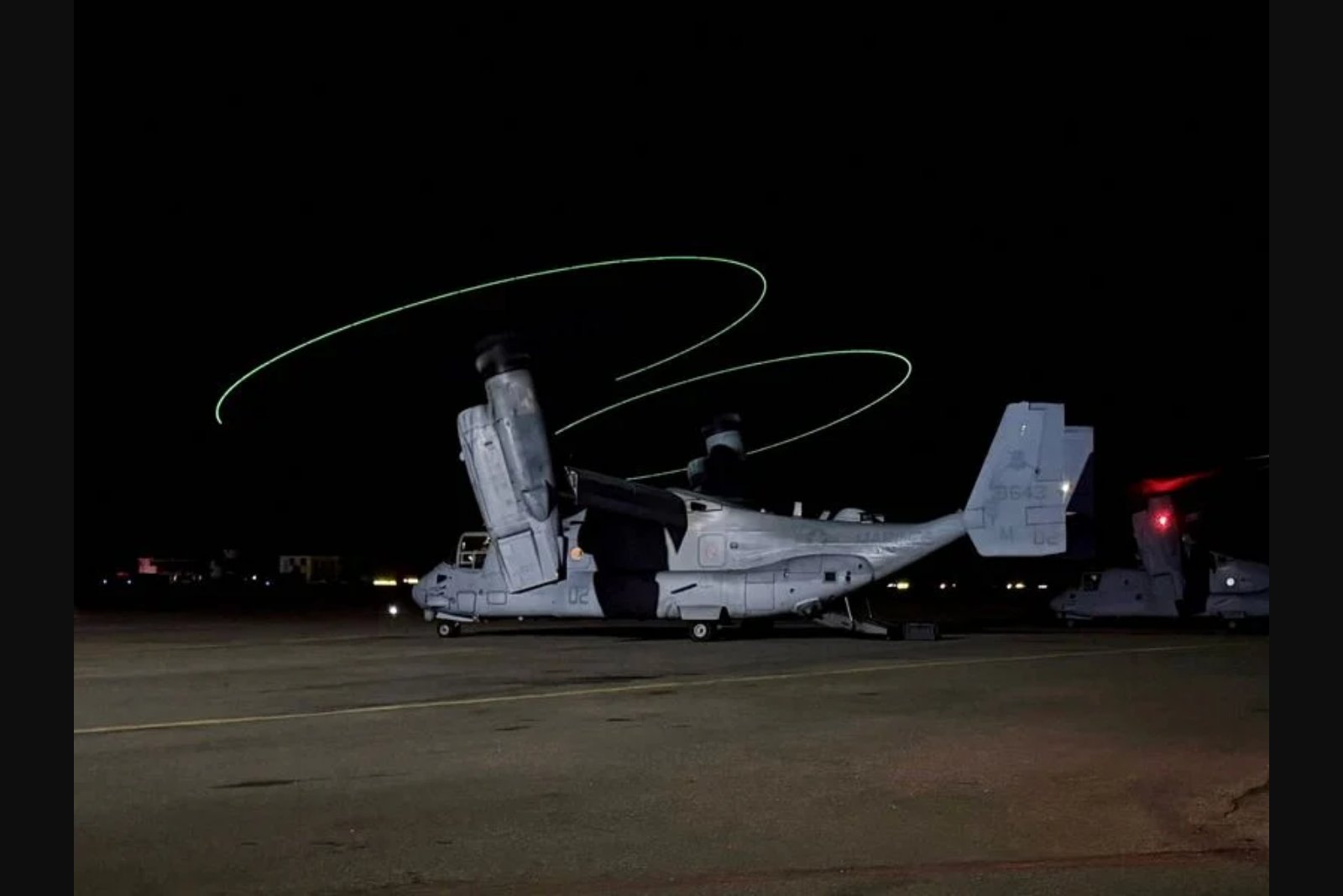
U.S. Southern Command has placed a substantial contingent of U.S. military personnel in and around Venezuela to support relief operations after two powerful earthquakes struck the country, the command's top general for the region told reporters. More than 900 U.S. service members are operating inside Venezuela, supplemented by roughly 800 personnel positioned in Caribbean hubs including Puerto Rico and Curacao.
General Francis Donovan, commander of U.S. Southern Command, described a range of U.S. activities aimed at bolstering Venezuelan rescue efforts. U.S. forces have joined search-and-rescue missions, assisted in restoring airport operations and positioned air and naval assets to facilitate the arrival and onward movement of humanitarian relief that international partners have sent in response to the disaster.
Donovan said the military had also deployed at least four or five MQ-9 Reaper drones over Venezuelan territory. Those unmanned aircraft, together with a fused intelligence cell based in Miami, are intended to strengthen situational awareness for Venezuelan authorities by helping map damaged infrastructure and keep roadways cleared for relief convoys.
"We’re using some of the same assets we might use to track hemispheric threats (to) now ensure roadways are open and ensure that we know where the damaged buildings are," Donovan said, adding that some aerial and analytical insights may be difficult for Venezuelan officials to obtain "from the ground level."
The deployment marks a striking change in operational posture between the two governments. In January, U.S. forces conducted a raid to seize Venezuelan President Nicolas Maduro on drug trafficking charges and transport him to New York for prosecution; Maduro has denied wrongdoing. In the weeks since, the U.S. military also executed a strike that killed the leader of the Venezuelan prison gang Tren de Aragua, an action Donovan said had been coordinated with Venezuelan authorities.
"January 3rd’s not that long ago. And just think about how this relationship has transitioned," Donovan said, highlighting how the cooperative relief effort contrasts with earlier operations.
Venezuela was struck last week by two strong earthquakes, measured at magnitudes 7.2 and 7.5, that occurred less than a minute apart. The quakes toppled buildings and left thousands believed to be trapped under rubble. With survival prospects diminishing on a daily basis, Venezuela’s legislative leader Jorge Rodriguez reported on Tuesday that "only one survivor -- a 3-year-old child -- had been rescued so far during the sixth day of rescue efforts." Rescue efforts were ongoing at the time of Donovan’s remarks.
Donovan said U.S. Marines were among the first American personnel to arrive on the ground, working alongside Venezuelan rescuers to dig through debris in search of survivors. He said the U.S. military also helped transport civilian rescuers into affected areas, noting rescuers from Fairfax, Virginia were flown in and shared video of a rescue of a mother and her 9-month-old baby over the weekend.
Much of the U.S. assistance has concentrated on logistics, Donovan said, emphasizing the need to prevent international aid from accumulating at points of entry rather than reaching the worst-hit communities. "Because that’s where these events can sometimes go sideways. You bring in too much material and you don’t have the logistics behind it to then move (the aid) to the affected areas," he said.
The Venezuelan government has faced criticism from residents and observers for a slow initial response, with complaints that heavy equipment and organized search-and-rescue teams were not deployed quickly enough. In the early aftermath, desperate residents resorted to clearing rubble by hand using shovels, ropes and improvised tools while trying to reach relatives. By Saturday, state television showed heavy construction machinery clearing collapsed masonry in some locations, and residents said foreign rescue teams had assisted in extracting bodies.
When asked about local frustrations with the government's handling of the disaster, Donovan acknowledged that Caracas is confronting the consequences of long-term governance issues that have degraded national infrastructure. He also noted reported shortages of medicines and hospital personnel as factors that could exacerbate public dissatisfaction.
Donovan declined to predict how long U.S. forces would remain in the country, saying that responsibility for the broader U.S. relief effort rests with the State Department. He asserted, however, that the military was not preparing for a protracted ground presence tied to the operations there. "There’s no talk about staying," Donovan said. "This is what we do (in relief operations) ... We leave when we’re done."
Looking beyond the immediate relief mission, Donovan expressed hope that the U.S. operation could open avenues for improved military-to-military engagement with Venezuela. "If then this opens the door for a better mil-to-mil relationship, absolutely, we’ll be ready to move forward," he said.
Contextual note: The material above reflects statements and operational details as described by General Francis Donovan and public comments by Venezuelan officials, including Jorge Rodriguez. It focuses on the military and logistical aspects of the international response to the earthquakes and does not assess ongoing political or legal actions beyond those referenced by the officials quoted.