
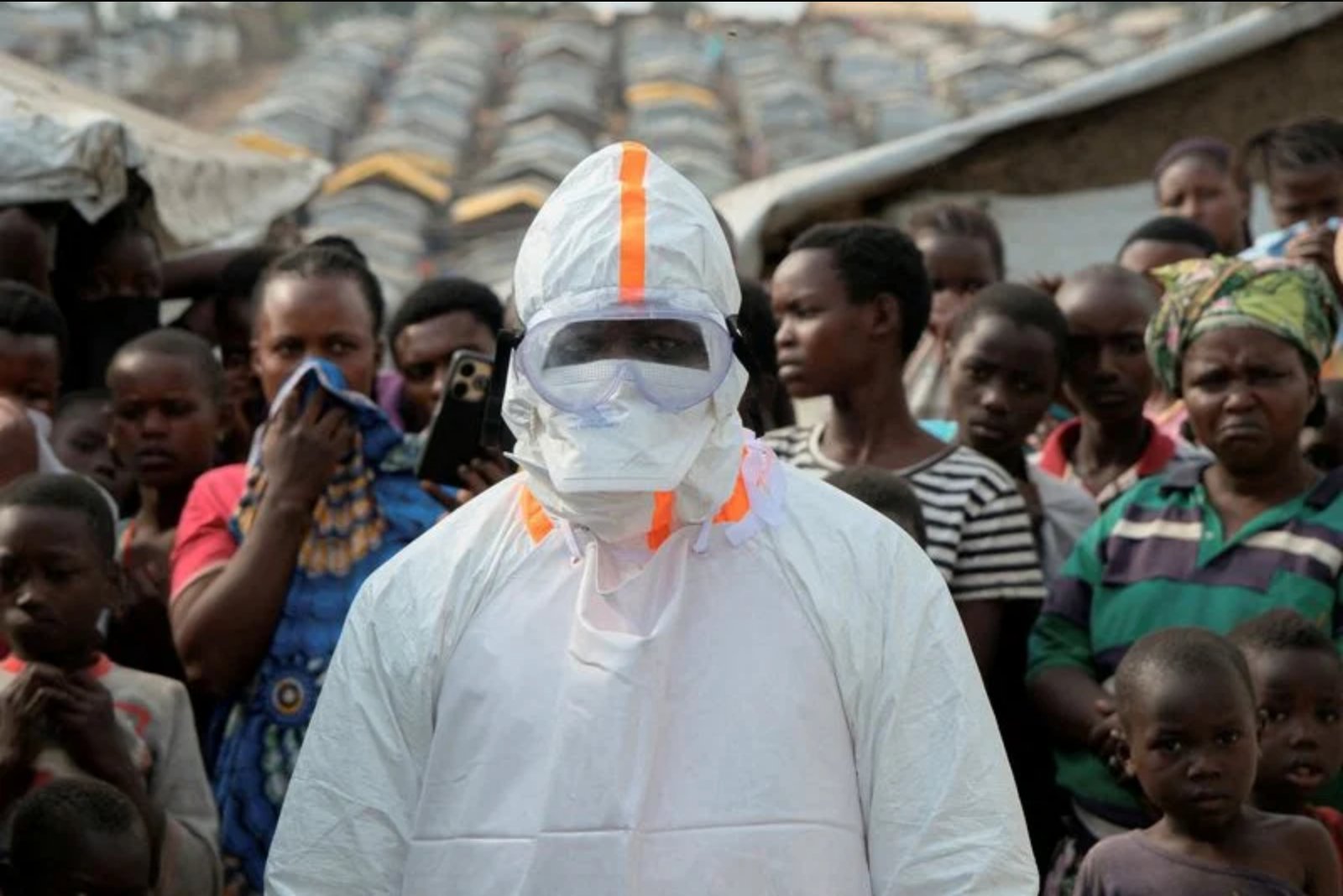
The U.S. administration announced a temporary ban on commercial travel to the United States by American citizens who are in the Democratic Republic of Congo or who have recently left that country, a White House official said on Monday. The action, implemented under a transportation authority known as Title 49, will place affected U.S. citizens on a "do-not-board" list until they have completed a minimum 21-day stay in a third country.
Officials described the step as a response to an expanding Ebola outbreak that has spread to multiple provinces within Congo. Official data released late on Sunday showed that confirmed Ebola cases across the country had risen to 1,926, including 702 deaths.
Ebola is transmitted through direct contact with infected bodily fluids from people or animals. The illness can present with symptoms that include high fever, vomiting and both internal and external bleeding, and is often fatal.
According to the White House official, roughly two dozen American citizens had been scheduled to board flights to the United States on Tuesday after travels in Congo. The official said the State Department will provide support to those individuals and others affected while they remain in a third country during the required waiting interval.
Earlier on Monday, the U.S. Secretary of Health and Human Services, Robert F. Kennedy Jr., signed an order citing increased Ebola risks, including instances of the virus reaching locations just hours from Kinshasa, Congo's capital. The U.S. Centers for Disease Control and Prevention stated on Friday that a U.S. citizen working for a humanitarian organization in Congo had tested positive for the Bundibugyo Ebola virus.
Officials also reported that one American infected in Congo was admitted to Frankfurt University Hospital in Germany early on Monday. The CDC additionally referenced an earlier case involving an American identified by the Serge Christian mission organization as Dr. Peter Stafford, who contracted Ebola and had been brought to Germany for treatment, according to CDC comments in May.
Context and immediate effects
- The Title 49 order places immediate travel constraints on U.S. citizens with recent ties to Congo and requires a 21-day stay in a third country prior to boarding commercial flights to the United States.
- The State Department will provide assistance to Americans subject to the restriction during their waiting period.
- Confirmed Ebola cases in Congo stood at 1,926 with 702 fatalities as of the most recent official report.
The new constraints represent a precautionary public health measure tied directly to a disease outbreak that has already affected U.S. citizens working in humanitarian roles in Congo. The steps taken are specific - restricting immediate commercial travel and establishing a defined quarantine-like interval in third countries - and are being presented as temporary until the prescribed period has elapsed.