
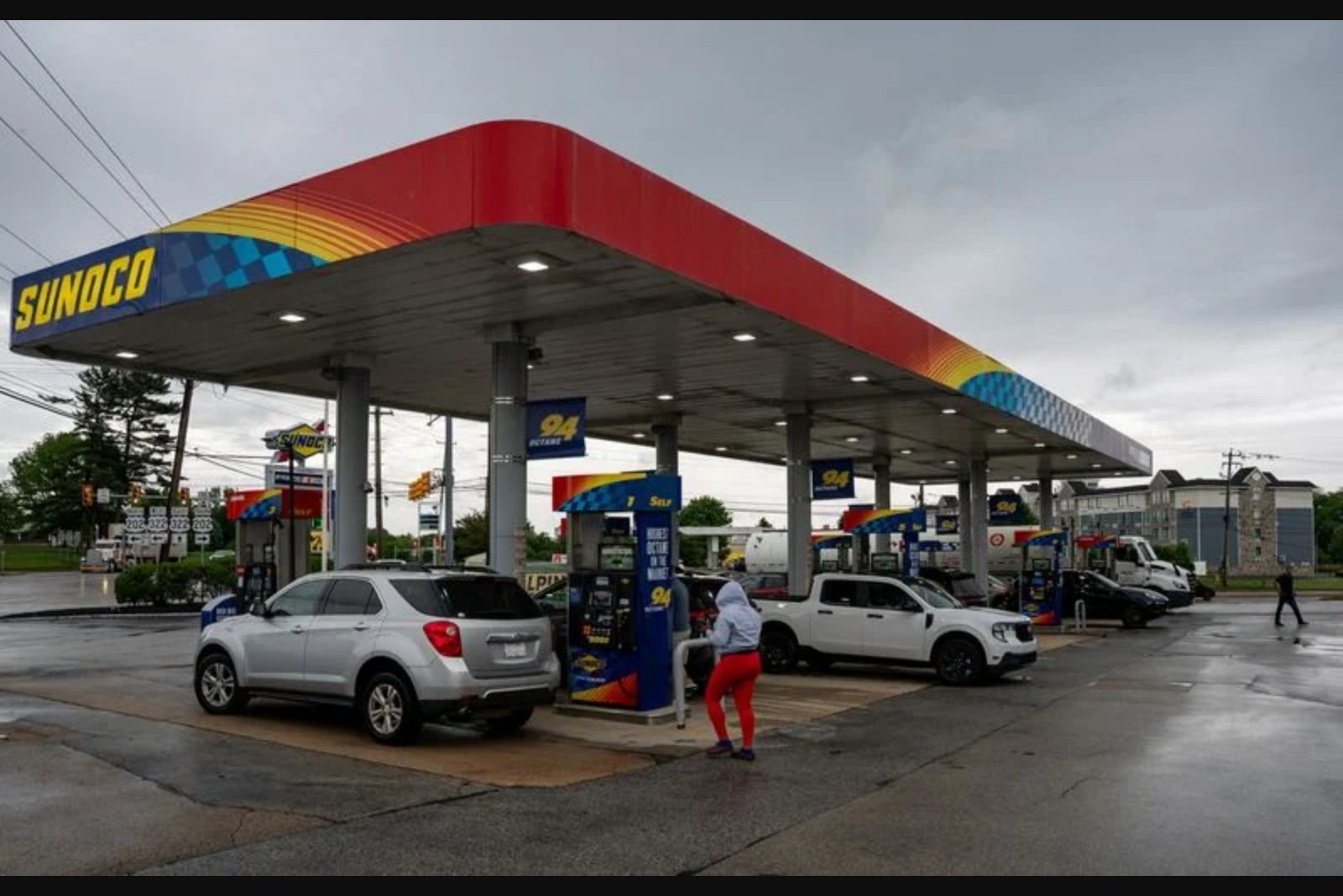
U.S. consumer inflation is expected to have slowed in June, largely reflecting a pullback in gasoline prices after a brief ceasefire between the United States and Iran seemed to take hold. That temporary calm collapsed last week when commercial vessels were attacked in the Strait of Hormuz, prompting military strikes between the United States and Iran and a renewed uptick in oil-related costs.
Data from motorist advocacy group AAA showed the national average price for gasoline rose to $3.87 per gallon on Monday from $3.80 a week earlier, illustrating how quickly energy measures can reverse. President Donald Trump said on Monday that the United States would reinstate its blockade on Iranian shipping in the Strait of Hormuz - a strategically important thoroughfare for global oil shipments and now a flashpoint in the conflict.
"The pain level just went down from 10 to nine, consumers are still in a lot of pain," said Brian Bethune, an economics professor at Boston College, underscoring that even small declines in headline inflation are limited relief for households whose budgets remain strained.
A Reuters survey of economists anticipates that the Labor Department’s Bureau of Labor Statistics will report on Tuesday that the Consumer Price Index climbed 3.8% in the 12 months through June. Estimates in the survey ranged from 3.6% to 4.0%. By comparison, the CPI surged 4.2% in May, the largest year-on-year advance since April 2023, and was viewed by many economists as a probable peak.
The Federal Reserve monitors the Personal Consumption Expenditures Price Indexes when assessing its 2% inflation mandate. Inflation was last below that 2% target in early 2021. Minutes from the Fed’s June 16-17 meeting, published last week, showed that policymakers increased their concern about inflation in the month that followed. At that meeting, the Fed left its target federal funds rate in the 3.50% to 3.75% range, even as new projections showed growing sentiment around a likely rate hike in 2026.
Financial markets were assigning roughly a 50.8% chance that the Fed would raise borrowing costs at its September 15-16 policy meeting, according to the CME FedWatch tool.
On a monthly basis, consumer prices are expected to have declined 0.1% in June - which, if realized, would mark the first monthly drop since May 2020 - following a 0.5% increase in May. Diane Swonk, chief economist at KPMG, noted that although some grocery retailers are attempting to lure shoppers with targeted price cuts, any such moves are unlikely to materially reduce overall household spending because other categories continue to exert upward pressure on bills.
U.S. Energy Information Administration data showed average gasoline prices dropped to $4.18 a gallon in June from $4.61 in May, with May representing the highest level since July 2022. Despite the recent easing, pump prices remain well above pre-war levels.
Much of the respite at the pump is likely to be offset by an expected uptick in food prices after only a marginal rise in May. Economists pointed to higher fertilizer costs and elevated distribution expenses stemming from the U.S.-Israel war with Iran, in addition to dry weather conditions in some U.S. agricultural regions, as factors that could push food prices higher later this year and into 2027.
Excluding volatile food and energy components, the so-called core CPI was forecast to have increased 2.8% year-on-year in June, down slightly from a 2.9% rise in May. On a monthly basis the core CPI was projected to have risen 0.2%, matching May’s gain. Some analysts interpreted that steady core monthly increase as a constructive sign, while others cautioned it indicated persistent underlying inflation that leaves the possibility of additional Fed tightening on the table.
Andrew Hollenhorst, chief U.S. economist at Citigroup, emphasized that core inflation is the dominant concern for Fed officials because it is less directly affected by swings in oil prices. He noted that, apart from a temporary lift in airfares that should reverse, higher oil prices had not materially pushed up core inflation measures.
Other economists flagged signs of stickiness. They pointed to still-elevated input costs and lengthening supplier delivery times reported in business surveys, and to producer price data that suggested further price increases could reach consumers.
Analysts expect the monthly core CPI to be pushed higher by rising service prices, including hotel and motel rates tied in part to the FIFA World Cup. Motor vehicle insurance is forecast to rebound in June after posting its largest monthly decline since October 2020 in May. Moderate increases were also anticipated for airfares and rents.
Core goods inflation was likely to be flat over the month. Economists said price adjustments by a major tech company late in June would likely appear in July data rather than June. They also judged that tariff pass-through effects were fading, though they expected apparel prices to rise and household furnishings to rebound.
Samuel Tombs, chief U.S. economist at Pantheon Macroeconomics, said June’s CPI report was unlikely to provide definitive guidance for whether the Fed will tighten policy further this year, reflecting the mixed signals between headline cooling driven by energy and continued momentum in core components.
Key takeaways:
- Headline CPI likely eased in June to a 3.8% year-on-year pace, with a predicted monthly decline of 0.1% driven mainly by lower gasoline prices.
- Core inflation remains elevated - forecast at 2.8% year-on-year and up 0.2% month-on-month - keeping the prospect of additional Fed action open.
- Geopolitical developments in the Strait of Hormuz and the U.S.-Iran conflict inject volatility into energy markets and risk reversing recent price relief at the pump.