
World November 19, 2026 01:27 AM

Trump Says New Board of Trade Has Restored Balance to US-China Relationship

At the start of APEC talks, the president defends tariff strategy and points to the newly formed body as a corrective to past imbalances

By Jordan Park
Share
Twitter Reddit Facebook LinkedIn

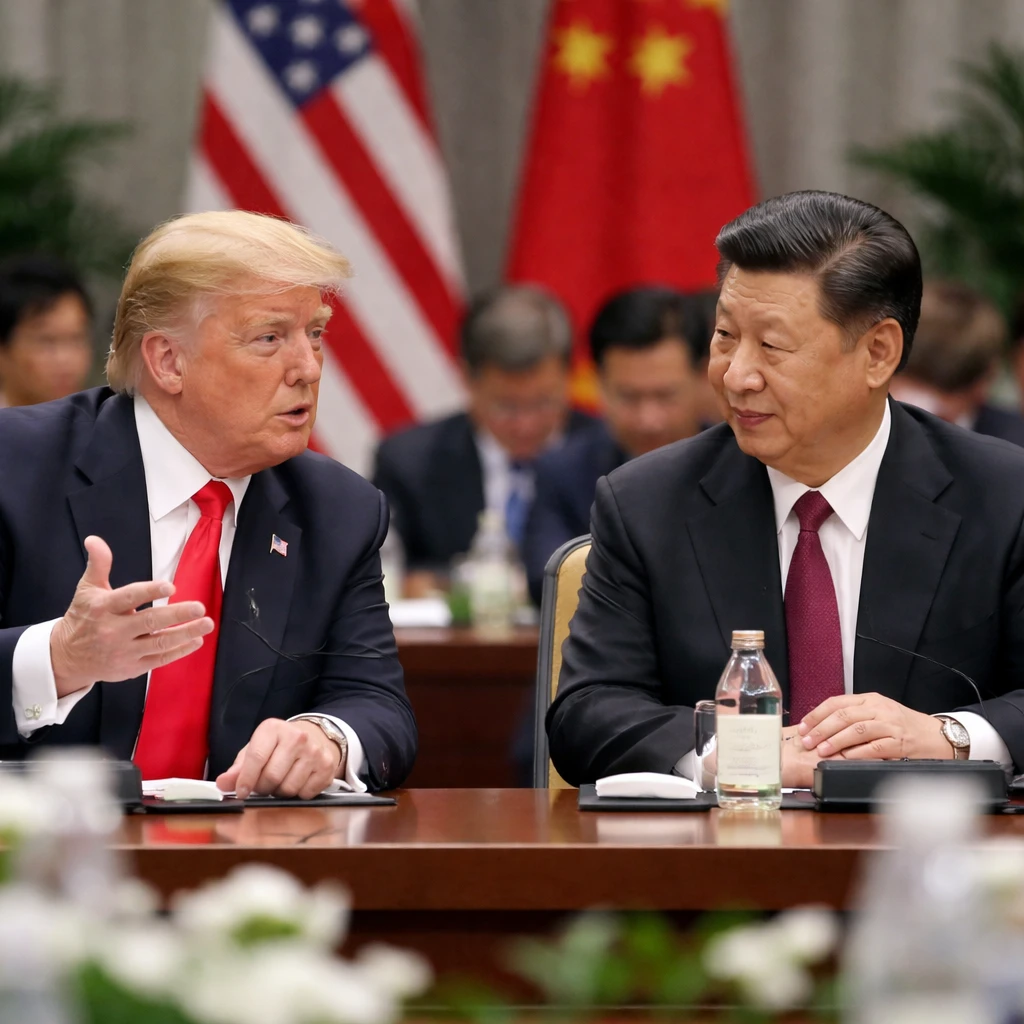
U.S. President Donald Trump told Chinese President Xi Jinping that the Board of Trade the two agreed to create at their Beijing summit in May has helped bring "greater balance to a very lopsided relationship." Speaking at the outset of a meeting during the APEC summit in China, Trump said the two countries had divided tariffs in a fair manner, defended tariffs as a central policy tool despite domestic legal challenges, and noted that U.S. and Chinese officials convened the Board's first official meeting last Friday.

Trump Says New Board of Trade Has Restored Balance to US-China Relationship
Summarize with
ChatGPT Perplexity Claude Grok Gemini

Key Points

  • President Trump said the bilateral Board of Trade agreed in Beijing in May has brought "greater balance" to US-China ties; sectors likely affected include trade and finance.
  • Trump stated that the US and China "split up the tariffs and cut it in a very fair way," underscoring tariffs as a central policy tool - an issue with implications for markets sensitive to trade policy and inflation.
  • U.S. and Chinese officials held the Board of Trade's first official meeting last Friday, marking the initial formal convening of the body intended to address bilateral trade matters.

U.S. President Donald Trump said on Thursday that a bilateral Board of Trade, which he and Chinese President Xi Jinping agreed to establish at their May summit in Beijing, has produced "greater balance to a very lopsided relationship" between the two countries.

Making the remark at the start of a meeting with Xi during the APEC summit in China, Trump asserted that Washington and Beijing had "split up the tariffs and cut it in a very fair way." He added that "the original relationship with China was very lopsided," and used the opportunity to criticize past U.S. leaders for allowing that imbalance.

Tariffs have been a central instrument in Trump's trade and foreign policy approach. The president continued to defend their use even as he faces legal and judicial setbacks at home. The article notes that economists and other analysts have criticised reliance on tariffs, warning that such measures carry the risk of pushing up inflation and potentially triggering a wider trade war.

On the institutional side, U.S. and Chinese officials held the Board of Trade's first official meeting last Friday, marking the first formal convening of the body the two leaders agreed to form earlier in the year. Trump framed that development as evidence that the new arrangement is contributing to a recalibration of the bilateral economic relationship.

The remarks came at the opening of the leaders' bilateral engagement at the APEC meeting in China, where trade and economic ties are on the agenda. Beyond the president's remarks about tariff allocation and historical imbalances, the public record in this report is limited to what was said at the meeting and the factual sequence of the Board's establishment and its first official session.


What was said

  • Trump: the Board of Trade has brought "greater balance to a very lopsided relationship."
  • Trump: "We have split up the tariffs and cut it in a very fair way."
  • Officials from both countries held the Board's first official meeting last Friday.

Context provided in remarks

  • Tariffs remain a cornerstone of the administration's strategy despite legal and judicial challenges in the United States.
  • Economists and analysts have warned that tariff-driven policy risks higher inflation and the possibility of a broader trade war.

Risks

  • Legal and judicial setbacks in the United States related to tariff policy could complicate implementation or challenge measures in court - impacting trade-exposed sectors and financial markets.
  • Economists and analysts cited in the report warn that reliance on tariffs risks raising inflation and could precipitate a wider trade war - a risk for sectors tied to global supply chains and consumer prices.
  • Information in the public record is limited to leaders' statements and the Board's initial meeting, leaving uncertainty about the Board's future actions and effectiveness in resolving deeper structural imbalances - a factor for policymakers and market participants monitoring bilateral relations.

More from World

ICJ to Deliver Ruling as Rohingya Crisis Persists Nov 19, 2026 Board of Peace Blames Both Israel and Hamas for Stalled Gaza Plan and Fragile Ceasefire Nov 18, 2026 Philippines and Australia Sign Defence Cooperation Deal to Streamline Joint Operations Nov 14, 2026 Trump Signals Possible Pause in Strikes on Iran If No New Provocations Arise Nov 14, 2026 Quad Leaders to Convene in Manila as ASEAN Summit Concludes, Sources Say Nov 14, 2026