
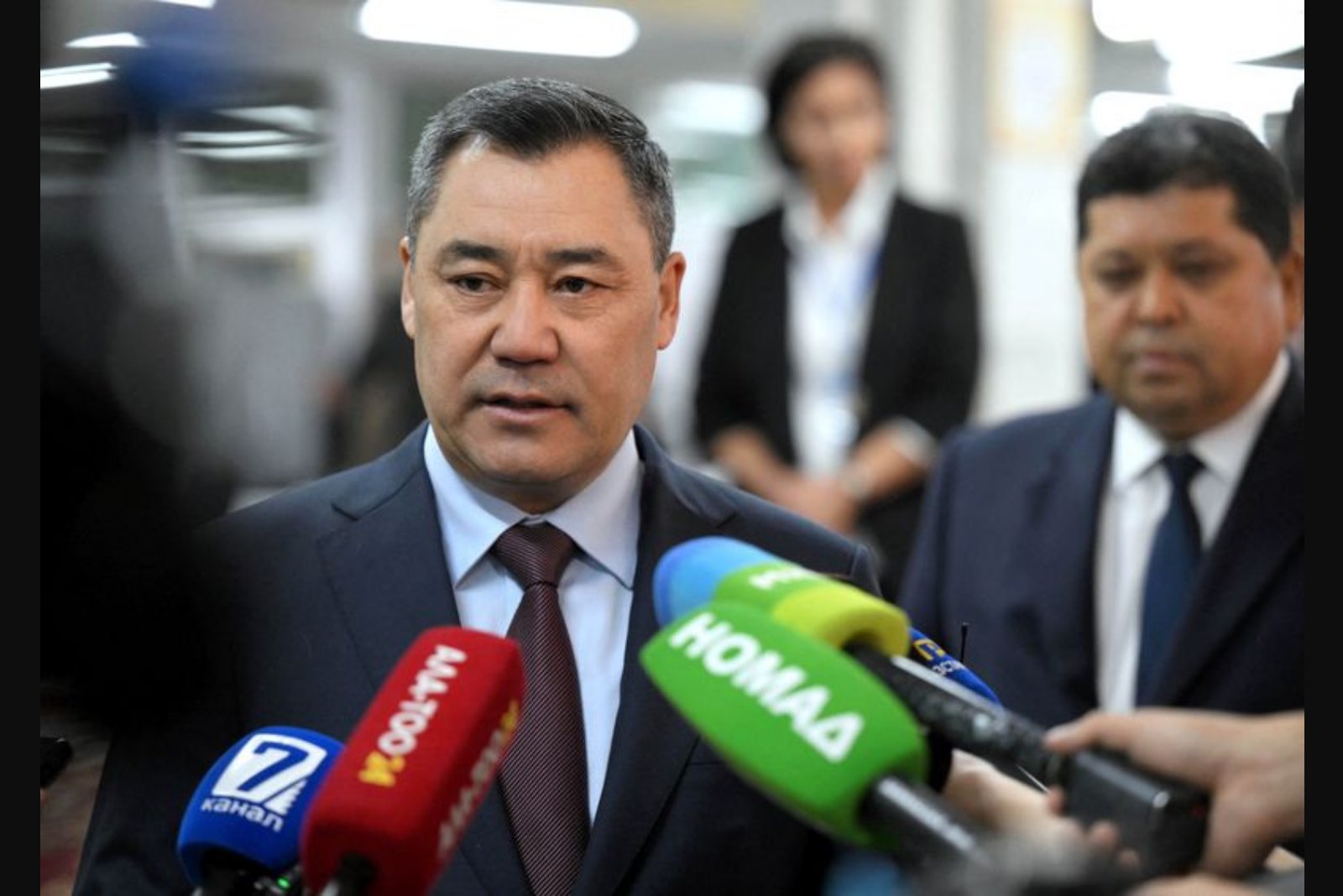
Kyrgyzstan has brought charges against eight individuals accused of scheming to seize power from President Sadyr Japarov, state authorities said on May 12. Among those charged is Kamchybek Tashiev, the former head of the national security apparatus who until January had been one of the country's most influential figures.
Tashiev had governed the Central Asian republic of about 7 million people in a de facto partnership with Japarov since both men rose to prominence during street protests in 2020. That informal tandem, which united influential elites from the country's north and south, lasted until Tashiev's sudden removal from office earlier this year.
Tashiev's lawyer, Ikramidin Aytkulov, confirmed the new charges in a post on Facebook. According to Aytkulov, the trial will take place behind closed doors and reporting on the proceedings has been banned. The identities of the seven others charged were not disclosed by authorities. In recent weeks, several ousted officials thought to be Tashiev allies - including a former speaker of parliament - have been questioned alongside him.
The charges carry a maximum prison sentence of 20 years. Tashiev has not made any public comment in response to the accusations.
Observers note that moves against a figure of Tashiev's standing could pose risks to domestic stability. Tashiev has been described as an influential powerbroker in the country's ethnically mixed south. Kyrgyzstan is a resource-poor, mountainous state that is heavily reliant on remittances from migrant workers in Russia. It has a recent record of political turbulence, with presidents removed from office by protests in 2005, 2010 and 2020.
Under the Japarov-Tashiev arrangement, the government tightened political control, with measures that affected the opposition and independent media. During their period in power the country experienced rapid economic growth relative to regional peers, a trend that officials attributed in part to trade routed through Kyrgyzstan after Western sanctions on Russia over the war in Ukraine altered regional trade flows.
Authorities have provided limited public detail about the evidence supporting the charges or the circumstances surrounding the alleged plot. The decision to hold the trial in camera, and to prohibit reporting, further restricts available public information about the case.
Context and next steps
With legal proceedings set to be closed to the press, outside observers and markets will have reduced visibility into the case. How the situation evolves could affect political dynamics in Bishkek and the government's relations with regional economic partners, but available public information remains limited to the official charges and the statements from Tashiev's lawyer.