
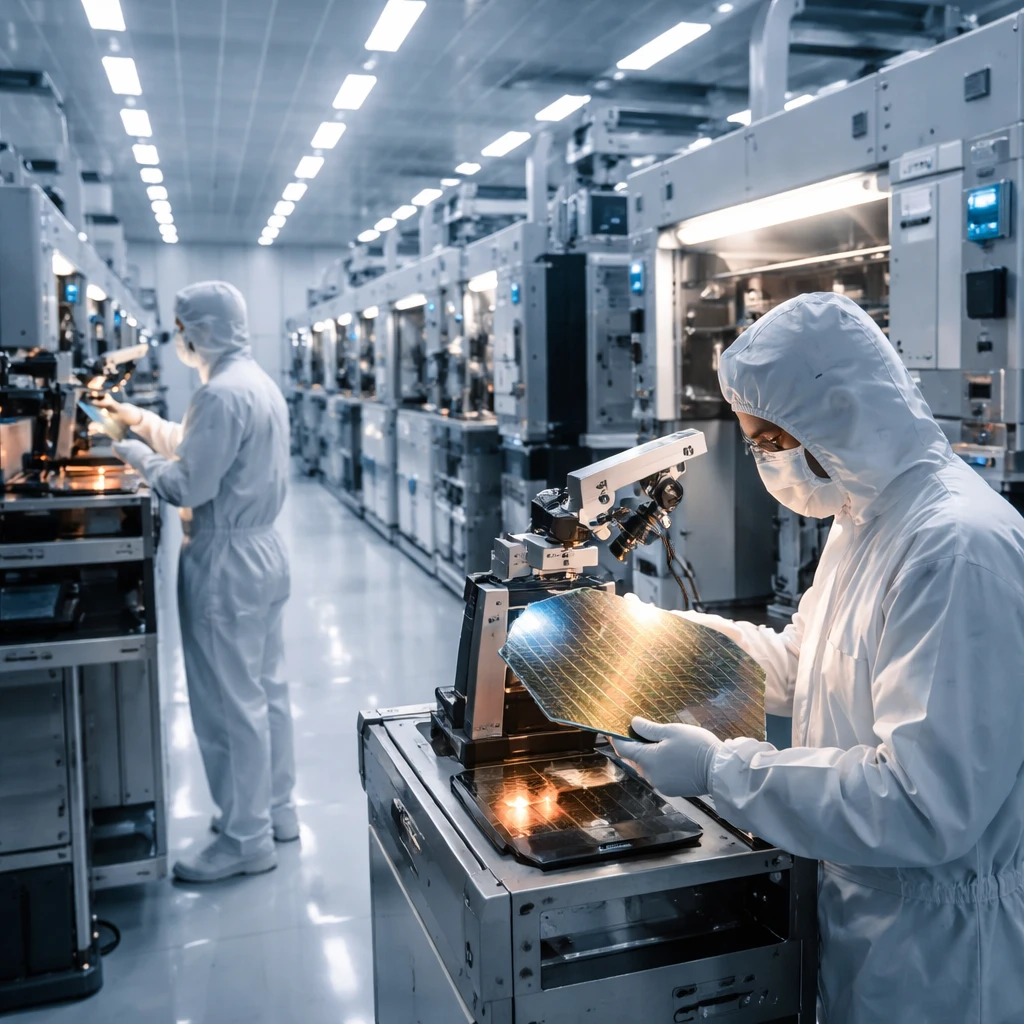
Shares of Intel Corporation have nearly doubled over the past month as investors responded to mounting reports that the chipmaker may be gaining traction for its foundry business. Media accounts pointing to talks with Apple Inc. and reports in ZDNet Korea linking Intel with SK hynix helped fuel optimism that Intel’s contract-manufacturing ambitions are advancing.
Analyst stance and valuation
Deutsche Bank has left its rating on Intel at Hold but raised its price target to $100. The bank justified the higher target by applying roughly 20 times the high end of its revised long-term earnings power estimate, which it now places between $4 and $5 per share.
That uplift in target rests in part on the expectation that Intel’s foundry unit could land two types of work: advanced packaging and front-end wafer manufacturing. While both would matter commercially, analysts consistently note that front-end wafer contracts are the more consequential opportunity because of their larger scale, higher profit potential, and the stronger validation they would provide for Intel’s manufacturing technology.
Revenue scenarios and break-even timing
Analysts have modeled a scenario in which Intel acts as a foundry for a portion of Apple’s M-series chips, estimating that such business could produce about $2 billion in annual revenue for Intel Foundry. The eventual contribution to Intel’s earnings, however, is uncertain because it will depend on variable factors including contract pricing, manufacturing yields, and the substantial capital expenditures required to scale foundry operations.
Deutsche Bank noted that its long-term forecasts already build in roughly $2 billion of external foundry revenue in 2027 and about $4 billion in 2028. Those forecasts support the brokerage’s view that the foundry business could reach operating break-even by the end of 2027, and they are a core reason the firm’s earnings-per-share estimates for 2027 and 2028 sit roughly 10% above the Wall Street consensus.
Market reaction and remaining cautions
Despite the brighter outlook for Intel’s foundry prospects, analysts warn that much of the upside may already be priced into the stock. The market’s rapid re-rating has compressed the margin for error: positive headline reports and early customer ties are encouraging, but the path to meaningful revenue and profits hinges on execution across pricing, yields, and heavy capital investment.
What this means for markets
- Semiconductor and equipment suppliers could see implications from larger foundry activity if Intel secures substantial front-end contracts.
- Technology firms that rely on custom silicon may be watching Intel’s ability to produce at scale and at competitive cost.
- Equity investors face a trade-off between near-term excitement around deal flow and the operational hurdles that determine durable profitability.