
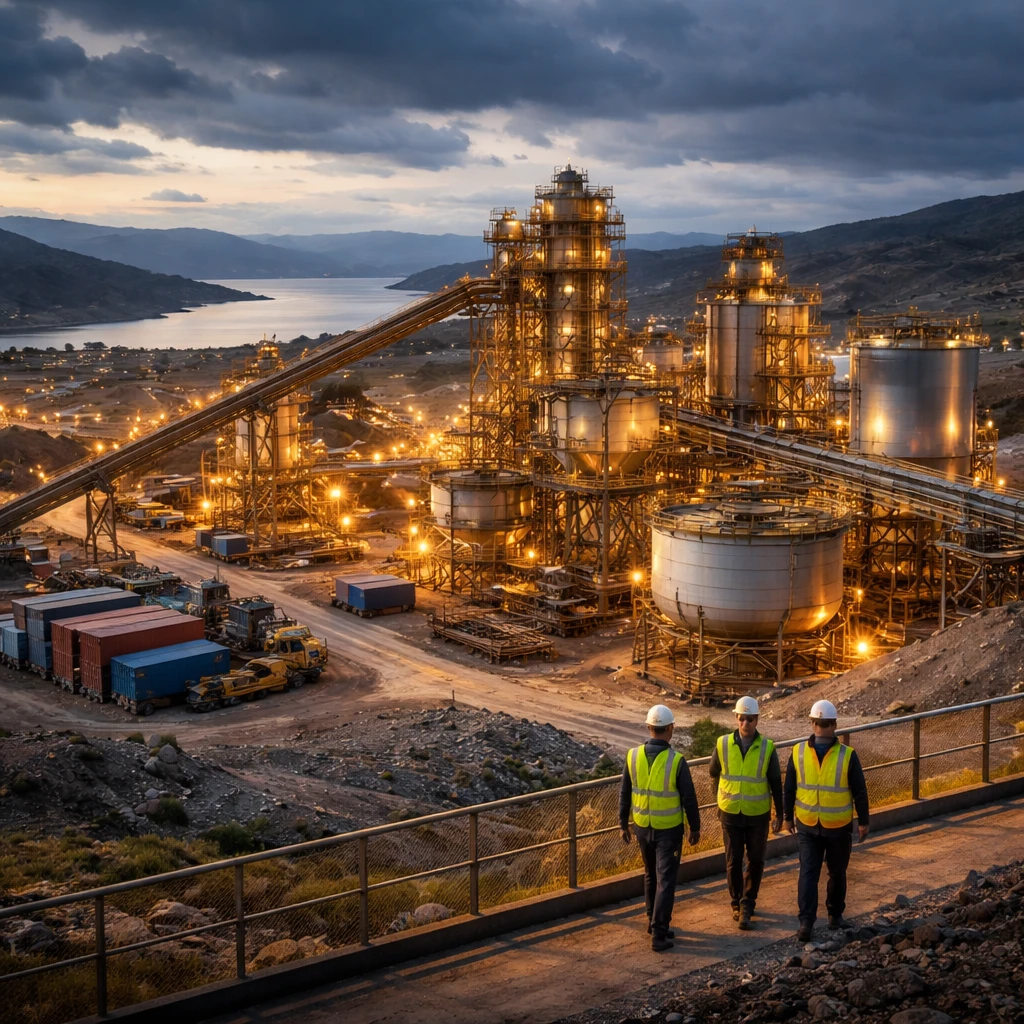
Kenyans may soon see more of the value from their mineral resources captured domestically, President William Ruto said, as Nairobi moves toward finalizing an agreement with the United States to allow processing of critical minerals within Kenya.
The prospective arrangement would include rare earths and other strategic minerals, the president said, adding that the deal is in development and could be concluded in the near term. "We have agreed that the minerals will be processed in Kenya," he said following multilateral discussions.
Ruto made his remarks after participating in talks with G7 leaders, where he met with a range of counterparts, including the U.S. President. He attended the summit on the shores of Lake Geneva representing partner countries and used the platform to press for what he described as a broader reset in relations between African states and Western nations.
According to the president's statements, the emerging agreement with the United States is intended to enable downstream activities in Kenya rather than exporting unprocessed ores and concentrates abroad. The move mirrors a wider regional trend in which several African countries have sought in recent years to develop domestic processing capabilities for strategic and rare earth minerals.
Proponents of local processing argue the shift helps retain more economic value on the continent instead of sending raw materials overseas for refinement and manufacturing. The president framed the potential pact as part of Kenya's effort to secure greater benefits from its natural resources while engaging with international partners.
The negotiations and the president's public comments indicate that the issue of mineral processing is a diplomatic as well as an economic priority in the discussions between Kenyan leadership and global counterparts. The exact terms of the arrangement remain under development, and the president indicated that completion could occur soon.
For now, the announcement underscores both Kenya's intent to expand its role in the minerals value chain and the ongoing interest from international partners in structuring agreements that would see processing carried out locally.
Key takeaways
- Kenya is close to finalizing an agreement with the United States to process critical minerals domestically, including rare earths and other strategic minerals.
- The president emphasized that minerals agreed under the deal will be processed in Kenya, following discussions with G7 leaders and the U.S. President at a recent summit.
- The development aligns with a broader trend across Africa toward establishing local processing to retain more economic value from mineral resources.
- The agreement is described as still in development, so completion timing and final terms remain uncertain - this poses execution risk for sectors tied to mining and processing.
- Diplomatic negotiations and the need to align multiple partners could affect the pace and scope of implementation - this could impact infrastructure, mining, and manufacturing planning.