
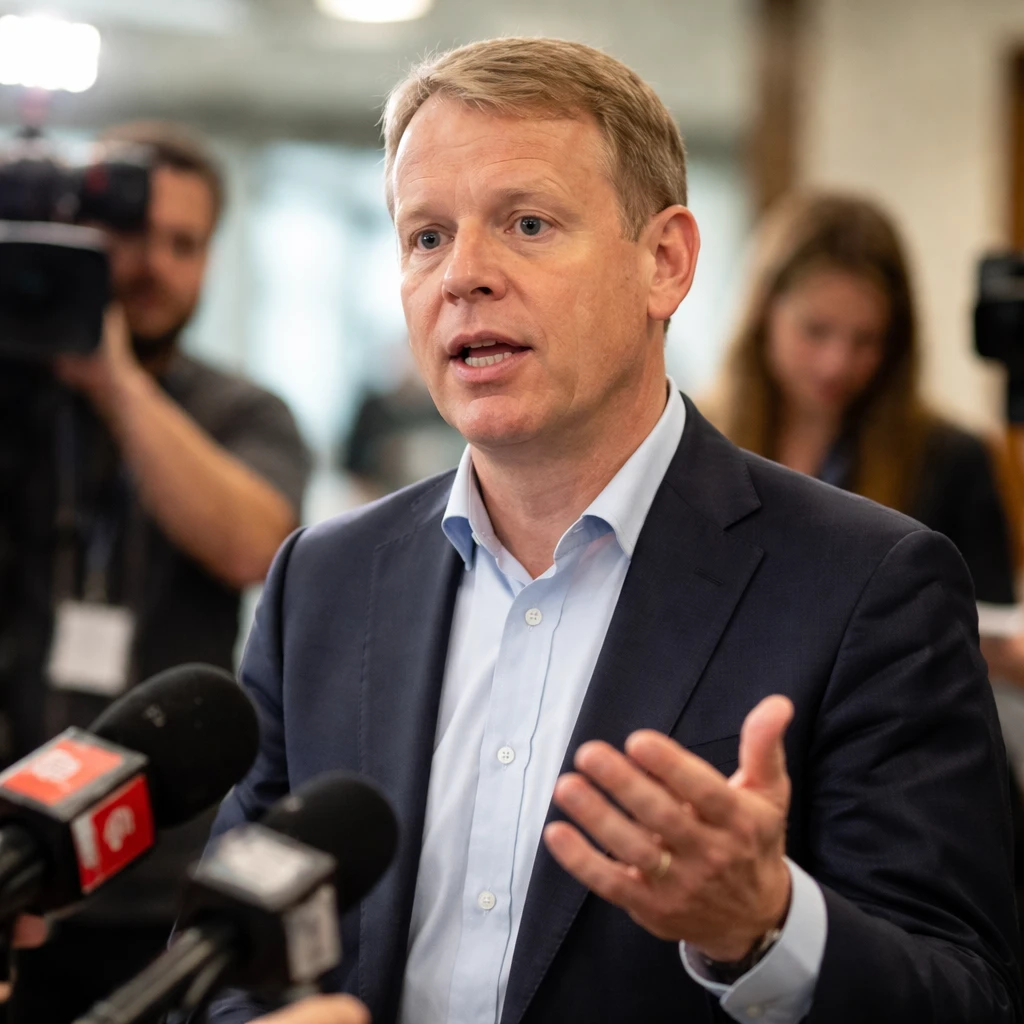
WELLINGTON, Sept 9 - Chris Hipkins, who became Labour leader and prime minister following Jacinda Ardern’s unexpected resignation months before the 2023 election, acknowledged that his party was slow to recognise the depth of cost-of-living strain families faced after prolonged COVID-19 disruptions. Now 48, Hipkins is attempting to win back urban, middle-income voters he says are critical in determining the outcome of the November 7 election.
In an interview, Hipkins said the pandemic era had consumed policymakers and caused Labour to delay a return to broader governing priorities. "COVID had been all-consuming," he said. "We were too slow to revert back to non-COVID-related good governing."
With living costs cited by voters as a central concern in the run-up to what is expected to be a close election, Labour has rolled out measures designed to deliver direct relief. Those include caps on public transport fares - NZ$20 per week in larger urban centres and NZ$10 in smaller towns - as well as offering three free doctors' visits per year and a program to encourage adoption of solar power.
Hipkins framed these measures as immediate cushions against the current squeeze, but said Labour’s longer-term response is focused on rebuilding urban economies. His plan places emphasis on fostering innovation, technology, renewable energy and research and development as sources of skilled employment that can revive city-based economic activity alongside support for rural exporters.
"The tech revolution that we’re in at the moment has the opportunity to be a source of massive competitive advantage for New Zealand," Hipkins said. "Renewable energy has the potential to be a source of competitive advantage."
Labour’s platform also proposes a New Zealand Future Fund to back high-growth firms, innovation projects and infrastructure. Complementary measures include support for apprentices and small businesses aimed at bolstering skills and enterprise.
On fiscal policy, Labour’s plan targets an operating surplus by 2029/30. It proposes holding spending and revenue at roughly 33% of gross domestic product once a proposed capital gains tax is enacted. The current government has criticised Labour for overspending during its prior term, an argument that has driven recent cost-saving initiatives.
Hipkins disputed the criticism, arguing that had his government remained in office it would have achieved a surplus sooner than the present administration anticipates. He also defended selective public spending, noting that governments sometimes need to spend to save, citing increased investment in preventative healthcare as one such example.
Coalition arithmetic remains central to post-election calculations. Polling indicates neither National nor Labour is likely to secure enough support to govern alone, necessitating negotiations with smaller parties. Since 2023, New Zealand has been led by a three-party coalition composed of the centre-right National Party, populist New Zealand First and the right-wing ACT Party.
Addressing prospective coalition talks, Hipkins asserted his leadership ambitions plainly. "Prime minister will be me," he said, and named Barbara Edmonds as his pick for finance minister. He emphasised that any negotiations or compromises required to form a government should have public backing, arguing that smaller parties should not be able to impose unpopular changes by holding the country to ransom. He also noted New Zealand’s track record with minority governments.
As the campaign continues, Hipkins is pitching immediate relief alongside structural economic initiatives aimed at generating skilled jobs and resilience in urban centres. How voters - particularly those in middle-income urban constituencies - respond will shape the formation and priorities of the next government.