
Overview
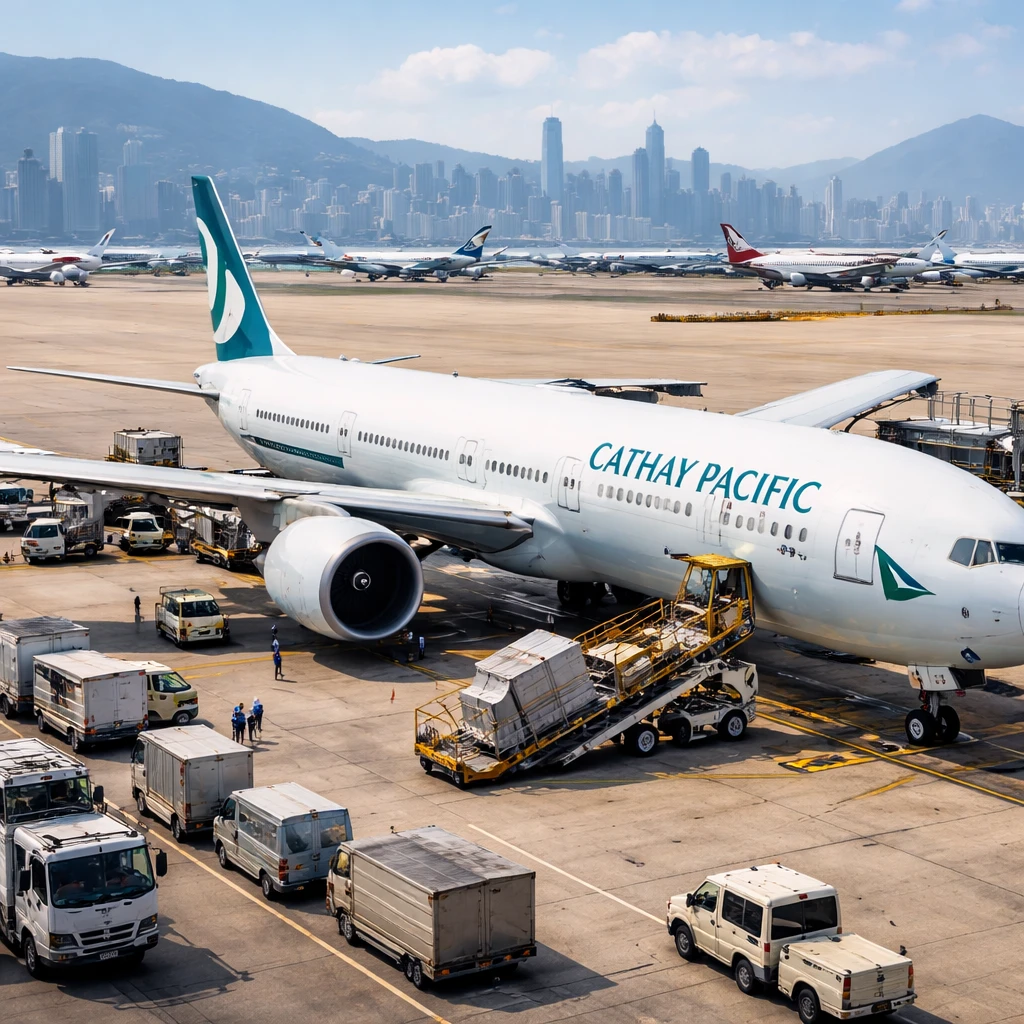
Citi has identified Cathay Pacific as its top pick among Asia-Pacific airlines, highlighting the carrier's positioning to benefit from an expected move toward international and long-haul travel. The bank's analysis centers on trends that favor widebody, premium-oriented carriers as international demand strengthens relative to supply.
Demand and pricing outlook
Citi projects that long-haul carriers will see stronger pricing power in the second half of 2026 and into 2027. The bank's view is that international travel demand will grow faster than the available widebody capacity over that period, which should support yields and profitability for airlines with meaningful exposure to premium international traffic.
Why Cathay Pacific
The bank highlights several specific advantages for Cathay Pacific. First, Cathay is notably exposed to premium international travel, a market segment Citi expects to remain resilient and thus to underpin stronger yields for carriers serving that demand. Second, Cathay stands to capture incremental connecting traffic as some long-haul flows shift - Citi expects spillover from the Middle East to drive additional long-haul connecting passengers toward alternative hubs.
Third, Cathay benefits from its Hong Kong hub, which Citi says offers a strategic position to link international traffic with China-related flows. Citi underscores the mutual shareholdings between the carriers as part of the connectivity picture: Air China holds a 29.97% stake in Cathay Pacific, while Cathay owns 12.85% of Air China. Citi interprets these cross-holdings as facilitating cross-border joint-venture traffic and reinforcing Hong Kong's role as a connection point.
Contrast with domestically focused Chinese carriers
Citi contrasts Cathay's international orientation with the situation facing airlines heavily dependent on China's domestic market. The bank considers the domestic market to be oversupplied, noting expansion in narrowbody fleets and the prospect of rising COMAC deliveries beginning in 2027. Those supply dynamics, Citi argues, will constrain the ability of domestic carriers to raise fares.
Air China and China Southern are cited as examples: more than 70% of their passenger revenue is generated domestically, leaving them more exposed to weak domestic pricing, in Citi's view. For that reason, Citi prefers Cathay in a pair trade against these domestically focused carriers.
Valuation and returns
On valuation metrics, Citi's analysis shows Cathay trading at about 10.3 times estimated 2026 earnings and about 8.8 times estimated 2027 earnings. Price-to-book ratios are shown at approximately 1.4 times and 1.3 times, respectively. Citi's forecasts indicate a return on equity of 16% for both 2026 and 2027.
Context and implications
Citi's recommendation centers on structural demand differences between international long-haul markets and China's domestic market. The bank's view implies that airlines with a high mix of premium international traffic and strong hub connectivity are likely to enjoy better earnings leverage if international demand continues to outstrip available widebody capacity in the period Citi outlines.