
CAIRO, July 6 - Hamas said on Monday it had disbanded the de facto government structure that has administered Gaza's civilian ministries for more than ten years and indicated it was prepared to transfer oversight to a U.S.-backed group of Palestinian technocrats. The move forms part of the post-war arrangements set out in a plan promoted by U.S. President Donald Trump following a fragile ceasefire with Israel in October.
At a press briefing in Gaza City, Ismail Al-Thawabta, director of Hamas's government media office, announced that the head of the "Government Emergency Committee" oversight body had stepped down and that the committee itself had been dissolved. He framed the decision as "a demonstration of the seriousness of these measures, in implementation of the agreed arrangements, and to facilitate the administrative transition process." The statement reiterated that the ministries and the personnel Hamas appointed to them would remain in place, and that Hamas would continue to oversee security and policing where it retains control.
The Trump-backed plan envisages a handover of governance oversight to a National Committee for the Administration of Gaza - a 15-member body of Palestinian technocrats supported by the United States. Ali Shaath, who is named as the head of that National Committee, posted that the committee was ready to assume responsibility "as soon as the necessary resources and enabling conditions for its work are in place." Shaath wrote that "the fundamental requirements for the commission's success are the existence of one authority and one law under a clear reference framework, and one weapon subject to that authority."
The Trump-appointed Board of Peace, formed to monitor implementation of the plan, acknowledged Hamas's announcement but emphasized it would judge progress by deeds rather than statements. The board said it "noted Hamas's move" and added that "ultimately, our assessment will be guided by actions, not promises, to meet the critical needs of the people of Gaza."
There was no immediate reaction from Israel to Hamas's declaration. Hamas has accused Israel of repeated ceasefire violations and of failing to deliver on other elements of the U.S.-backed plan, which calls for Israeli forces to withdraw from Gaza as Hamas lays down its weapons.
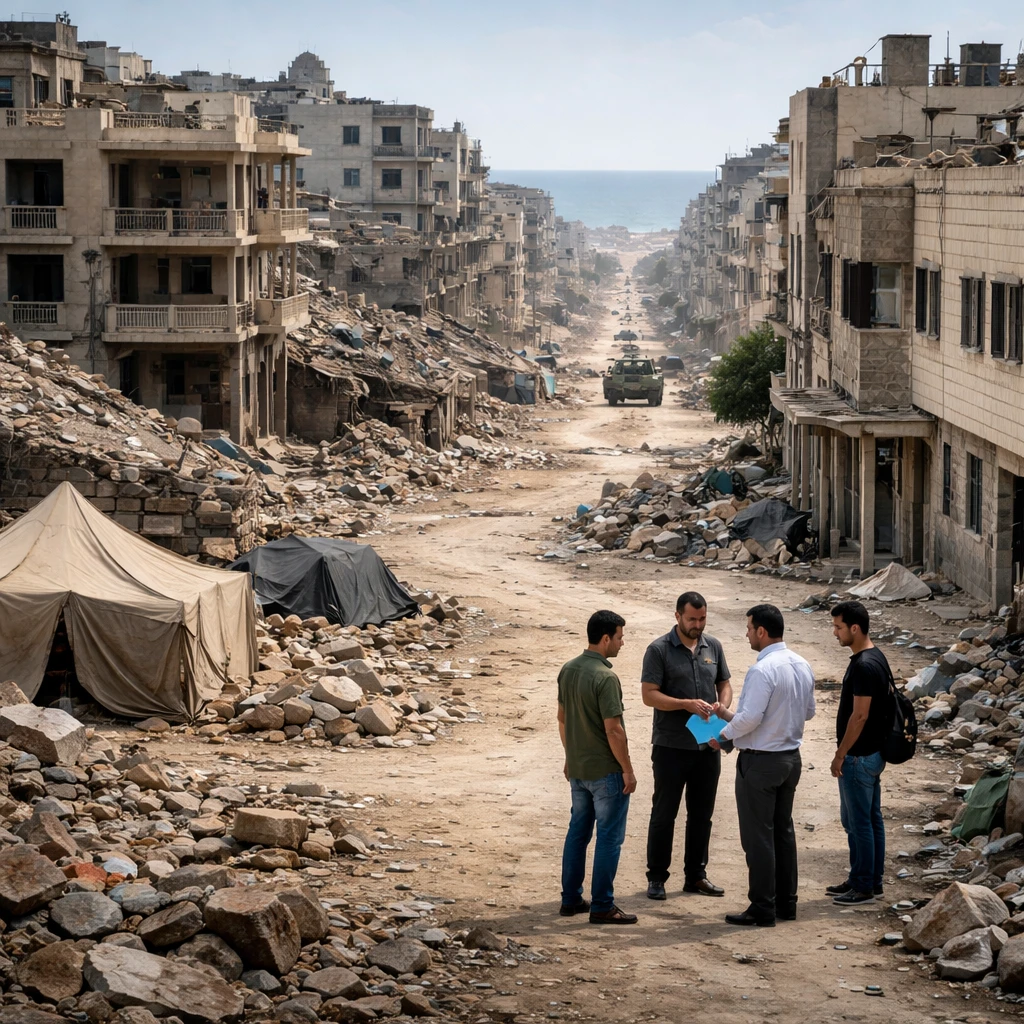
The densely populated coastal enclave remains devastated more than two-and-a-half years after the most recent major escalation of hostilities, which was triggered by Hamas's October 7, 2023 raids on Israel. The latest conflict and subsequent operations displaced nearly the entire population of about two million people; many now live in tents or damaged structures in a narrow strip of territory still governed by Hamas.
Hamas has maintained that it will not disarm until Israel ceases attacks in Gaza. Medics in the enclave reported that the most recent Israeli strikes killed five people on Monday. Gaza health officials said an airstrike hit an apartment in the Tel Al-Hawa neighbourhood of Gaza City, killing a couple. Two other strikes - one on a tent sheltering displaced people and another on a vehicle in Khan Younis in the south - killed three additional people and wounded at least 20 others, medics said. The Israeli military did not immediately comment on those incidents.
Israeli forces currently control more than 60% of Gaza, conducting patrols that the Israeli prime minister, Benjamin Netanyahu, describes as a buffer zone intended to deter militant activity. Netanyahu has stated that Israel will not withdraw from the territory.
The measures announced by Hamas are presented as part of an administrative transition to the National Committee for the Administration of Gaza, but the committee itself has made clear it requires both resources and a stable operating environment before it can take over. Shaath's statement underscored that a clear centralized authority, a single legal framework, and control of weapons under that authority are preconditions for the committee's work.
Observers monitoring the post-ceasefire arrangements will focus on whether the dissolution of the Government Emergency Committee leads to tangible shifts on the ground, especially given the Board of Peace's warning that actions will determine progress. For now, key elements remain unresolved: the disposition of arms, the presence of Israeli forces in much of Gaza, and the availability of the resources and secure conditions the National Committee says it needs to operate.
Summary
- Hamas has dissolved the long-standing oversight committee for Gaza's ministries and signalled willingness to cede administrative oversight to a U.S.-backed technocratic committee.
- Hamas said ministries and appointed staff will stay in place and that it will continue to oversee security in areas under its control.
- The Trump-appointed Board of Peace said it will evaluate developments by actions, not promises, while Israel had no immediate comment and ongoing strikes have continued to cause casualties.
Key points
- Administrative change: Hamas says it has dissolved the Government Emergency Committee to enable a transition to a U.S.-backed National Committee for the Administration of Gaza.
- Security and governance: While administrative oversight is being offered to technocrats, Hamas intends to retain responsibility for security and policing in areas it governs.
- Humanitarian and reconstruction implications: Continued hostilities and displacement mean urgent needs remain for the civilian population; implementation of the committee's role depends on resources and secure conditions.
Risks and uncertainties
- Implementation gap - The Board of Peace cautioned it will judge progress by actions rather than statements; without concrete follow-through, the announced dissolution may not translate into effective administrative change. (Impacted sectors: humanitarian assistance, reconstruction)
- Security stalemate - Hamas's refusal to disarm until attacks stop, and Israel's continued control of large parts of Gaza, create uncertainty over who will hold effective authority and whether a single, enforceable legal framework can be established. (Impacted sectors: security, reconstruction)
- Resource and operational readiness - The National Committee has said it needs necessary resources and enabling conditions to act; absence of those resources would limit its ability to administer services. (Impacted sectors: humanitarian assistance, local governance)