
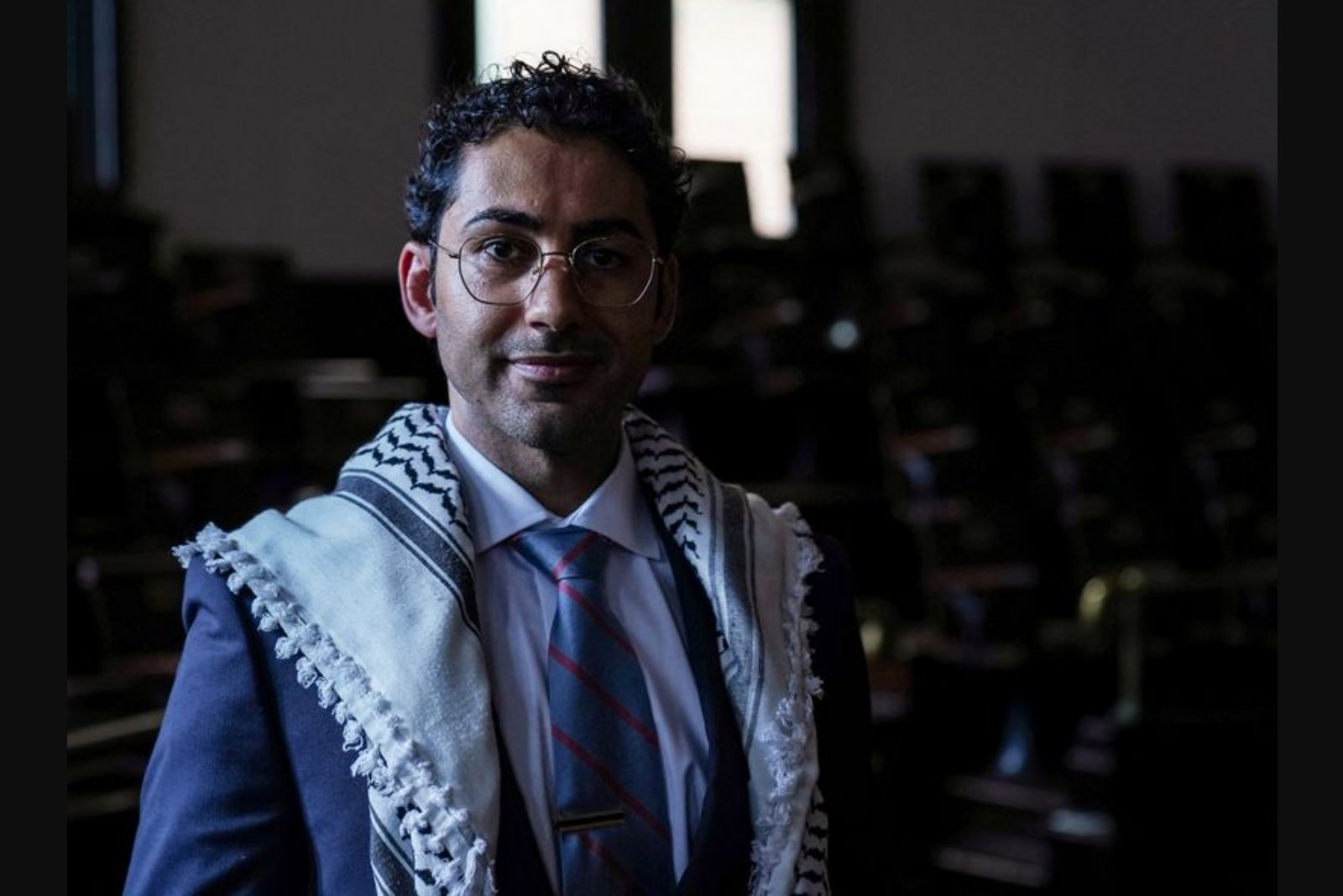
The U.S. Board of Immigration Appeals has reopened deportation proceedings against Mohsen Mahdawi, according to a court filing submitted by his lawyers.
In February, a U.S. immigration judge denied the Trump administration's attempt to remove Mahdawi, a Columbia University student who drew scrutiny after taking part in pro-Palestinian demonstrations. That judge, Nina Froes of Chelmsford, Massachusetts, who had barred the administration's effort to deport him, was dismissed last month. The Board of Immigration Appeals, which operates within the Department of Justice's Executive Office for Immigration Review, has now overturned Froes' decision and reinstated the proceedings.
Mahdawi, who was born and raised in a refugee camp in the Israeli-occupied West Bank, has been a focal point in the broader debate over campus activism and U.S. immigration enforcement. His lawyers said in the court filing that the government is pursuing renewed deportation action following the appeals board ruling.
His case has drawn contrasting characterizations from the administration and its opponents. President Donald Trump and administration officials assert that activists such as Mahdawi are antisemitic, support extremism and pose a threat to U.S. foreign policy. By contrast, activists and some Jewish organizations argue that the government is conflating political criticism of Israel - including its assault on Gaza and its occupation of Palestinian territories - with antisemitism, and equating advocacy for Palestinian rights with support for extremist causes.
"The government continues to weaponize the immigration system to silence dissent," Mahdawi said in a statement distributed by his legal team on Wednesday.
There are multiple elements to Mahdawi's recent interactions with immigration authorities. The filing notes that he was arrested last year after participating in pro-Palestinian protests. He was detained again in April 2025 when he arrived for an interview related to his U.S. citizenship petition. Following that April detention, he spent two weeks in custody before a judge ordered his release; he was not charged with a crime. The American Civil Liberties Union, which represented Mahdawi, has argued that the government cannot deport him at present because the circumstances of his arrest remain under challenge in federal court.
The administration has pursued a broader policy approach aimed at curbing pro-Palestinian campus activism. Measures referenced in the filing include attempts to deport foreign protesters, threats to withhold funding from universities where protests took place, and scrutiny of immigrants' online speech. Rights experts have raised concerns that these actions pose risks to free speech, due process and academic freedom.
Campus activism against Israel's war in Gaza emerged at U.S. colleges beginning in late 2023 and reached peak intensity in 2024. While overall protest activity has diminished since that peak, the filing notes that sporadic incidents continue. Recent episodes cited include a University of Michigan commencement moment in which a professor praised pro-Palestinian protesters and the university subsequently issued an apology, and Rutgers University's decision to withdraw an invitation to pro-Palestinian business leader Rami Elghandour for an upcoming graduation address.
Summary
The Board of Immigration Appeals has reinstated deportation proceedings against Mohsen Mahdawi by overturning an immigration judge's February ruling that had blocked the Trump administration's deportation effort. Mahdawi's arrest and detention have been the subject of ongoing legal challenges, and civil liberties groups say federal litigation over his arrest continues. The case sits against a backdrop of heightened scrutiny of pro-Palestinian campus activism and administrative measures aimed at protesters.