
Stock Markets July 7, 2026 01:03 AM

White House to Tell Ankara It Will Reopen Access to F-35 Program, NYT Says

President expected to notify Recep Tayyip Erdogan of plan to permit Turkey's return to F-35 program amid lingering congressional and legal obstacles

By Nina Shah
Share
Twitter Reddit Facebook LinkedIn

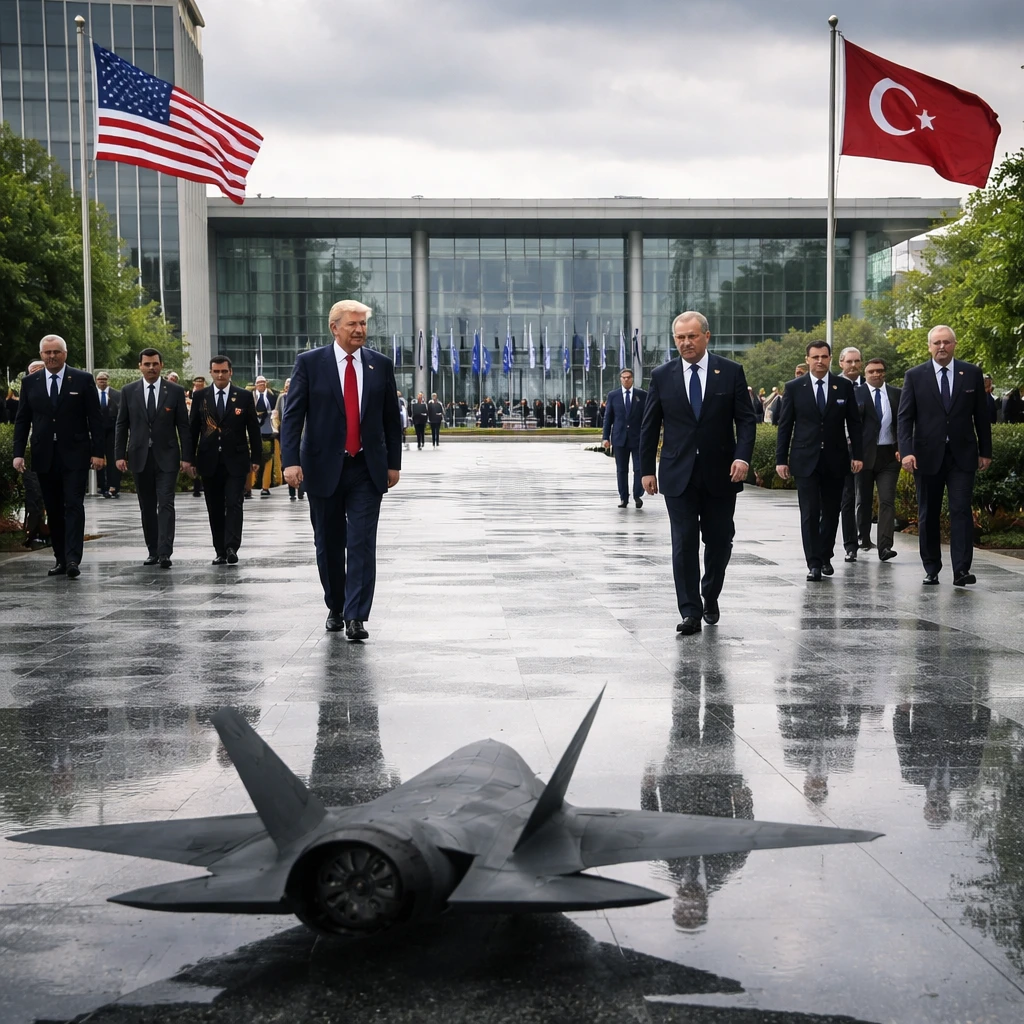
U.S. President Donald Trump plans to inform Turkish President Recep Tayyip Erdogan that Turkey will be allowed back into the F-35 stealth fighter program, according to a New York Times report citing four senior administration officials. The announcement comes as Trump travels to Ankara for a NATO summit and follows long-running tensions sparked by Turkey's 2019 purchase of Russia's S-400 air defense system.

White House to Tell Ankara It Will Reopen Access to F-35 Program, NYT Says
Summarize with
ChatGPT Perplexity Claude Grok Gemini

Key Points

  • President Trump plans to tell Turkish President Erdogan he will allow Turkey back into the F-35 program, according to four senior administration officials.
  • Officials disagree within the administration on how to navigate congressional and legal barriers; the leaders may exchange letters on the subject.
  • Sectors impacted include defense and aerospace, as well as the legislative oversight mechanisms that shape international arms sales and program participation.

President Donald Trump intends to tell Turkish President Recep Tayyip Erdogan that the United States will permit Turkey to rejoin the F-35 stealth fighter program, the New York Times reported, citing four senior administration officials. The discussion is set to take place as Mr. Trump travels to Ankara to attend a NATO summit that begins Tuesday evening, where a meeting between the two leaders is scheduled.

According to the officials cited, there is no consensus inside the administration about the mechanism Mr. Trump will use to overcome congressional and legal impediments that currently prevent Turkey from receiving F-35 aircraft. The sources said the leaders may address the issue via exchanged letters as they seek a path forward.

The U.S. removed Turkey from the F-35 program and imposed sanctions after Ankara purchased the Russian S-400 air defense system in 2019. That acquisition weakened ties between Washington and Ankara and eroded support among U.S. lawmakers for lifting restrictions on Turkey's participation in the F-35 program.

Congress has enacted legislation that blocks F-35 sales to Turkey while the country retains the S-400 systems. Lawmakers have pointed to security concerns, arguing the Russian-made system could present risks to U.S.-built combat aircraft and related sensitive technologies.

While the dispute over the S-400s and F-35 access has been a persistent source of friction between the United States and Turkey, officials say overall bilateral ties have seen some improvement during Mr. Trump’s presidency. The precise legal and legislative avenues for restoring Turkey’s program access remained contested within the administration, according to the report.

Separately, the administration last month notified Congress of plans to sell Turkey dozens of jet engines valued at more than $700 million, the report said. That move followed other, earlier efforts to navigate the bilateral relationship through selective defense-related transactions.

The coming exchanges between the two presidents - and the internal debate over how to address congressional and statutory barriers - underscore the intersection of foreign policy, national security concerns, and congressional oversight in decisions about defense program participation and arms sales.

Risks

  • Congressional and statutory restrictions continue to block F-35 sales to Turkey while it retains the Russian S-400 systems - a legal and political obstacle to implementation (affects defense and aerospace sectors).
  • Security concerns cited by lawmakers - that the S-400 could compromise U.S.-made combat aircraft - remain a stated risk that underpins the restrictions (affects military aircraft programs and national security oversight).
  • Internal disagreement within the U.S. administration over how to proceed creates uncertainty about the timing and feasibility of restoring Turkey’s F-35 access (affects defense contractors and bilateral defense cooperation).

More from Stock Markets

Taiwan market edges up as chemicals, textile and transport sectors lead gains Jul 7, 2026 Saipem Wins Roughly $2 Billion Contract for Indonesian Offshore FPSO Jul 7, 2026 Morgan Stanley Raises Kion Rating, Citing Automation Momentum and Cost Measures Jul 7, 2026 SK Hynix to Repatriate Portion of ADR Proceeds to South Korea Around July 15 Jul 7, 2026 WiseTech founder Richard White relinquishes chair role as company tightens succession focus Jul 7, 2026