
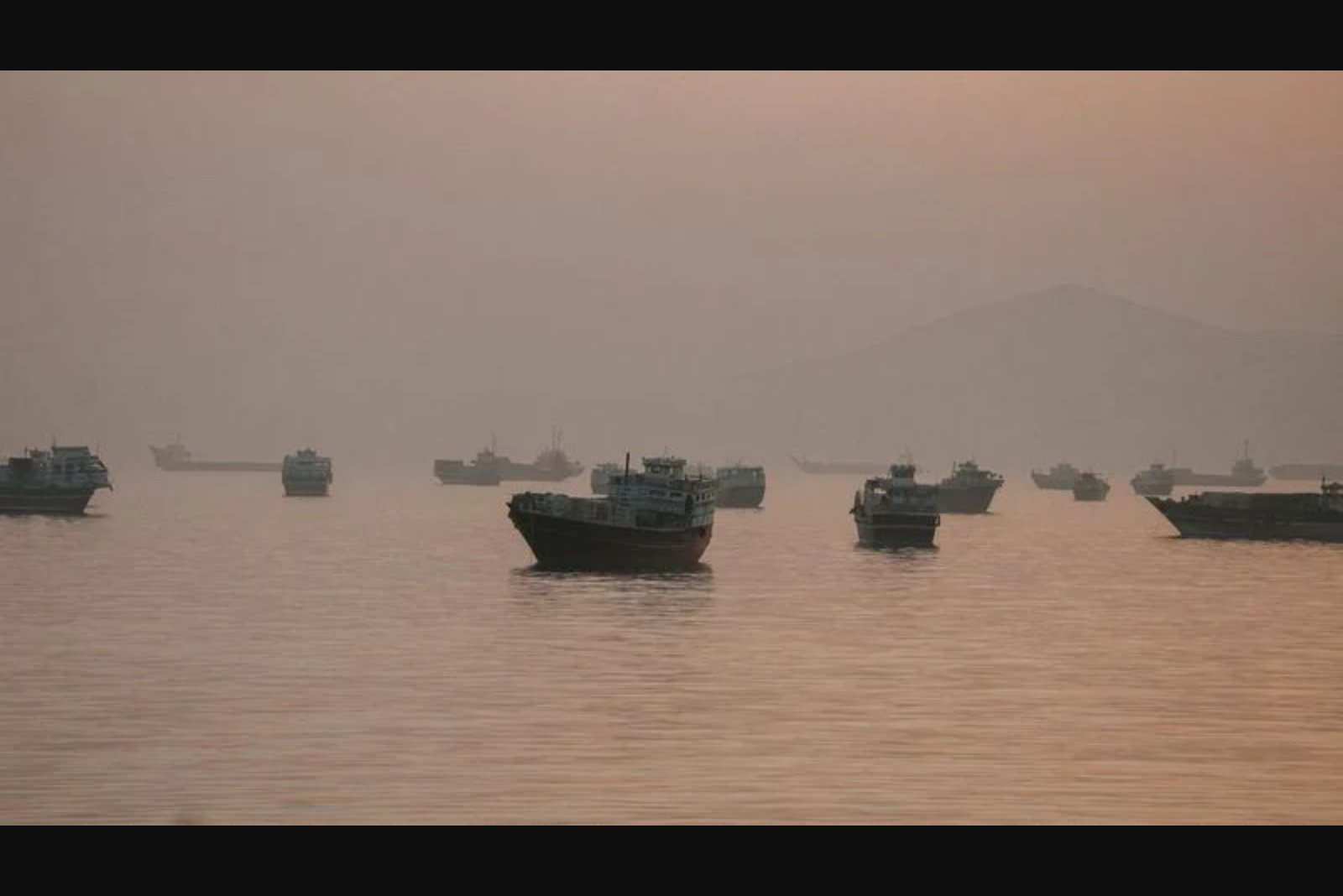
Iran’s Revolutionary Guards fired at least two missiles at commercial ships passing through the Strait of Hormuz on Monday night, according to an Axios report that cited two U.S. officials. The strikes reportedly inflicted significant damage on two merchant vessels but did not cause casualties, a U.S. official told Axios.
U.S. Central Command did not immediately provide comment when contacted. Separately, the United Kingdom Maritime Trade Operations agency, UKMTO, said early on Tuesday that a tanker had been struck on its port side by an unknown projectile while sailing southbound roughly 8 nautical miles (15 km) east of Oman’s Limah. The UKMTO said the impact ignited a fire aboard the ship, but that there were no reported casualties and no environmental damage had been observed.
Reports place one of the vessels under attack as the liquefied natural gas tanker Al Rekayyat, which is owned and managed by Nakilat, the shipping arm of Qatar’s LNG industry, according to the Wall Street Journal. The WSJ said the ship was hit on the port side at the top of the engine room while positioned at the mouth of the strait in the Gulf of Oman.
The WSJ also quoted a recording in which crew described conditions after the strike: "Engine room fire and full of smoke. Unable to assess further damage. All crew are safe and mustered on the starboard side."
The incidents come after indirect talks between the United States and Iran concluded last week without any public sign of progress toward a durable settlement. Those discussions followed a 60-day ceasefire intended to create diplomatic space after U.S. and Israeli strikes that precipitated the conflict.
President Donald Trump said on Monday that the United States would either reach a deal with Iran or "finish the job," reiterating a threat of military action as Iran signaled defiance in the aftermath of the funeral for former Supreme Leader Ayatollah Ali Khamenei.
Additionally, the Wall Street Journal reported that Iran’s Revolutionary Guard warned ships by maritime radio over the weekend, saying, "Our missiles and drones are ready to fire at you," quoting from a recording obtained by the newspaper.
Investors have been monitoring U.S.-Iran diplomatic exchanges closely for any indication about the security of shipping through the Strait of Hormuz and for signs of recovery in Gulf oil exports. The recent attacks add to uncertainty for shipping operators and energy markets that track transit safety in the region.
Key points
- At least two missiles were fired at commercial vessels in the Strait of Hormuz, damaging two ships but causing no reported casualties.
- A tanker was struck on the port side about 8 nautical miles east of Oman’s Limah and experienced an engine-room fire, according to UKMTO.
- These events follow stalled indirect U.S.-Iran talks after a 60-day ceasefire and come amid renewed public threats from Iran and strong rhetoric from the U.S. president - sectors affected include maritime shipping and energy.
Risks and uncertainties
- Security risk to commercial shipping in the Strait of Hormuz, which may affect freight operators and insurers in the maritime sector.
- Potential disruption to oil exports or market confidence, as investors watch diplomatic talks and recovery in Gulf oil shipments.
- Escalation risk tied to unresolved diplomatic talks and public threats from both sides, with implications for regional stability and transportation routes.