
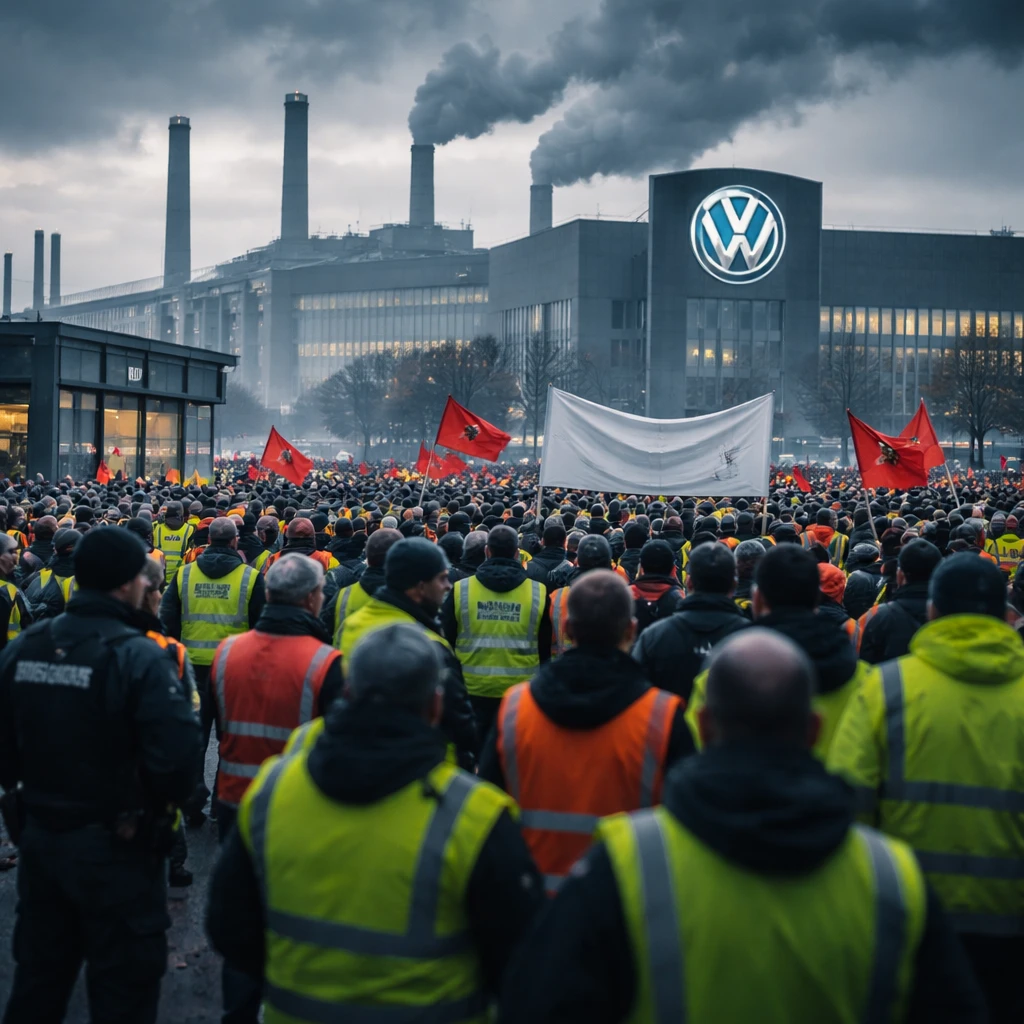
Volkswagen AG is contending with mounting pushback from organized labor as it explores sweeping workforce reductions and possible factory closures within Germany. Tensions rose sharply during a supervisory board meeting on Thursday, where union leaders made clear their opposition to proposed cuts.
IG Metall chairwoman Christiane Benner delivered a pointed message at the meeting, saying in a statement:
"This is a clear signal to the management board: Not with us," and adding, "The employees have made their contribution."
Company executives, led by Chief Executive Officer Oliver Blume, have been pushing for actions aimed at lowering costs and improving competitiveness amid falling profits in China, Volkswagen's largest market. Management has emphasized the need for steps to strengthen operations in Germany, where energy and labor expenses remain comparatively high.
In response to concerns about the group's trajectory, Volkswagen issued a statement saying:
"Management and supervisory board share the concerns about the future of the VW Group," and that management has developed an extensive future plan "with the goal of making VW and all its brands and units faster, more robust and more competitive."
IG Metall mobilized protests on Thursday at more than a dozen locations across Germany, including Stuttgart and Ingolstadt, cities that host Porsche and Audi operations. Those brands are also under pressure from weaker demand in China and the impact of trade tariffs, according to the reporting reflected in company commentary and union statements.
Media reports have circulated details of internal planning documents indicating that Volkswagen could close four factories between 2031 and 2034, a list that reportedly includes Audi's Neckarsulm plant. Additional reporting has suggested the company might increase planned job reductions to 100,000 and close four German plants, developments that have fueled union resistance.
Labor leaders have criticized company management for decisions made during the industry's pivot toward software-driven and electric vehicles, arguments that surfaced repeatedly during the supervisory board exchange.
Any factory shutdowns would require the approval of the supervisory board, where worker representatives occupy half of the seats. Two further seats are held by the state of Lower Saxony, which typically aligns with labor interests. The German state also retains a 20% stake in Volkswagen and certain veto rights.
Lower Saxony hosts several major Volkswagen facilities, including the Wolfsburg headquarters, which employs approximately 70,000 people. Other supervisory board seats are filled by representatives of the Porsche and Piech family and the Qatar Investment Authority.
The dispute underscores the institutional checks embedded in Volkswagen's governance and highlights the friction that can arise when management seeks rapid structural change in high-cost manufacturing environments.