
Stock Markets July 9, 2026 07:56 AM

Germany to Acquire U.S. Tomahawk Missiles and Host Them Domestically

Chancellor says procurement closes a strategic gap while Europe develops its own long-range systems

By Hana Yamamoto
Share
Twitter Reddit Facebook LinkedIn

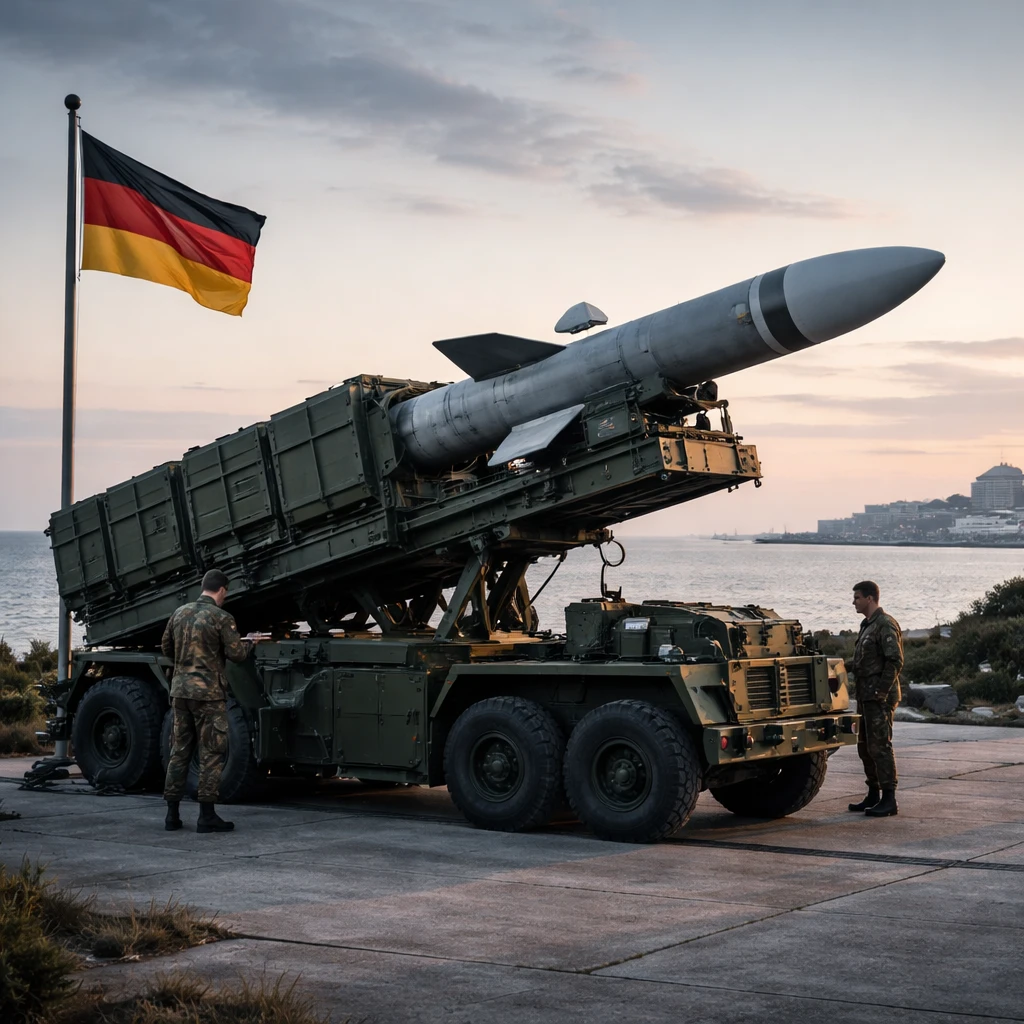
Chancellor Friedrich Merz announced that Germany will buy Tomahawk cruise missiles from the United States and station them on German territory. The agreement, reportedly formalized in a letter of intent signed during meetings on the sidelines of a NATO summit in Ankara, includes U.S. approval expected in August for Tomahawks and ground-based Typhon launchers. Specific quantities remain classified. The move replaces an earlier plan for U.S. deployments and is presented as an interim deterrent while European long-range capabilities are developed.

Germany to Acquire U.S. Tomahawk Missiles and Host Them Domestically
Summarize with
ChatGPT Perplexity Claude Grok Gemini

Key Points

  • Germany will buy U.S. Tomahawk cruise missiles and station them on German territory, according to Chancellor Friedrich Merz.
  • Washington has reportedly committed to approving the sale in August via a letter of intent that includes ground-based Typhon launchers; the number of systems to be procured is classified.
  • The procurement replaces a plan for a U.S. long-range battalion deployment and serves as an interim deterrent while Europe develops its own long-range strike systems; defence and defence-manufacturing sectors, as well as government procurement markets, are directly affected.

BERLIN, July 9 - Germany will procure Tomahawk cruise missiles from the United States and place them on German soil, Chancellor Friedrich Merz told lawmakers on Thursday, marking a shift from hosting U.S. long-range deployments to developing its own stationed capability.

Merz said he had finalised the arrangement with U.S. officials during meetings on the margins of the NATO summit in Ankara, and added that the discussions on Tuesday and Wednesday had surpassed his expectations. He framed the procurement as a necessary step to fill an urgent defence gap while Europe works to create indigenous long-range systems.

"We are closing a critical strategic gap in our defence, while simultaneously working to develop our own European systems and station them in Europe," he said.

According to sources within the German government, Washington agreed to give formal approval in August for Germany to buy Tomahawk missiles together with the associated ground-based Typhon launchers, under a letter of intent that was signed on Tuesday. The exact number of missiles and launch platforms Germany intends to acquire is being kept secret for security reasons.

Observers note the purchase aligns with U.S. President Donald Trump’s stance encouraging European partners to fund their own defence needs, including by purchasing American weaponry. The availability of Tomahawks for Germany had been uncertain after the U.S. president announced in May plans to reduce American troop levels in Germany, a step that was interpreted as cancelling an earlier initiative under the previous administration to deploy a U.S. battalion equipped with long-range Tomahawk missiles to German territory.

That earlier deployment had been considered an interim measure - a powerful deterrent against Russia - to be used while European nations worked on producing comparable long-range weapons. Germany already manufactures its own Taurus cruise missile, but its range of roughly 500 km (311 miles) is significantly shorter, approximately three to five times less, than that of the Tomahawk.

Beyond the immediate procurement, questions remain about the timeline for approval and the classified scale of the acquisition. The government has emphasized that this acquisition is both a stopgap to strengthen deterrence and a complement to ongoing efforts to build European long-range strike capabilities.


Risks

  • The exact number of missiles and launchers is classified, creating uncertainty over the scale and market impact of the procurement - this affects defence contractors and suppliers.
  • The future of Tomahawk availability had been unclear following U.S. troop reductions announced in May, showing geopolitical and policy risk around international supply and deployments - this impacts defence logistics and transatlantic cooperation.
  • Relying on an interim foreign procurement while European systems are developed creates timing risk if domestic programs progress more slowly than expected - this influences European defence budgets and long-term procurement planning.

More from Stock Markets

Barry Callebaut Shares Drop After Q3 Update as Profit Outlook Remains Weak Jul 9, 2026 Aehr Test Systems Gains After Follow-On FOX-XP Order from Lead Silicon Photonics Client Jul 9, 2026 Simply Good Foods Jumps After Q3 Beat and Raised Full-Year Revenue Target Jul 9, 2026 Insider Moves: Big Buy at Mission Produce, Notable Purchases in Small-Cap Biotech, Heavy Sales at Rocket Lab and Dell Jul 9, 2026 Families Wait as Deep-Sea Search Continues for Crew of Pakistani Cargo Jet Jul 9, 2026