
Stock Markets November 28, 2026 02:17 PM

Volkswagen Challenges $1.2 Billion Indian Tax Demand, Points to Competitors' Import Practices

Automaker tells Indian court it is being singled out over component import tariffs while rivals follow similar processes

By Priya Menon
Share
Twitter Reddit Facebook LinkedIn

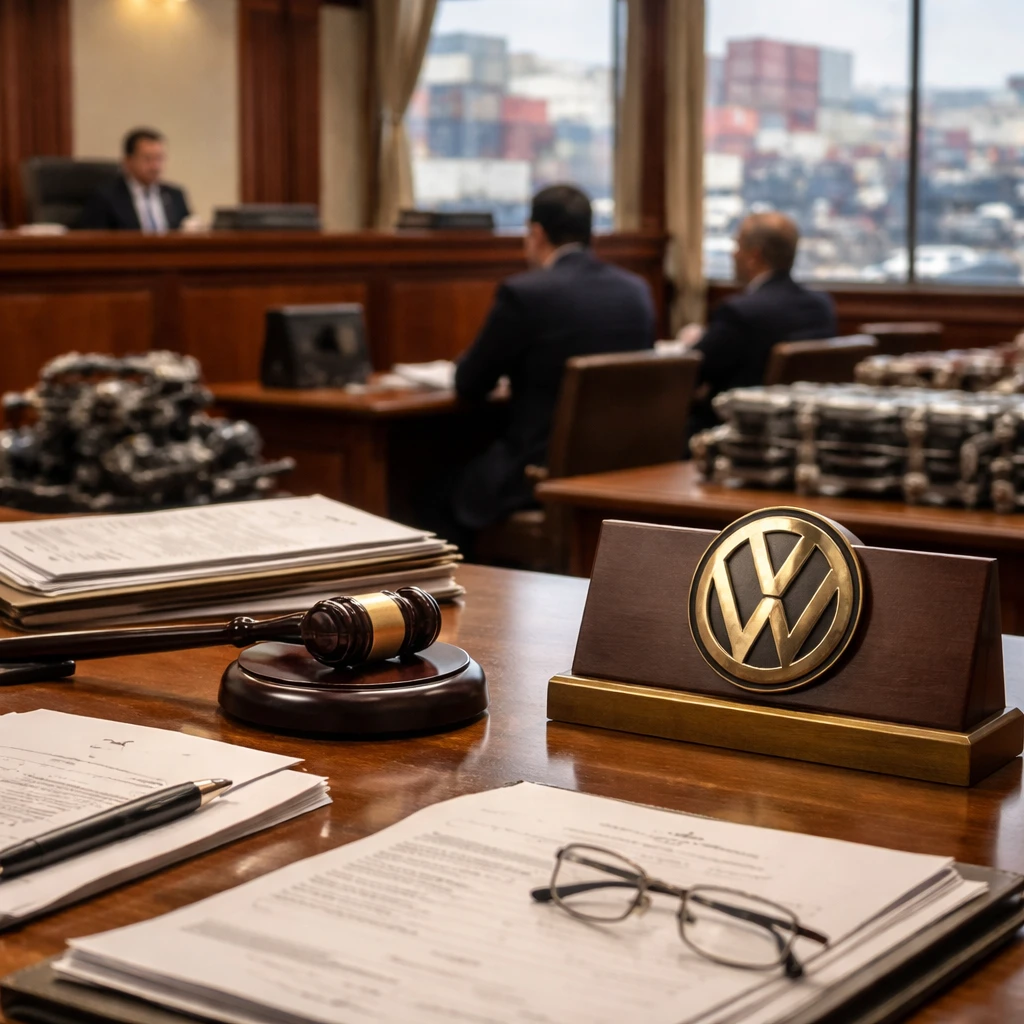
Volkswagen has asked an Indian court to dismiss a $1.2 billion tax demand, arguing that Indian tax authorities have unfairly targeted the German automaker for importing components at lower tariffs and assembling them into cars in India. In its filing, Volkswagen names Mercedes-Benz, BMW and Kia as companies that use comparable import methods and frames the claim as selective enforcement rather than uniform application of customs rules. The dispute, ongoing since 2025, concerns whether parts brought in at a 10% tariff and assembled locally were improperly used to avoid an approximately 30% duty on complete car kits.

Volkswagen Challenges $1.2 Billion Indian Tax Demand, Points to Competitors' Import Practices
Summarize with
ChatGPT Perplexity Claude Grok Gemini

Key Points

  • Volkswagen is contesting a $1.2 billion tax demand in Indian courts, asserting it has been singled out by tax authorities.
  • The company stated that Mercedes-Benz, BMW and Kia use comparable import approaches, framing the issue as selective enforcement rather than uneven application of customs rules.
  • The dispute hinges on whether parts imported at a 10% tariff and assembled in India were used to avoid an approximately 30% duty on complete car kits.

Volkswagen has moved to overturn a sizeable tax demand in India, telling a court this week that tax officials have singled the company out over its method of importing car parts, according to the firm's recent court filing. The automaker is contesting a $1.2 billion levy that Indian authorities issued on allegations Volkswagen intentionally brought in components at a lower tariff and then assembled those parts into finished cars inside India.

At the center of the dispute is an allegation by Indian tax officials that the company imported components subject to a 10% tariff and then assembled them domestically - a practice that, the authorities claim, enabled Volkswagen to evade a higher tariff of about 30% that applies to complete car kits. Volkswagen disputes that characterization and is pursuing its defense through the Indian court system.

In its latest submission to the court, Volkswagen identified Mercedes-Benz, BMW and Kia as other automakers that use the same import route. The filing frames the $1.2 billion demand as selective enforcement rather than the consistent application of Indian customs rules, arguing that competitors follow similar practices.

The amount in question represents a record-level tax claim against an automaker in India. Volkswagen has maintained a manufacturing presence in the country and continues to sell vehicles across multiple brands in its group.

Key elements in Volkswagen's argument, as set out in the court filing, emphasize parity of treatment: the company asserts that its import procedures are not distinct from those of named rivals, and therefore singling out Volkswagen is inappropriate under the customs framework cited by Indian authorities. Volkswagen is seeking judicial relief to quash the demand and has been engaged in this legal process since 2025.

Because the case remains active in the courts, the outcome and any potential consequences for customs assessment or company operations in India are unresolved. The filing explicitly ties the dispute to tariff classifications and enforcement practice, rather than to other commercial or operational claims.


  • Summary: Volkswagen is fighting a $1.2 billion tax demand in India, arguing selective enforcement and naming Mercedes-Benz, BMW and Kia as companies using similar import methods.
  • Legal status: The dispute has been pursued through Indian courts since 2025.
  • Scope: The claim is reported as a record tax demand against an automaker in India; Volkswagen retains manufacturing operations and ongoing vehicle sales in the country.

Risks

  • Uncertainty over the court outcome could affect Volkswagen's tax liabilities in India and set precedent for customs enforcement affecting the automotive sector.
  • Selective enforcement claims raise the potential for broader scrutiny of import practices across multiple automakers, which could impact manufacturing and sales operations in India.
  • The unresolved nature of the dispute means potential financial exposure for Volkswagen while legal proceedings remain ongoing.

More from Stock Markets

AI-Valued Stocks Look Poised for a Year-End Reset as InvestingPro Prepares December Picks Nov 28, 2026 Final Cyber Monday Window: Lock in 60% Off InvestingPro Before Prices Return to Normal Nov 28, 2026 Year-end outages pose a risk to consumption-based infrastructure software, Bernstein says Nov 27, 2026 Two American Airlines Planes Sustain Wing Contact While Taxiing at Reagan National Nov 27, 2026 Black Friday Offer: InvestingPro at 60% Off — AI-Driven Picks Highlight Strong November Returns Nov 27, 2026