
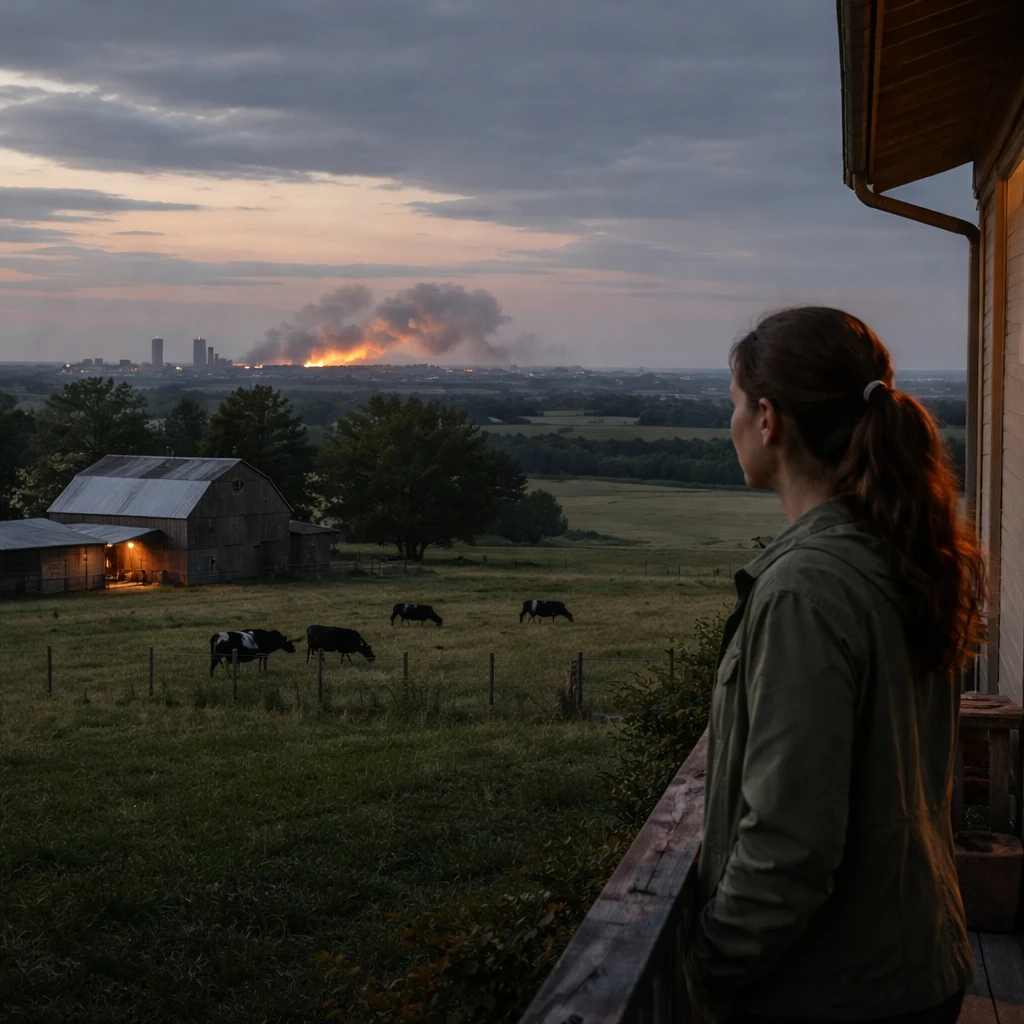
Families living within miles of the Iowa Army Ammunition Plant are pressing for more information after the U.S. Army carried out an on-site detonation of several tons of lead azide stored in 68 barrels. Although initial monitoring and laboratory testing have not detected widespread contamination, the episode has left residents demanding answers about how the stockpile deteriorated and why the explosives were destroyed where they lay.
Jessica Phillips farms roughly five miles from the detonation site. She said she felt relief once the explosion had occurred, but remains dissatisfied with explanations provided so far and wants clear accountability for how the material reached a hazardous state. "I teach my kids accountability," she said. "And there sure in hell should be some accountability over this."
The Environmental Protection Agency reported that its regional air monitors did not detect airborne lead in the aftermath of the blast. The agency also said that laboratory testing of the first soil and water samples collected after the detonation found negligible levels of contamination attributable to the event. Those findings were released publicly on Saturday following the operation.
Despite the EPA's initial results, concern has been amplified in a state where rising cancer rates were a prominent issue in this month’s midterm elections. Several residents voiced unease that the munitions stockpile had been allowed to degrade to the point where detonation on site became necessary.
Local political leaders have joined calls for a thorough inquiry. Iowa Senator-elect Josh Turek, a Democrat, has publicly urged a full investigation into how the stockpile came to be in a degraded condition and why authorities concluded an in-place detonation was the only viable option.
Community alarm began when the Army announced on November 15 that it planned to detonate 68 barrels of lead azide, an obsolete explosive once used in military munitions. Environmental groups sought legal intervention to halt the blast, filing suits that delayed the operation by five days. The Army maintained that crystallization within the barrels had made the material unstable and raised the risk of spontaneous detonation, which it said posed a more immediate hazard to the public.
That perceived risk prompted some residents to leave their homes over the Thanksgiving holiday. Sean Byers, who lives in Middletown with three young children, drove six hours to Branson, Missouri, to stay with family. "They’re still developing. They’re still growing," he said, explaining why he did not accept the risk of staying in town.
Officials note that the national supply of lead azide was relocated to the Middletown plant in 2009, and some of the stockpile was already more than 60 years old at that time. Army statements in March indicated that dangerous crystallization had been discovered in the barrels, rendering portions of the cache unstable. The Army said it informed nearby residents about the problem when it identified the issue, though the formal announcement of a detonation date did not come until November 15. That announcement included maps projecting where lead dust could travel - in some scenarios up to 100 miles from the blast site.
Public health messaging underscores the seriousness of lead exposure. There is no safe level of lead in the blood, according to public health experts, and children are especially vulnerable, as exposure can impair brain development.
Many residents prepared for the operation in different ways. Melanie Knedler of Burlington said she and her husband, Nick, taped their windows and brought their cats indoors ahead of the detonation. They expected a pronounced explosion but watched a faint plume of dust on a livestream instead. Knedler stated she plans to seek independent verification of contamination by taking soil samples she collected before and after the blast to the University of Nebraska for testing. "I think they contained it well," she said of the Army’s handling. "We needed to make that big uproar in order for them to take care of it properly."
On the Phillips family farm, Jessica and her husband Aaron raise cattle. They did not move the animals indoors or relocate them despite guidance from the Iowa Department of Agriculture suggesting such steps. Aaron thought moving the livestock was unnecessary, though Jessica expressed worries about their safety and joked about hiding some of her favorite cows in the basement.
The episode has left ongoing questions about long-term environmental monitoring, community trust, and the responsibilities of military and civilian authorities to manage aging and potentially hazardous stockpiles. While initial EPA air monitoring and early laboratory results have not identified airborne lead or meaningful contamination attributable to the blast, local demand for a complete investigation into the chain of events that produced an unstable supply of lead azide remains strong.
Summary
The Army detonated several tons of aging lead azide stored in 68 barrels at the Iowa Army Ammunition Plant after officials determined crystallization made the material unstable. The EPA reported no detection of airborne lead and early soil and water tests found negligible contamination attributed to the blast. Residents and local leaders are calling for a full investigation into why the stockpile degraded and why an on-site detonation was necessary.