
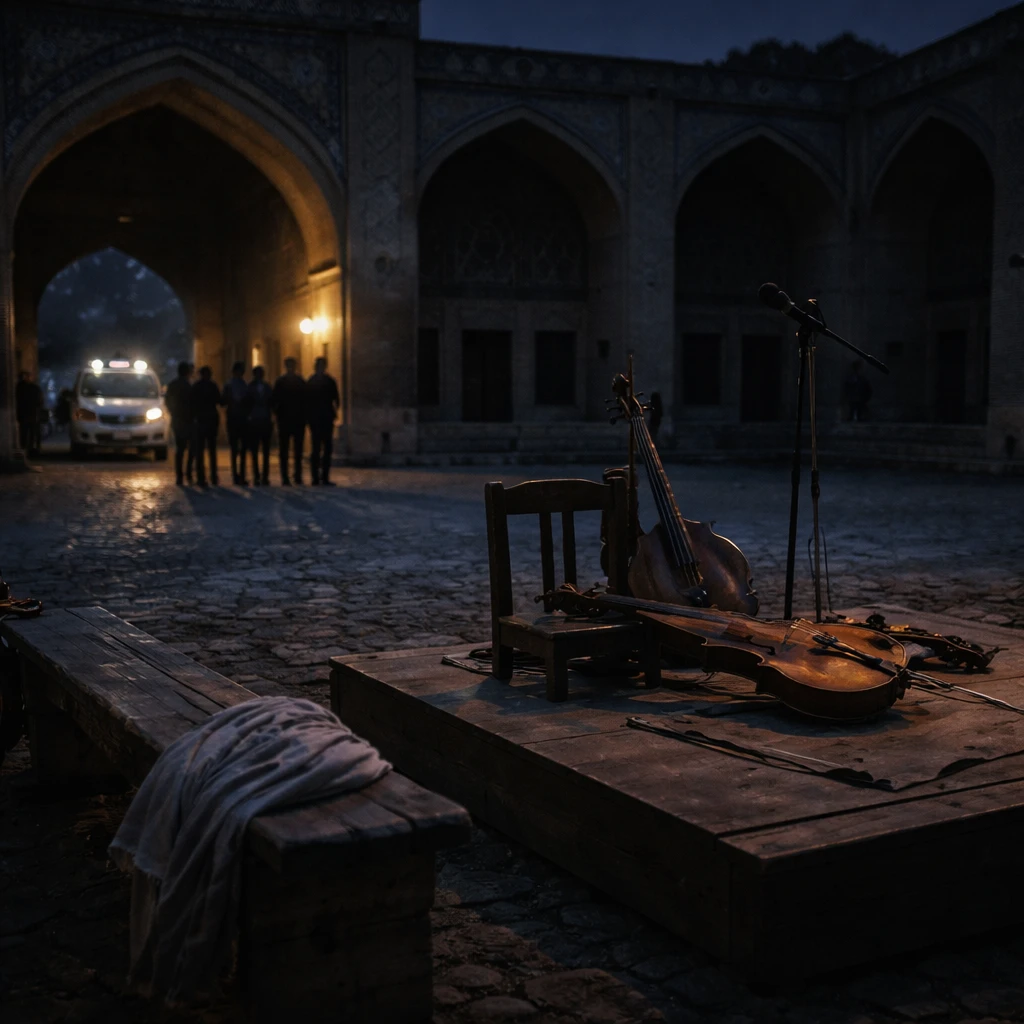
The public flogging this week of 29-year-old Parastoo Ahmadi and four members of her production team has been described by Iranian insiders as a deliberate demonstration of authority by a clerical elite anxious to maintain social control. Each of the five received 74 lashes on Monday for a livestreamed performance at a caravanserai near the Shi'ite holy city of Qom, in which Ahmadi appeared with bare shoulders, no headscarf and alongside male musicians - a configuration that breaches Iran's theocratic legal code.
That the punishment occurred two years after footage of the concert first circulated online has prompted sources to frame the action as political rather than purely judicial. "I think the authorities are sending a message of fear through the flogging," said Saba Robatjazy, a London-based Iranian singer who performs as Emma and who has known Ahmadi since childhood.
Timing and the wider political context
Insiders interviewed for this account said the timing of the sentence - coming amid an ongoing war and nine months into the conflict that sources say has ravaged the economy - reflects heightened nervousness within Iran's ruling system. That anxiety is compounded by the nearing anniversary of nationwide protests last winter and continuing economic grievances, both of which officials fear could spark further unrest.
According to three officials and two other establishment insiders, the punishment was intended both as a warning to potential dissidents and as a conciliatory signal to hardline supporters whose backing remains essential for the regime's survival. At the same time, one of the people said, more moderate officials within the establishment opposed the decision, concerned it would inflame public opinion and prove divisive at a delicate moment.
The Iranian government maintains that the judiciary operates independently and that punishments such as this are not politically motivated.
Fear of unrest, wartime pressures and strategic signaling
Two of the officials cited the approaching anniversary of last winter's protests as a factor that intensified concern in the security and political apparatus. In their view, the combination of mounting economic hardship and the continuation of war made preventing any recurrence of widespread demonstrations a priority.
"They know it's going to be a hard winter. This war might go on for many more months to come, and they do worry about public protests and they sometimes take decisions like this one just to flex muscle," said Alex Vatanka of the Middle East Institute think tank.
Those inside the establishment said hardliners have expressed growing frustration over what they see as lax enforcement of dress codes that have been in effect since the 1979 revolution. The rules require women to cover their hair and wear a long, loose coat over their clothes, yet, the sources said, those requirements have been frequently ignored across Iran since mass protests in 2022 following the death in custody of a woman detained for alleged violations of the dress code. That movement marked an unusual and sustained national protest against state policy.
Internal divisions and attempts to limit backlash
While hardline figures within the hierarchy advocated for decisive action against perceived moral backsliding, some moderates counseled restraint. President Masoud Pezeshkian, the sources said, had warned authorities against using force to address social and cultural issues. Nevertheless, hardline politicians demanded measures to counter what they viewed as subversive behaviour.
Since the US and Israel attacked Iran on February 28, hardliners have pushed their supporters to hold rallies and public events in defence of the ruling system. Those supporters, described by insiders as the most fervently anti-Western and strict interpreters of the revolution's directives, continue to exert influence - regularly winning more than a tenth of votes in national elections, according to the insiders. That ongoing influence, the sources said, increases pressure on authorities to placate hardliners on issues such as public morality.
Gholamali Haddadadel, a conservative politician and father-in-law of Supreme Leader Mojtaba Khamenei, acknowledged on September 9 that wartime conditions had limited the authorities' ability to enforce dress codes as robustly as they might desire. Nevertheless, by meting out punishment in Ahmadi's case, the establishment may have sought to reassure hardliners while avoiding the risks associated with a broader, nationwide crackdown on women - a move insiders said could provoke a major public backlash.
Reactions and unresolved questions
Friends and supporters of Ahmadi have suggested the flogging has not quelled dissent. Robatjazy, who has not had recent contact with Ahmadi because communications into Iran have become more difficult since the start of the year, said she believed Ahmadi and her team were mindful of the risks associated with livestreaming their performance. There has been no public information about the condition or location of Ahmadi and her colleagues following the punishment.
Robatjazy said she believed the punishment could inflame public anger rather than dampen it. "I think that the punishment that they gave Parastoo and her band members is only bringing up more anger from people," she said.
Supporters of strict enforcement argue that failing to punish such public displays of defiance of compulsory veiling would have implications beyond individual behaviour, one of the officials said. Not acting, they contend, would amount to acknowledging that years of resistance have forced the Islamic Republic to compromise on a foundational ideological principle.
Human rights monitors and activists framed the flogging as part of a broader effort to assert control over women's public behaviour. "The regime has made a clear and concerted effort to continue to police the way women express themselves in public and the way that they move about their daily lives," said Skylar Thompson, deputy director at Human Rights Activists News Agency, a US-based group.
Looking ahead
For now, insiders say the authorities have attempted to strike a balance: taking action that will placate hardline elements while avoiding steps likely to provoke widespread popular resistance. Yet the same sources acknowledge an unresolved tension between the demands of those hardline backers and the changing social attitudes of many Iranians.
One official observed that the hardliners' insistence on strict moral enforcement increasingly conflicts with the aspirations of segments of the population. How that tension will play out remains unclear, and the immediate effect of the flogging appears to be a mixture of temporary reassurance for some conservative constituencies and deeper anger among opponents.
The episode highlights the complex interplay between security priorities, political calculations and social enforcement in a country under wartime strain and facing economic pressures. It also underscores the limits of a strategy that aims to use punitive measures as political signals without fully addressing the underlying social and economic grievances that give rise to dissent.