
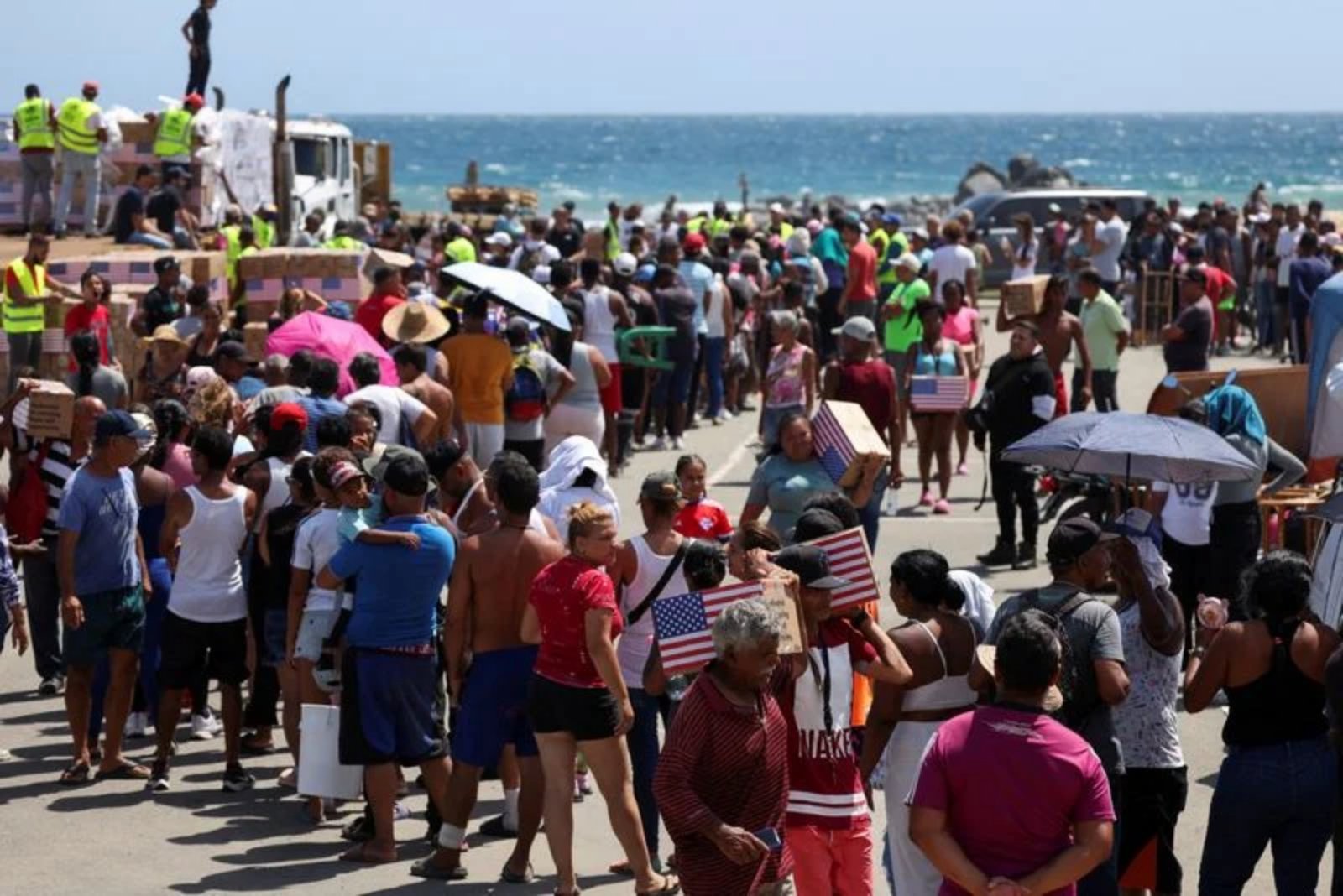
Venezuela has embarked on a fast-track plan to restructure one of the most complicated debt loads in recent memory, with creditor claims approaching $200 billion. The effort, initiated in May to include sovereign obligations and liabilities tied to state oil company PDVSA, is being pushed forward even as the nation grapples with the aftermath of powerful earthquakes that have killed thousands and caused widespread damage to public infrastructure.
Bondholders say Venezuelan authorities want to conclude early phases of the restructuring as soon as November in order to unlock capital flows into critical areas such as oil production and power generation. Yet debt specialists caution that compressing the timetable risks producing a debt-relief package that is neither credible nor sustainable, at a time when the country will need large amounts of financing to rebuild.
"This will surely be the most complex sovereign debt restructuring of my lifetime," said Mitu Gulati, a sovereign debt expert and professor at the University of Virginia. "I’ve never seen anything done like this." His remark underscores the scale and intricacy of claims involved - from arbitration awards to oil-backed loans from China, in addition to traded bonds and accrued unpaid interest.
Central to a fair restructuring is a credible Debt Sustainability Analysis, or DSA. A DSA tests a country’s liabilities against its expected macroeconomic trajectory to estimate what creditors can realistically recover after a restructure. For Venezuela, producing such an assessment is particularly difficult. The country has not released comprehensive debt or economic statistics for years, and much of the outstanding claims are fractured across different legal and commercial forms.
Veteran sovereign debt lawyer Lee Buchheit, who has advised governments on restructurings since the 1980s, warned that the proposed schedule leaves too little time to prepare a robust, independent DSA. He suggested that both Caracas and some creditor groups may have incentives to complete a deal quickly - the government to demonstrate a return to international markets, and bondholders to avoid a more rigorous International Monetary Fund-led vetting process that could reduce recoveries.
"What may be presented as a DSA will in fact just be a manufactured set of numbers that appears to support some form of bond restructuring," Buchheit said. Buchheit previously served as an adviser in 2019 to then-opposition leader Juan Guaido on debt matters.
Analysts commonly put Venezuela’s total liabilities near $200 billion. For perspective, Greece restructured roughly $200 billion of debt over the course of about a year after its 2012 default. That comparison highlights the compressed timeframe Venezuelan authorities are pursuing.
The recent earthquakes, which authorities say killed more than 3,000 people and damaged hospitals, schools and other infrastructure, add a further layer of complexity. Assessing the full scale of the damage is essential for determining how much financing will be needed for recovery and therefore how much debt relief might be appropriate.
Complicating perceptions of transparency, Venezuela in May announced it had engaged Centerview Partners to advise on the process and said it planned to complete a DSA by the end of June. Investors now anticipate the assessment this month. The IMF, whose assessments typically take several months, is not participating in Venezuela’s restructuring, and there has been no independent audit of the government’s figures, heightening skepticism about the credibility of any government-produced DSA.
Centerview Partners, the financial adviser named by Venezuelan authorities, declined to comment.
Press reports have also amplified creditor unease. One recent widely-discussed analysis suggested the country’s liabilities could be as high as $240 billion - roughly $40 billion higher than some prior estimates - although that report did not detail the source of the added amount. The discrepancy prompted some creditors to urge IMF involvement and increased scrutiny.
"If you don’t have a process that can be verified by independent observers, the IMF, then you run the risk of cronyism and corruption," said Christopher Sabatini, director of the Latin America Programme at Chatham House. That comment reflects concern that without independent validation, numbers and assumptions used to support a restructuring may not hold up under scrutiny.
Domestic financial consultancies have urged caution as well. Caracas-based Sintesis Financiera recommended postponing the restructuring process, arguing that using pre-earthquake economic assumptions would risk understating the debt relief required and prove costly in the long run.
Economists say the earthquake toll - damage estimated at $7 billion - is a major shock to an economy already struggling to recover from years of sanctions, corruption and underinvestment. Joan Domene, chief economist for Latin America at Oxford Economics, described the damage as a "massive blow" to a recovery that has been slow. Domene said the new losses could strengthen Venezuela’s case for deeper debt reductions - in restructuring terms, a larger haircut for creditors.
Some investors remain cautiously optimistic that advisers and officials grasp the stakes. "It’s right to have a healthy degree of skepticism," said Elina Theodorakopoulou of Manulife Investment Management, a holder of Venezuelan bonds. "But surely you would believe that the people that are putting that together realize the significance of doing that credibly."
Venezuela’s economy has contracted sharply - by an estimated 75% since 2013 - under the combined weight of sanctions, corruption and years of underinvestment. The earthquake damage has been estimated to add losses equivalent to as much as 6% of gross domestic product. That context helps explain the urgency among some stakeholders to unlock foreign financing and to end the legal exposure that has kept major international capital at bay.
Yet there is a trade-off: rushing a restructuring that is not founded on verifiable assumptions may leave the country carrying unsupportable obligations for years, constraining public investment in reconstruction, health and other essential services. "If you give away all of your goodies now... my worry is that we’re just pushing the real restructuring problem down the road," Gulati said.
Some advisers and investors express a desire to break Venezuela’s prolonged limbo while still seeking a process that will not invite renewed contestation over recoveries. "We want to unlock funding... (but) publish a DSA that will not be contested," said Rodrigo Olivares-Caminal, a professor at Queen Mary University who is advising some private investors on Venezuela.
As Venezuela and its creditors weigh a timetable that seeks to move quickly, experts emphasize the centrality of credible, independently verifiable numbers. Without those, any early reopening to markets risks being fragile - and the very goal of attracting reconstruction capital could be undermined by doubts about the durability of the settlement.