
Stock Markets July 9, 2026 06:06 AM

Nokia Defense and NestAI Move to Deliver First Operational AI-Enabled Defense Capabilities

Three integrated capabilities under development after €100 million joint investment; systems tailored to contested, communications-denied environments

By Hana Yamamoto
Share
Twitter Reddit Facebook LinkedIn

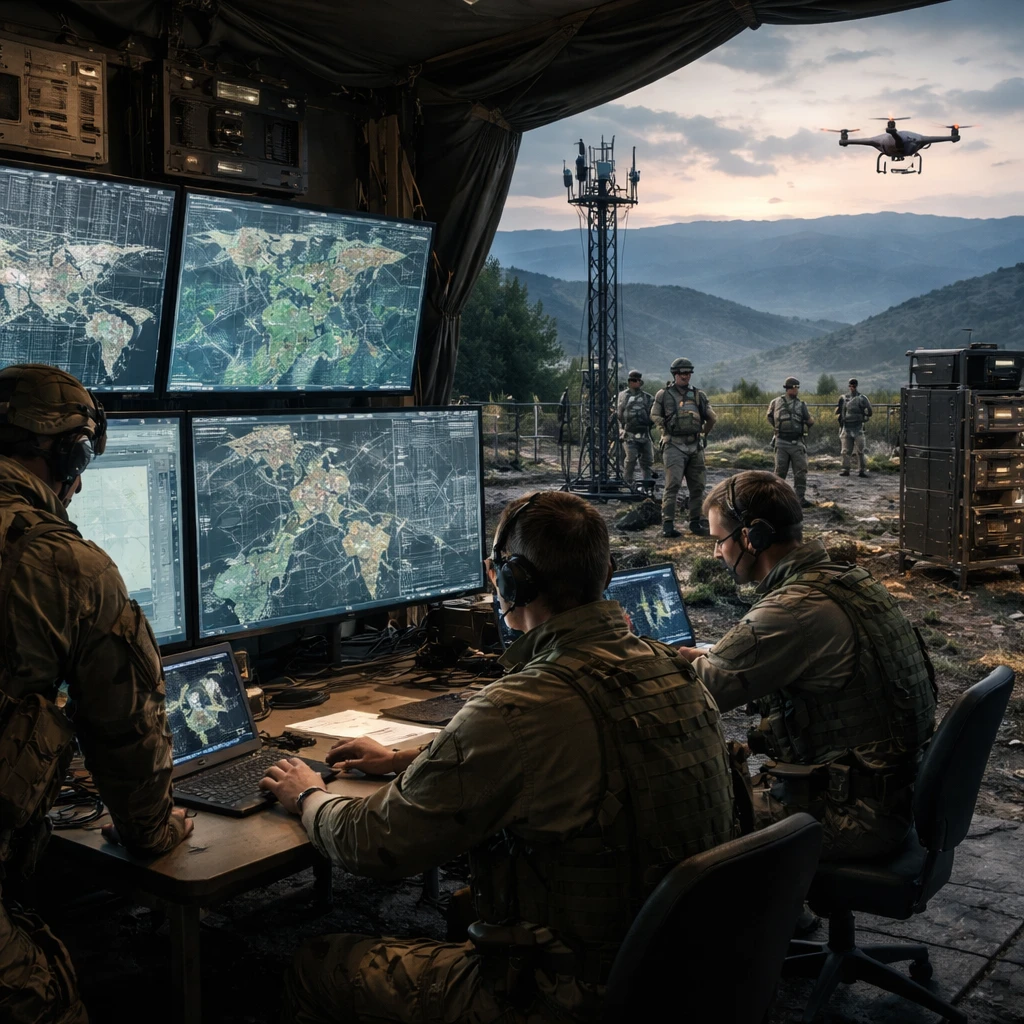
Nokia Defense and NestAI are advancing a technology partnership into operational development after Nokia and Tesi committed €100 million to NestAI in November 2025. The collaboration is producing three integrated capabilities that combine deployable 5G, mission planning and integrated sensing to support command-and-control, connectivity assessment and wide-area threat awareness for forces operating in contested environments. The technologies are being developed to meet NATO operational requirements and rely on European-developed systems.

Nokia Defense and NestAI Move to Deliver First Operational AI-Enabled Defense Capabilities
Summarize with
ChatGPT Perplexity Claude Grok Gemini

Key Points

  • Nokia Defense and NestAI are developing three integrated operational capabilities following a €100 million joint investment by Nokia and Tesi in NestAI announced in November 2025.
  • The capabilities combine Nokia's deployable 5G networks, radio-network planning models and Integrated Sensing and Communications with NestAI's NestOS and multi-sensor tracking to support command-and-control, connectivity assessment and wide-area threat awareness.
  • Technologies are being developed to operate in environments with denied communications, active electronic attack and drone threats, and are being built to NATO operational requirements using European-developed systems.

Nokia Defense and software house NestAI have begun developing the first operational capabilities from their technology partnership, following the €100 million joint investment in NestAI by Nokia and Tesi announced in November 2025. The two companies describe the work as a set of three integrated capabilities intended for use in contested operational environments.

The capabilities under development pair Nokia’s communications and sensing technologies with NestAI’s battlefield-focused operating system, NestOS. The partners say the goal is to provide forces with resilient command-and-control and enhanced situational awareness even when communications are degraded or under attack.

The three integrated capabilities are:

  • Deployable 5G and NestOS integration - Nokia’s deployable 5G networks are being linked with NestOS, NestAI’s adaptive operating system for battlefield operations, to support command-and-control functions and to enable the operation of autonomous systems.
  • Radio-network planning and mission-planning tools - Nokia’s radio-network planning models are being incorporated into NestOS mission-planning tools to allow forces to evaluate and adjust connectivity during missions.
  • Integrated sensing and multi-sensor tracking - Nokia’s Integrated Sensing and Communications early-detection capability is being combined with NestAI’s multi-sensor tracking to deliver wide-area threat awareness in contested environments.

The partners state the capabilities are designed specifically for scenarios that include denied communications, active electronic attack and drone threats. Both companies emphasize the systems are being built to NATO operational requirements and are based on European-developed technologies.

Commenting on the work, Mikko Hautala, Chief Geopolitical & Government Relations Officer and Chairman, Nokia Defense, said: "Defense is moving quickly to adopt AI-enabled capabilities, from mission planning to unmanned operations. But AI only works in the field when it has secure, resilient connectivity behind it."

Peter Sarlin, Founder and Executive Chairman of NestAI, added that the partnership targets the realities European forces face "from the network underneath to the threats at the edge, on technology that Europe develops and controls."

The programme represents a combined effort to align communications, planning and sensing technologies for operations where traditional connectivity and situational awareness can be impaired. The companies have framed the work as interoperable, Europe-focused solutions aimed at meeting NATO standards.

Details on timelines, field trials or procurement decisions were not specified in the companies' statements. The development is positioned as a step from investment into tangible operational capabilities that integrate network infrastructure, mission software and sensing into a single set of tools for contested environments.

Risks

  • Uncertainty about deployment timelines and procurement - the companies did not provide details on field trials or acquisition schedules, which affects defence procurement and equipment suppliers.
  • Operational performance in contested environments - capabilities are designed for denied communications and electronic attack, but actual effectiveness will depend on real-world validation, impacting defence and communications equipment sectors.
  • Dependence on meeting NATO requirements - the work is being developed to NATO operational standards; any changes or additional requirements could affect integration and adoption, with implications for defence contractors and systems integrators.

More from Stock Markets

Software Stocks Fall After Report Starbucks Is Building Its Own AI-Driven Applications Jul 9, 2026 Polestar Sees Quarterly Volume Decline as U.S. Market Access Is Restricted Jul 9, 2026 FuelCell Energy Shares Surge After Siemens Partnership to Pursue Scalable Fuel Cell Projects Jul 9, 2026 Maersk Stock Drops After Plan to Resume Suez Canal Sailings Jul 9, 2026 Kepler Commences Coverage of Elementis with Buy Rating, Cites Transformation as Re-rating Trigger Jul 9, 2026