
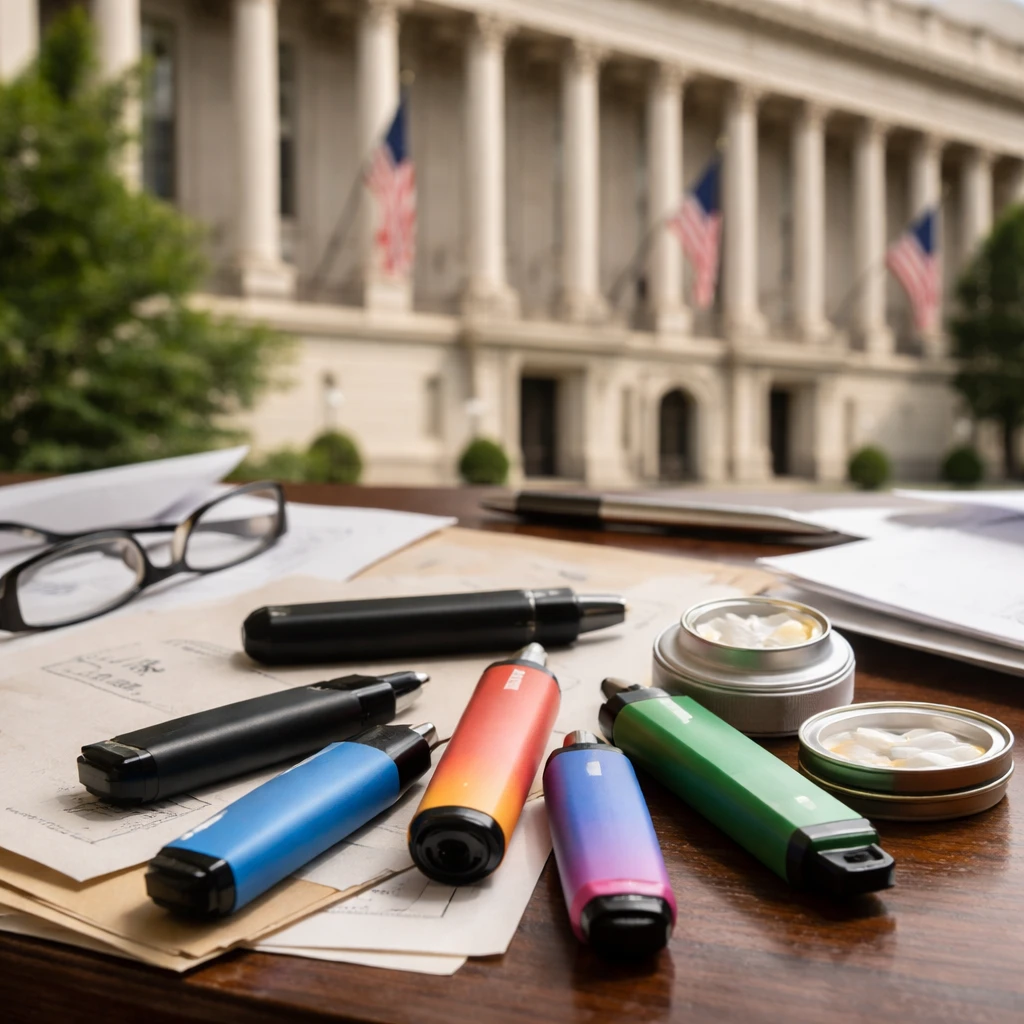
Six U.S. senators on June 4 publicly requested information from two major tobacco firms, Reynolds American and Altria, about their recent donations and lobbying activities tied to the Trump administration and a change in U.S. Food and Drug Administration policy.
The correspondence, signed by Democratic whip Dick Durbin and senators Elizabeth Warren, Edward Markey, Jeff Merkley, Richard Blumenthal and Jack Reed, centers on an FDA statement that introduced an "enforcement discretion" approach. Under that policy the agency will allow some manufacturers to offer vapes and nicotine pouches to consumers without the usual premarket authorization that the law requires.
The senators say the regulatory adjustment - which they warn could enable hundreds or more vape products to enter the market - followed pressure from the White House and came after political contributions from Reynolds, the U.S. unit of British American Tobacco, and Altria as recently as April, along with a May meeting between President Donald Trump and tobacco executives.
"Money well spent," the letters state, adding that donations and lobbying efforts enabled tobacco companies to skirt federal requirements and put addictive vapes into consumers' hands, undermining the FDA's independence.
The lawmakers' letters ask for specifics on the size and recipients of donations, details of meetings with officials, and which products are expected to benefit from the enforcement discretion policy. The correspondence is dated June 4.
Reynolds, Altria and the White House did not immediately provide comment in response to requests for reaction.
Industry arguments cited in the letters note that tobacco manufacturers have long complained the FDA's regulatory framework helped spur a large market for unlicensed devices, many imported from China. Reynolds has estimated that this illicit market is worth about 7 billion pounds, which the letters convert to $9.41 billion using a reference rate of $1 = 0.7435 pound.
The senators' letters also point to corporate tactics beyond political donations: the companies have mounted lobbying campaigns and court challenges, paused internal sales targets and, in some cases, threatened to introduce their own unlicensed products should market access remain restricted. Following the FDA's enforcement discretion announcement, tobacco companies have indicated plans to launch new products.
Market data incorporated alongside the letters shows short-term movements in tobacco-related tickers, with Altria (MO) quoted as up 0.66% and British American Tobacco (BTI) quoted down 0.74% in the snapshot accompanying the correspondence.
The senators' inquiries aim to clarify the relationship between corporate political activity and regulatory outcomes, and to identify which brands or product lines might be positioned to gain from the FDA's policy change. The letters request documentation and explanations from Reynolds and Altria that would illuminate those ties and the potential commercial beneficiaries.