
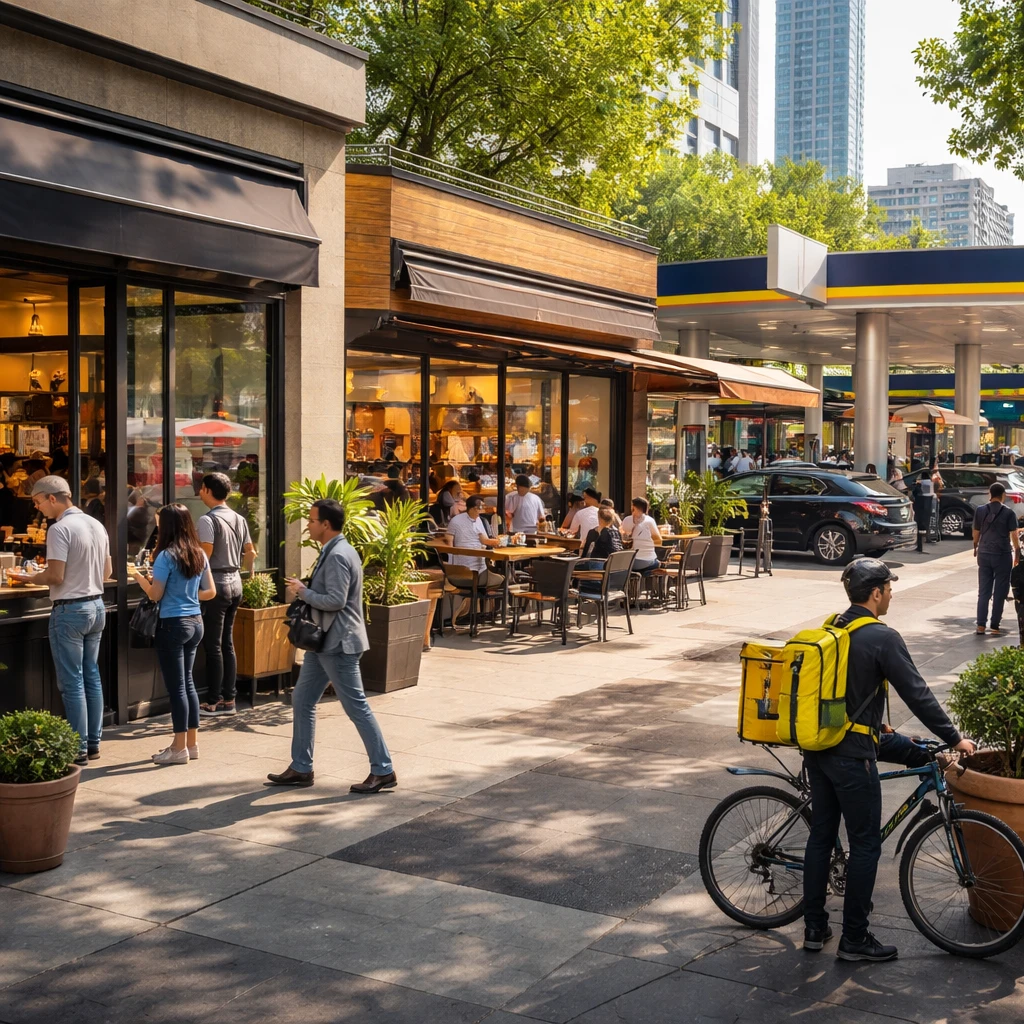
UBS reported that management teams across US restaurant chains sounded relatively optimistic heading into the second half of 2026, a tone that has not been fully shared by investors. The investment bank reached its assessment after hosting conversations with investors and company executives in recent weeks to gauge demand trends following sizable moves within the sector.
Data and commentary discussed in the UBS calls point to a bifurcated traffic picture through the first half of 2026. Specialty coffee, fast-casual concepts and fine-dining establishments led growth, while quick-service restaurants and casual dining continued to lag. UBS cited a recent call it hosted with Placer.ai as underscoring those divergent trends.
Lower- and middle-income consumers have pulled back on some spending due in part to elevated gas prices, the bank noted. Those consumers have shifted some of their purchases toward grocery stores, gas stations, convenience stores and dollar retailers in search of better value.
Supporting that view, Fiserv data show consumer spending at small-business restaurants rose 0.2% year-over-year in June, an improvement from a 0.6% decline in May. The Fiserv figures also reveal format differences: full-service restaurants posted sales up 2% and traffic up 0.4% year-over-year, while limited-service restaurants recorded sales down 2.7% and traffic down 5.0%.
On employment, government figures indicate restaurant hiring fell in June, with eating and drinking places losing roughly 32,900 jobs for the month. Separately, April and May payroll estimates were revised to show a combined increase of about 24,000 jobs across those months, compared with the previously reported 83,000 jobs.
Looking forward, UBS expects consumer retail traffic to improve in the second half if gas prices ease further, a development that would particularly benefit quick-service operators. The firm also cautioned that restaurant traffic could continue to face headwinds from stronger food-at-home competition and potential impacts related to GLP-1 drugs.
UBS highlighted convenience-store food offerings as a notable disruptor to quick-service restaurants during breakfast and lunch periods, noting that such competition is one of several factors that may limit traffic upside despite managements' brighter tone.
Context note: The observations above reflect UBS's recent investor and management calls and cited third-party data sources presented during those discussions.