
S&P Global Ratings has raised the Netherlands-based aircraft maker's long-term credit rating to A+ from A and upgraded its short-term rating to A-1+. Issue-level ratings were also increased to A+, with the agency assigning a stable outlook.
The upgrade was driven by Airbus' recent cash performance. S&P highlighted that the company generated cumulative free operating cash flow of roughly €15.6 billion across 2022-2025. In addition, Airbus held a net cash position in excess of €10 billion as of December 2025, a balance S&P says provides a financial buffer against potential operational disruptions or setbacks.
Looking ahead, S&P expects Airbus to preserve at least this net cash level through the next three years while continuing to produce free operating cash flow well in excess of €4 billion per year as it fulfills its substantial order backlog. The ratings agency estimated the group's backlog at more than €600 billion.
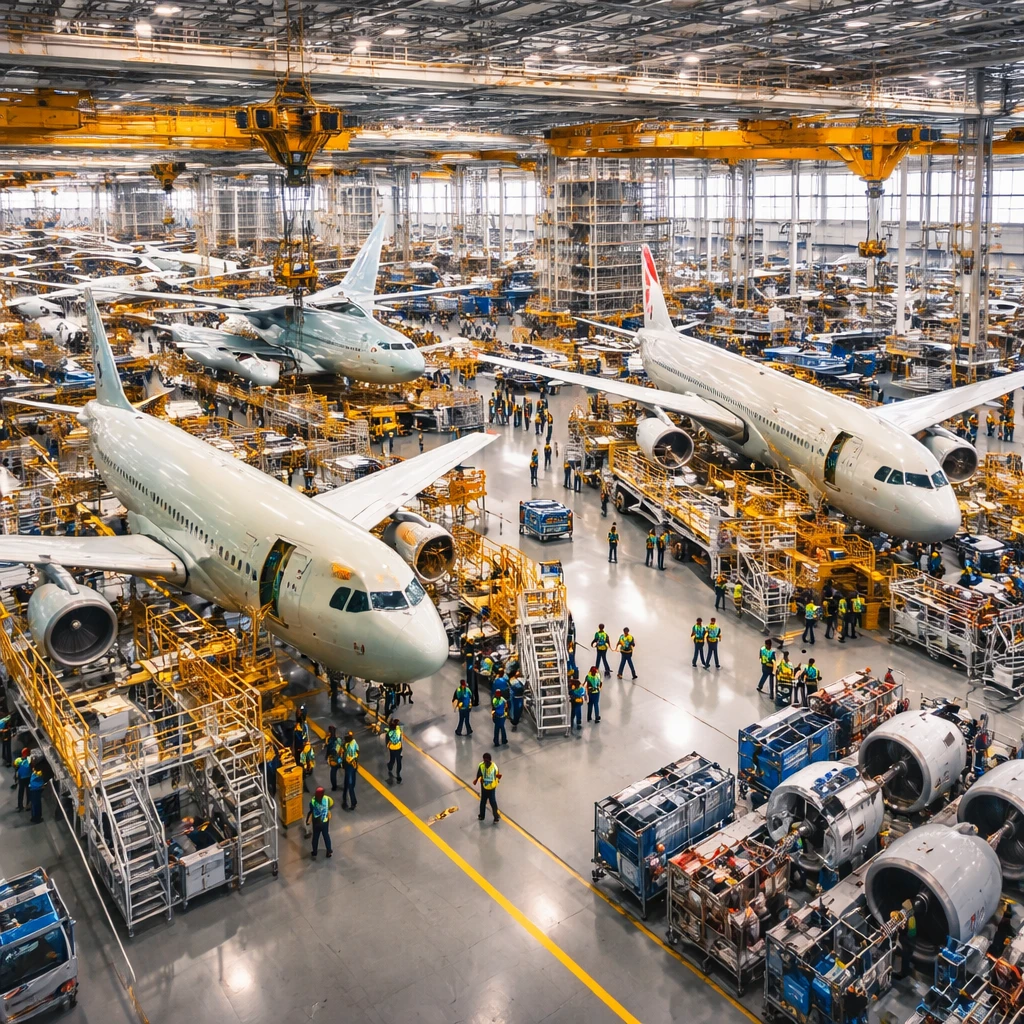
Operationally, Airbus reported a commercial aircraft backlog of 9,253 units as of May 2026, evidence of persistent demand across most business divisions. The manufacturer has set production targets aimed at raising output for core programs: A320 family production is planned to reach between 70 and 75 aircraft per month by the end of 2027, while A350 output is targeted to reach 12 aircraft per month by 2028.
Capacity expansions have already been put in place to support those targets. Airbus commissioned a second A320 final assembly line in Tianjin in 2025 and is enlarging its production footprint in Mobile, Alabama. Those moves are part of the group's broader capacity strategy to meet backlog delivery schedules.
In December 2025 Airbus acquired significant work packages from Spirit AeroSystems. The assets included major fuselage sections, wing leading edges, nacelles, engine pylons, landing gear doors and other composite and metallic aerostructures, primarily supporting the A220 and A350 programs.
Workforce expansion has accompanied the production build-out. Airbus' employee headcount increased to approximately 165,000 as of December 2025 compared with about 133,000 in 2019.
On capital spending, S&P expects Airbus' annual capital expenditure will range between €4.0 billion and €4.5 billion per year over 2026-2028. The ratings agency framed the stable outlook around the view that Airbus will continue to execute its large backlog successfully, which should translate into improving profitability and steady cash flow while the company maintains a credit-supportive financial policy.
Implications for markets and sectors
Airframe manufacturers, suppliers of aerostructures and the broader aerospace supply chain are directly affected by changes in Airbus' credit profile, since a stronger rating can influence borrowing costs, supplier payment terms and investment decisions tied to production ramps.