
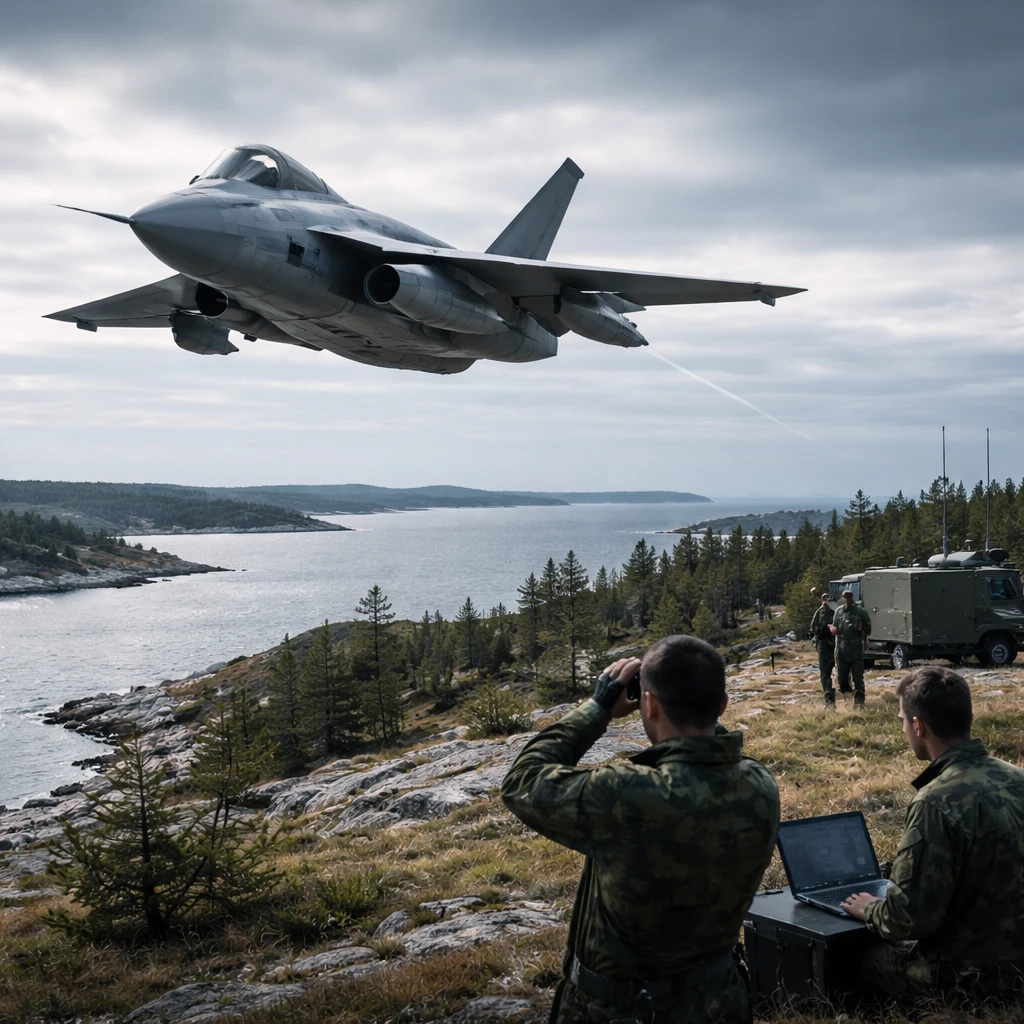
Saab has secured a contract from the Swedish Defence Material Administration (FMV) valued at roughly 2.9 billion Swedish kronor to continue concept development on a future fighter system. The agreement runs for the 2026-2028 period, and includes options that could extend work into 2029 and 2030.
The contract is framed around further development and demonstration of new technologies relevant to next-generation fighter systems. Planned activity under the order includes both flying and ground-based demonstrators, a series of advanced studies, and the elaboration of future system concepts that encompass manned aircraft and unmanned platforms.
Work under the program targets a set of technical areas intended to boost Sweden’s national capabilities. The specified focus areas include systems integration, autonomy, signature adaptation, propulsion and digital development. The defence administration and Saab expect the effort to feed into preparations for future production capabilities.
Lars Tossman, who leads Saab’s business area Aeronautics, said the company welcomes FMV’s continued confidence via the new contract. He highlighted that the assignment is important for taking forward and demonstrating technologies that are expected to be central to future fighter systems.
This new order follows earlier contracts with FMV that were signed in 2024 and 2025. The present agreement builds on that prior work and extends the program’s funded concept-development phase into the latter half of the decade.
Context and emphasis
The structure of the contract places emphasis on demonstration activities - both airborne and on the ground - alongside advanced analytical work and systems concept development. The inclusion of both manned and unmanned system concepts underscores a broad technology scope rather than a narrower single-platform focus. The program’s stated technical priorities - integration, autonomy, signature control, propulsion and digital development - are intended to strengthen domestic industrial and technical skills and to underpin potential future production lines.
Duration and optional extensions
The base period for the contract covers three years, 2026 to 2028. The agreement explicitly leaves room for additional work in 2029 and 2030 through contractual options, meaning further activity is contingent on whether those options are exercised.