
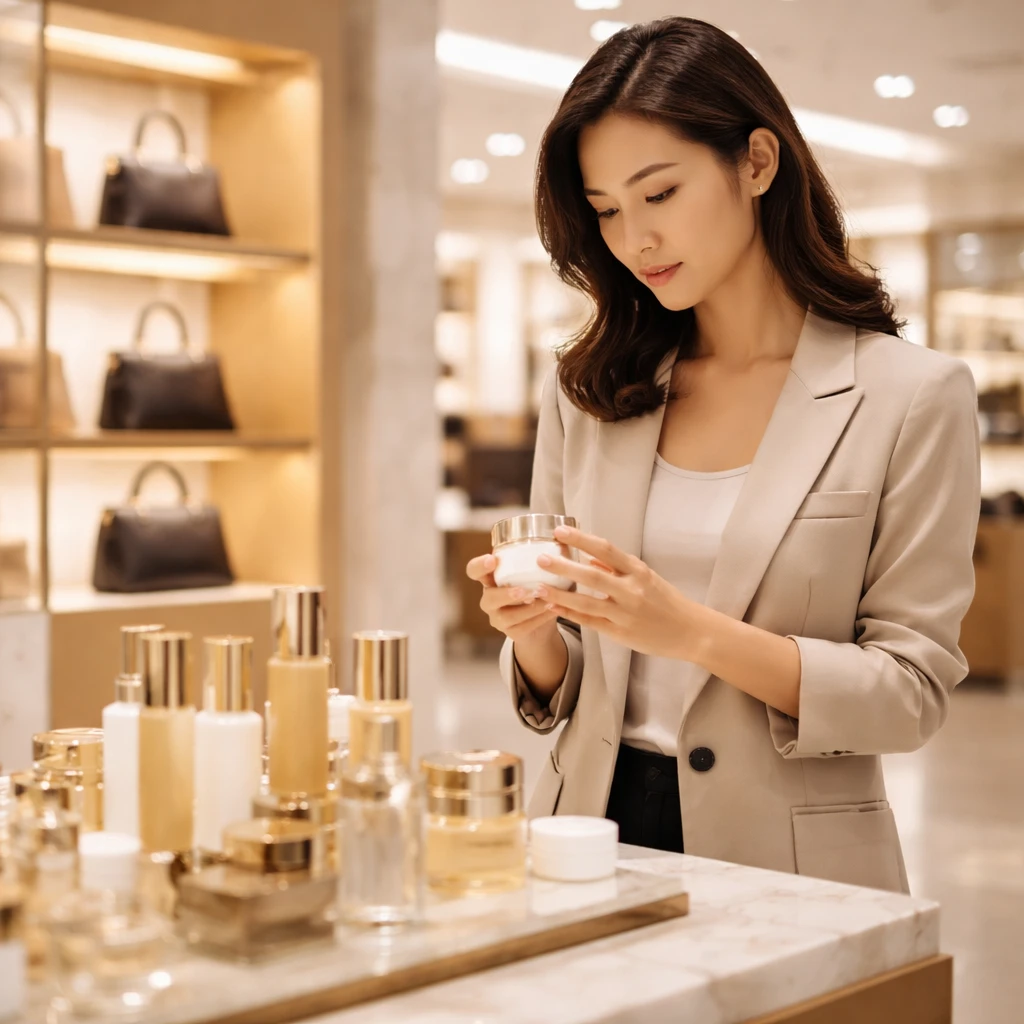
As Chinese households continue to navigate a prolonged property downturn and fragile confidence, their luxury purchases are trending away from big-ticket designer bags toward prestige beauty products, industry participants say. Recent corporate earnings and sector studies point to rising demand for luxury skincare, perfume and premium makeup - categories that are more frequently repurchased and easier to justify during uncertain times.
Analysts and executives frame the change as a reallocation of discretionary spending within the broader luxury market. "The aspirational (Chinese) consumer has not traded down. She has moved to the top of a category she can comfortably afford, instead of the bottom of one she cannot," said Jacques Roizen, co-founder of Shanghai-based Foresight Performance Partners.
After an extended period of rapid expansion driven by rising incomes and broader economic growth, the Chinese luxury sector - from handbags to timepieces - experienced a sharp slowdown in 2024. The slump in real estate activity and the resulting dent to consumer confidence contributed to weaker sales. The recovery since then has been uneven: a pickup in the second half of last year was followed by a muted start to 2026.
"It’s a kind of paradigm shift," said Jonathan Yan, a Shanghai-based partner at consultancy Roland Berger. "Younger consumers feel less attached to the idea of luxury brands, and I think the brands need to have something beyond a logo and craftsmanship to resonate."
Industry research underscores an intention-to-spend gap between beauty and leather goods among affluent Chinese consumers. A study by consultancy Oliver Wyman and the Tax Free World Association found 37% of affluent respondents intended to spend more on prestige beauty over the next year, compared with 4% for leather goods. Oliver Wyman principal Kenneth Chow explained the behavioural drivers: "Skincare is lower-ticket, frequently replenished, and easily justified as self-care and 'self-investment', so consumers keep buying even when they feel uncertain. Leather goods are the opposite: high-ticket, discretionary, and easy to postpone."
Company results are consistent with those findings. L’Oreal reported that luxury and dermatological skincare brands overall are growing at around 7% in China, outpacing recent quarters, and said some of its top-tier marques such as Lancome and Helena Rubinstein are performing even better. L’Oreal added that China was the main contributor to sales growth in its North Asia region during the last quarter, with its Luxe premium business expanding 10% in the country.
Estee Lauder signalled a similar trend. CEO Stephane de la Faverie said earlier in the year that the company expects prestige beauty growth to accelerate in the 2027 financial year, which began on April 1, and anticipates mid single-digit percentage growth in China.
By contrast, luxury houses that depend heavily on leather goods for growth report a less encouraging picture. While several of these groups operate high-end cosmetics and perfume divisions, their exposure to the skincare segment that is leading China's beauty market is comparatively small.
Executives at Hermes and LVMH said recent months had shown little sign of a broad improvement in Chinese demand, reinforcing the sense that consumer confidence remains fragile despite government stimulus and a stronger stock market. LVMH finance chief Cecile Cabanis described Chinese spending as essentially flat in the first half. Gucci owner Kering said its China sales remained down in the second quarter and that the group is addressing past missteps in its China strategy.
Kering CEO Luca de Meo cautioned about the competitive landscape, saying: "This is becoming one of the most challenging and competitive markets in the world." Hermes chief Axel Dumas similarly reported he did not see "any tremendous improvement" in China, calling the market stable rather than in recovery and citing low pork prices as an indicator of weak consumer sentiment. He added that he was waiting for a rebound in sentiment to signal renewed optimism.
Roizen of Foresight Performance Partners suggested that even an improvement in overall sentiment may not return the aspirational middle class en masse to entry-level luxury purchases, a cohort that powered the sector during its boom. "The brands suffering most are the ones still waiting for that consumer to come back, which I don’t think is going to be a rewarding strategy," he said, adding that Chinese middle-class behaviour has shifted from a one-time 'YOLO' approach to a 'YONO' - you only need one.
Market implications
- Premium beauty and skincare suppliers are positioned to benefit from repeat purchase dynamics and consumer justification of spend as self-care.
- Luxury houses that rely on leather goods for revenue face a more challenging environment as high-ticket items are more likely to be postponed.
- Sector performance in China remains sensitive to property market developments and overall consumer sentiment, which influences spending across discretionary categories.
Outlook and constraints
The current pattern, as reflected in company reports and consultancy research, points to a demand reallocation within the luxury space rather than a uniform rebound. Brands and investors should monitor consumption trends across categories - particularly the balance between replenishable, lower-ticket prestige beauty and higher-ticket leather goods - as a gauge of consumer priorities in China.