
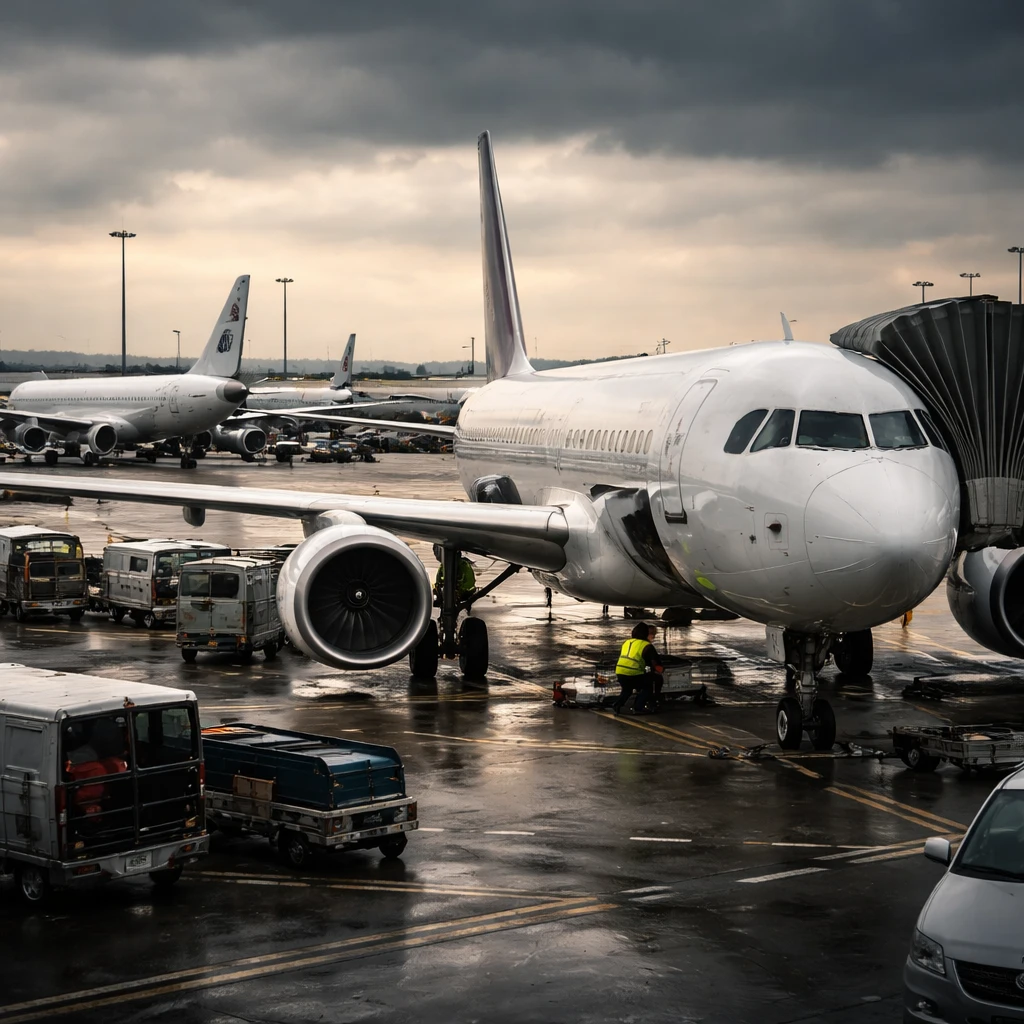
Deutsche Lufthansa AG stock slipped 2.8% in today’s trading to €9.613 after Citi downgraded the airline to Sell and assigned a €8.70 price target, arguing that the market had priced in too much improvement after a significant recovery since late April.
Citi's action came alongside a contrasting move by the same bank for a competitor. Citi elevated IAG to its top pick among Western European carriers, lifted IAG’s price target to 610p, and increased its 2026 EBIT estimate for the British-Spanish group by 5% - a juxtaposition that placed Lufthansa at a relative disadvantage in analysts' comparisons.
Adding to the negative analyst tone, Barclays maintained an Underweight rating on Lufthansa while modestly raising its price target to €7.75 from €6.80. Barclays said lower fuel costs and a slightly improved summer outlook were only partial offsets to the persistent geopolitical risks stemming from the Middle East and Ukraine.
The stock had already rallied sharply from its late-April trough, climbing roughly 46% to approach its 52-week high of €10.285. That advance pushed technical indicators such as the Relative Strength Index into overbought territory, increasing vulnerability to profit-taking once unfavorable analyst commentary emerged.
Operational headwinds remain prominent for the group. Management has grounded 25 aircraft this summer and closed the CityLine regional unit. The company also faces a projected €1.7 billion rise in jet fuel costs for 2026 attributed to supply disruptions linked to the Middle East.
Labour disruptions continue to present downside risk. Cabin crew and pilot strikes in April cost the airline around €150 million, and tensions with staff remain a concern heading into the peak travel season.
Wider market weakness provided an additional backdrop to the share drop. The S&P 500 traded down about 0.5% and the Nasdaq fell roughly 1.2% during the same session.
Immediate market reaction
The Citi Sell rating served as the proximate catalyst for the day's pullback, crystallizing concerns that the stock had already baked in an optimistic recovery scenario ahead of Lufthansa’s next earnings report, which is scheduled for early August. With two major banks expressing caution and the shares trading near multi-year highs, investors elected to pare back exposure rather than wait for further confirmation of the group’s recovery trajectory.
What remains uncertain
- Whether operational measures such as the grounding of aircraft and the CityLine closure will meaningfully affect near-term capacity and unit costs.
- The extent to which projected fuel cost increases for 2026 will pressure margins if Middle East-related supply issues persist.
- How ongoing labour tensions might influence revenue and costs during the high-demand summer months.
The convergence of cautious analyst notes, operational setbacks, elevated fuel-cost risk and labour disputes has left the stock exposed to downside while investors await the next earnings update.