
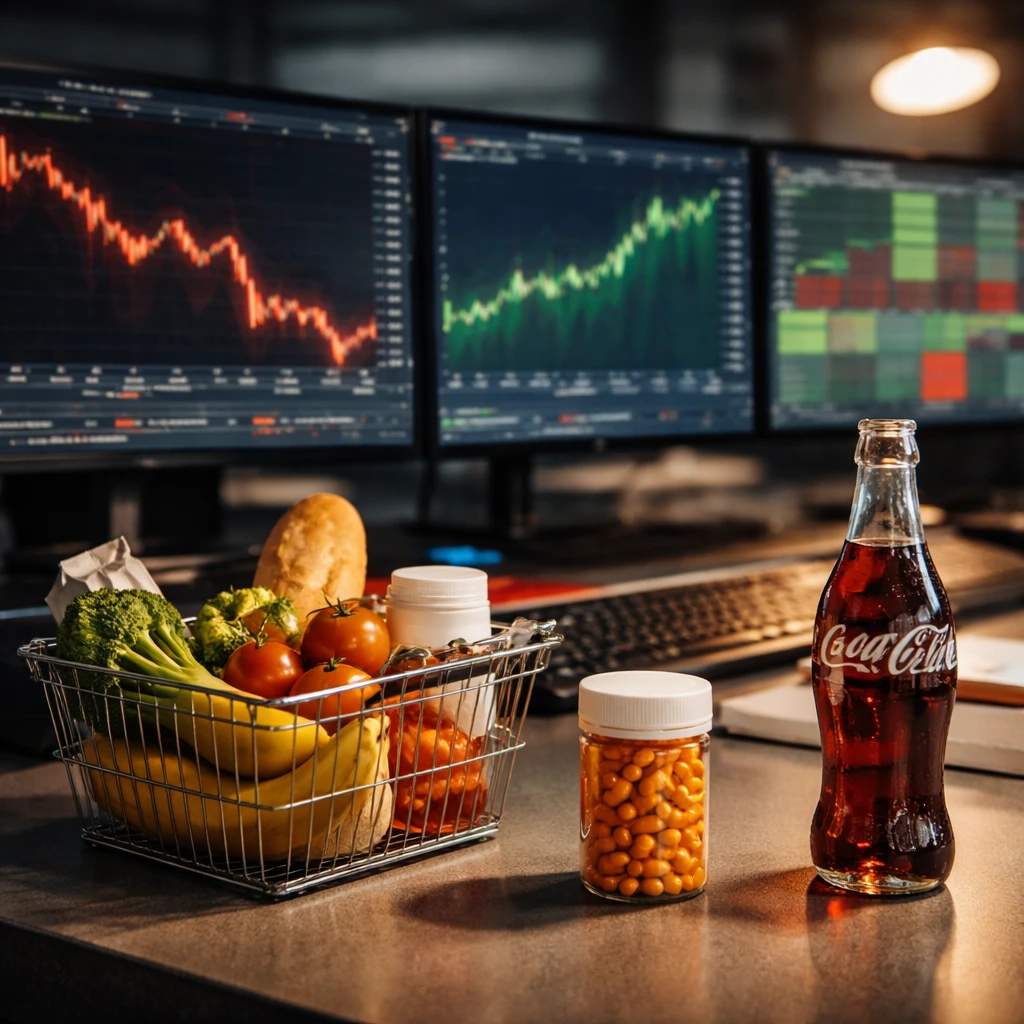
The recent rout in AI-related equities intensified on Friday, driving the S&P 500 down 3.7% to 6,910.39 and pushing the index below the 7,000 level into correction territory - 11.6% beneath its record high. That drop marked a seventh consecutive session of losses, the longest daily losing streak since February 2020. The Nasdaq Composite fell 5.3% to 22,617.73, and the Nasdaq 100 now sits 19.8% below its peak of 6 October.
Among individual names, Nvidia (NASDAQ:NVDA) declined 14% following a Reuters report that the SEC is examining the company’s accounting. The Philadelphia Semiconductor Index tumbled 10.7% in a single session, reflecting the heavy selling pressure in chip-related stocks. Newly public Anthropic (NYSE:ANT) slid 8.5% on its second day of trading, though it remained roughly 7% above its $83 IPO price.
For the week as a whole, the S&P 500 dropped 8.6%, the Nasdaq lost 10.0% and the Dow fell 8.0%. Volatility rose markedly: the VIX closed at 35.9, its first finish above 30 since late March. On the fixed-income side, the 10-year Treasury yield eased to 4.94% by the end of the session. In a market that saw broad declines across sectors, consumer staples bucked the trend and were the only S&P 500 sector to finish in positive territory, rising 0.7%.
Why the outperformance matters
When headline-driven, high-growth names were under pressure, the shares that held up tended to be businesses outside the AI hype loop: a grocery chain, a large-cap drugmaker and a global beverage company. These three firms also happen to be holdings in model strategies that use an AI-driven selection process; since their inclusion in those strategies they have recorded very large gains.
1. Kroger (NYSE:KR) - +63.0% since strategy entry
Kroger closed Friday at $68.44, rising 0.7% on a day when the S&P 500 fell sharply. The stock was up 3.1% in November and has appreciated 63.0% since it was added to the strategies in December 2023. Kroger’s relative resilience is reflected in its recent operating updates: in its latest quarter the company reported adjusted earnings per share of $1.09, a 5% increase from the prior year. The retailer also recorded adjusted e-commerce sales growth of 20% and maintained its full-year adjusted EPS guidance range of $5.10 to $5.30. Kroger’s next quarterly report is scheduled for early December.
2. Amgen (NASDAQ:AMGN) - +62.3% since strategy entry
Amgen finished the day at $435.64, a modest 0.7% decline on Friday compared with the much larger drop in the Nasdaq. Added to the strategies in December 2024, Amgen has climbed 62.3% since entry. Its recent third-quarter results, released on 3 November, showed revenue up 8% to $10.4 billion and adjusted EPS rising 14% to $6.45, beating the consensus of $5.74. The company raised its 2026 outlook for the third time this year, projecting $38.9 to $39.7 billion in revenue and $22.90 to $23.70 in adjusted EPS. Several of Amgen’s newer products are growing rapidly: Repatha sales increased 37% to $1.09 billion, Evenity rose 39% to $751 million, Tezspire grew 43% to $538 million and Uplizna was up 191% to $451 million. The company is also advancing its obesity programme, with the Phase 3 MariTide studies underway and several trials already fully enrolled.
3. Coca-Cola (NYSE:KO) - +42.5% since strategy entry
Coca-Cola closed at $96.99, up 0.9% on Friday and 3.1% for November, bringing its gain since entry in September 2024 to 42.5%. The company’s October earnings release provided supportive growth metrics: third-quarter net revenue rose 7% to $13.4 billion, unit case volume climbed 5%, and comparable EPS increased 11% to $0.91, ahead of the $0.88 analysts had expected. Coca-Cola Zero Sugar grew 16%. Management raised the full-year outlook to at least 5% organic revenue growth and at least 11% comparable EPS growth, and increased its free cash flow target to at least $13.0 billion. CEO Henrique Braun characterised the quarter with the phrase "Affordability is working," and the stock had previously risen 11.9% in the month to 2 November, reaching a 52-week high.
Kroger and Coca-Cola are included in the model portfolio labelled Best of Buffett, while Amgen sits in the Dominate the Dow strategy. The reported gains are calculated from each stock’s date of entry into the relevant strategy, which represents the price an equal-weighted follower of the strategy would have paid.
How the AI-driven selection process operates
At the start of every month, the proprietary selection engine screens thousands of global equities using a combination of historical performance indicators, valuation metrics and growth projections. The system processes more than 15 years of financial data across over 150 quantitative models to identify up to 20 high-conviction names for each strategy, based on projected medium-term upside potential.
Each strategy is rebalanced monthly: new candidates are added, strong performers are retained and stocks that no longer meet the selection criteria are removed. Portfolios are tracked using equal weighting across selected stocks so that performance comparisons remain consistent. The stated objective of the approach is to maintain exposure to companies that combine favourable momentum, reasonable valuation and solid business performance.
The live performance record of the Beat the S&P 500 strategy begins from its official launch in October 2023.
Key points
- Major US indices sold off sharply as AI-related names and semiconductors led declines; the S&P 500, Nasdaq and Dow all fell substantially on the week.
- In contrast, consumer staples were the only S&P 500 sector to finish the week higher, and select defensive names added to AI-informed strategies have posted large gains since their inclusion.
- The three highlighted stocks - Kroger, Amgen and Coca-Cola - are up 63.0%, 62.3% and 42.5% respectively since entering their respective model strategies, supported by steady earnings, product growth and updated guidance.
Risks and uncertainties
- Market volatility remains elevated after a multi-day selloff; indices such as the S&P 500 and Nasdaq have moved significantly, and the VIX has spiked above 30, indicating higher expected volatility that could affect both cyclical and defensive sectors.
- Company-specific events can sharply affect stock prices - for example, an SEC review of accounting at a major chipmaker coincided with significant declines for semiconductor and AI-related names.
- Outperformance measured from strategy entry reflects portfolio methodology and timing; gains reported are measured from the date each stock was added to a model strategy and may not reflect other entry points or risk tolerances.
Note: The article focuses on market moves, individual company results and portfolio-level performance as reported. It does not provide trading advice or recommend specific actions. Investors should consider their own objectives and risk tolerance before making investment decisions.