
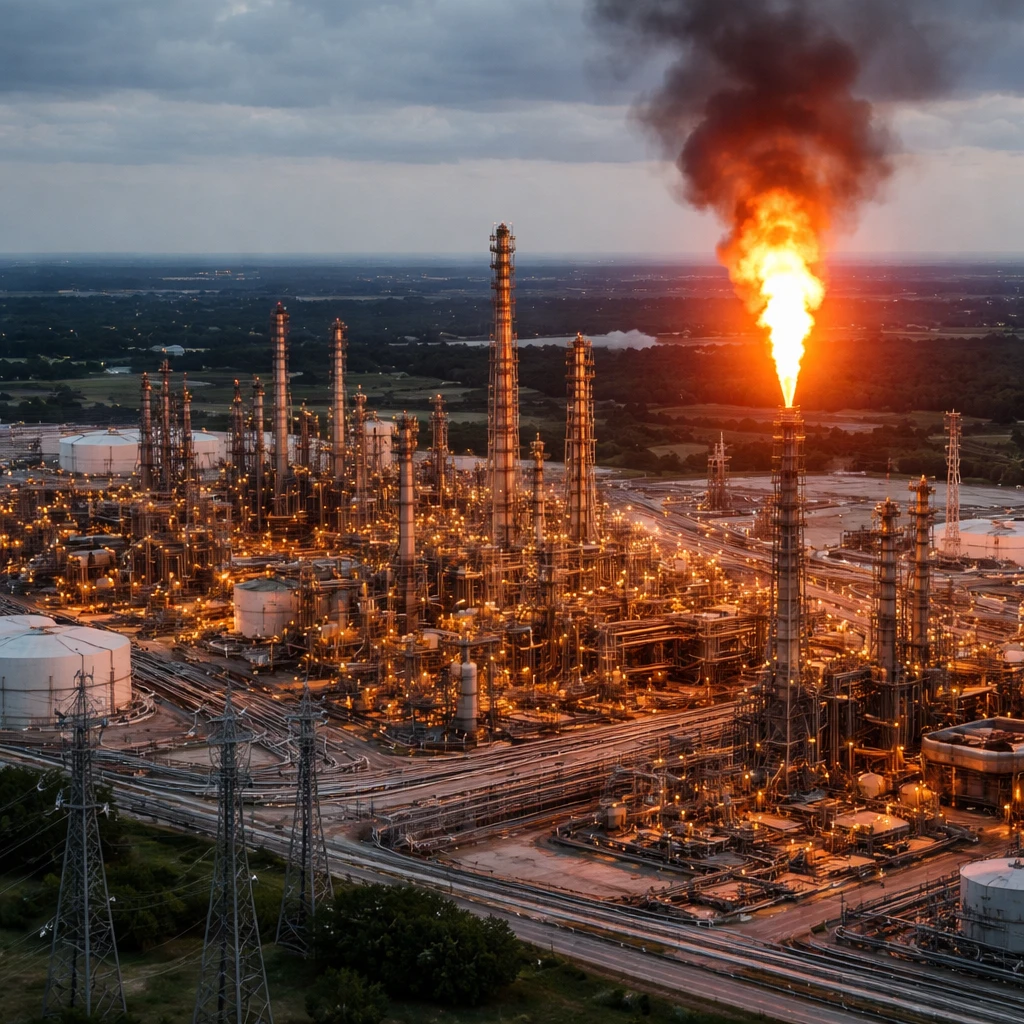
Exxon Mobil's 264,000-barrel-per-day refinery in Joliet, Illinois, was taken out of service after a power interruption struck the site on Sunday afternoon, the company said. The outage occurred at about 3:30 p.m. CT and power was reported restored at around 7:00 p.m., according to the company's statement.
The interruption prompted the refinery's safety flare to activate and led to a plant-wide shutdown. The company is assessing the facility's condition and has said the cause of the incident remains under investigation. Following the shutdown, industry monitors said units are being stabilized as part of the restart and recovery process.
Market observers including IIR Energy have noted that the refinery is expected to return to normal service by the end of this week as stabilization proceeds. The Joliet refinery supplies key fuels to consumers in the U.S. Midwest and, according to the company's website, has the capacity to produce about 11 million gallons a day of gasoline and diesel fuel.
The disruption arrives amid a period of tightness in global fuel markets. The article notes that the Iran war and Ukrainian attacks on Russian refineries have strained global fuel supplies, and robust export activity has further tightened domestic inventories. In the United States, the national average price of diesel last week surpassed $6 a gallon for the first time ever. Any prolonged operational disruption at major refining hubs could further tighten an already constrained market and put upward pressure on prices.
Exxon Mobil is conducting its internal assessment and investigation while market participants monitor the stabilization process at Joliet. At this stage, officials and analysts cited in market notes expect normal operations to resume by the end of the week, contingent on the outcomes of inspections and stabilization work.
Operational note: Units are being stabilized after the plant-wide shutdown, according to IIR Energy. The company and independent observers will continue to track the facility's restart timeline and any downstream impacts to regional fuel supplies.