
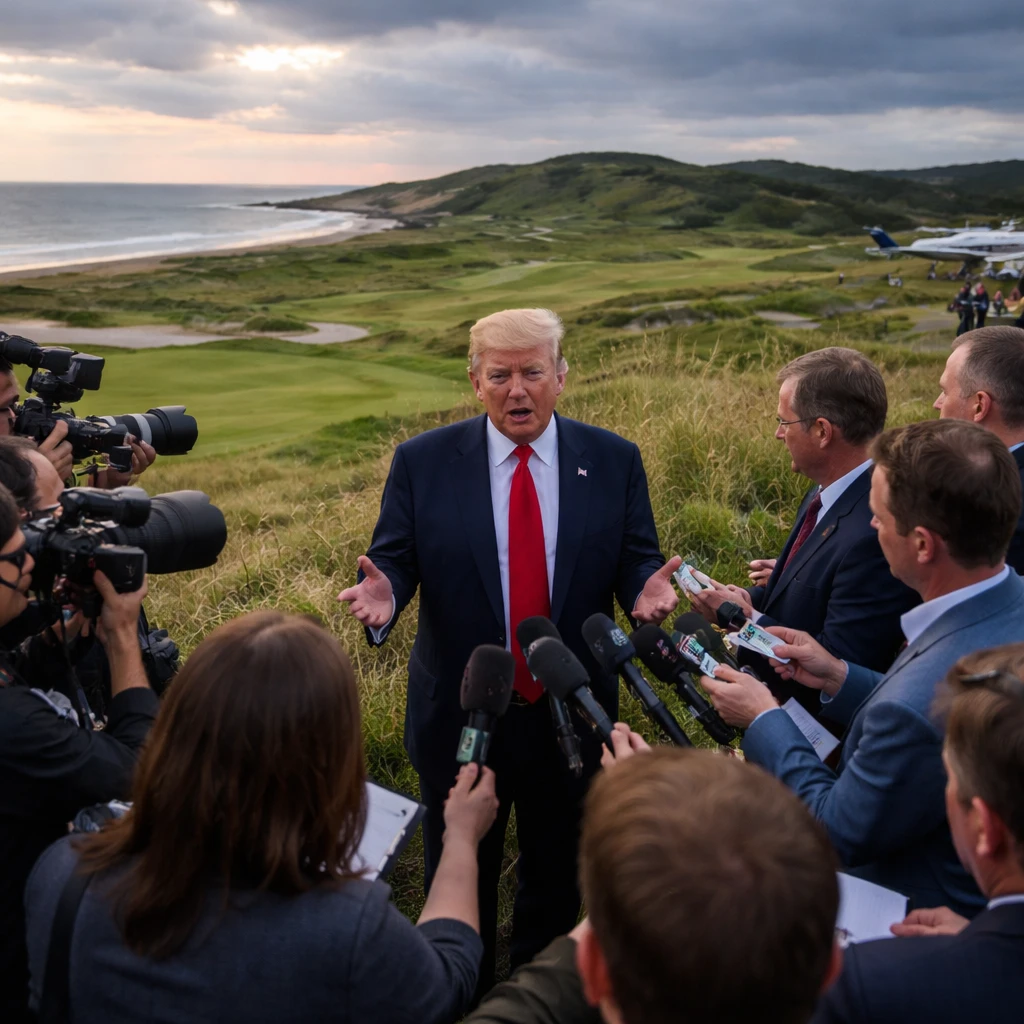
DOONBEG, Ireland, Sept 13 - President Donald Trump said on Sunday that no country should have lower interest rates than the United States, remarks delivered just days before the Federal Reserve is set to decide on monetary policy.
Speaking with reporters at the Irish Open golf tournament, Trump said he did not know whether Fed policymakers will raise interest rates at their meeting this week. He added, however, that the U.S. "should be paying the lowest interest rate in the world" regardless of what Federal Reserve data on inflation and the economy show.
The Labor Department’s Consumer Price Index, a key gauge of underlying inflation, on Friday posted its largest increase in four months. That data reinforced expectations that the U.S. central bank will raise the target range for its federal funds rate - now at 3.5% to 3.75% - when the Federal Open Market Committee concludes its meeting on Wednesday.
Officials at the Fed are weighing price pressures that remain elevated as the economy contends with recent import tax increases and surging energy prices tied to the Iran war. Many worry that the longer inflation stays above target, the greater the eventual cost to restore price stability.
The central bank’s gathering also comes just weeks before midterm elections that will determine whether Republicans retain narrow majorities in both chambers of Congress. Recent polls indicate that concerns over affordability could be heightened if the Fed moves to raise rates ahead of the vote.
Trump has seen his approval ratings fall amid persistent inflation and has frequently criticized previous Fed leadership. "I know more about formulas than anybody, and with the best credit in the world, we make other countries rich," he said on Sunday.
Since naming his own Fed chair, Kevin Warsh, earlier this year, Trump has been comparatively more supportive of the central bank’s leadership. But he has also made his preferences explicit. Two weeks ago he posted on social media in capital letters: "LOWER THE RATE OR I’LL STOP TRADING WITH COUNTRIES WITH WHICH WE HAVE A DEFICIT."
Before boarding a plane to return to the United States later on Sunday, Trump reiterated that stance to reporters, saying: "We don’t want to have deficits with nations. We want to have surpluses or at least break-evens."
Kevin Hassett, director of the National Economic Council, told a Sunday television program that Trump "will defend the independence of Kevin Warsh above all" regardless of what the Fed does on rates. Hassett also emphasized the president’s preferences, adding that if the Fed raises rates, "I’m sure he’s not going to be super happy about it."
With the Fed meeting imminent, markets and policy observers are watching for the committee’s assessment of incoming inflation readings and the economy’s resilience. The combination of stronger-than-expected CPI data, the administration’s tariff moves and international energy-market shocks tied to the Iran war has left policymakers facing a delicate trade-off between containing inflation and avoiding further pressure on household finances ahead of the midterms.
Trump’s public demands for lower rates and his social media warnings about trade policy add a political dimension to an already fraught policy decision. The Fed must weigh short-term economic and political considerations against its mandate to bring inflation back toward target over the medium term.
How the Federal Open Market Committee decides on Wednesday will reverberate through credit markets, borrowing costs for consumers and businesses, and the broader political conversation about affordability and economic stewardship in an election year.