
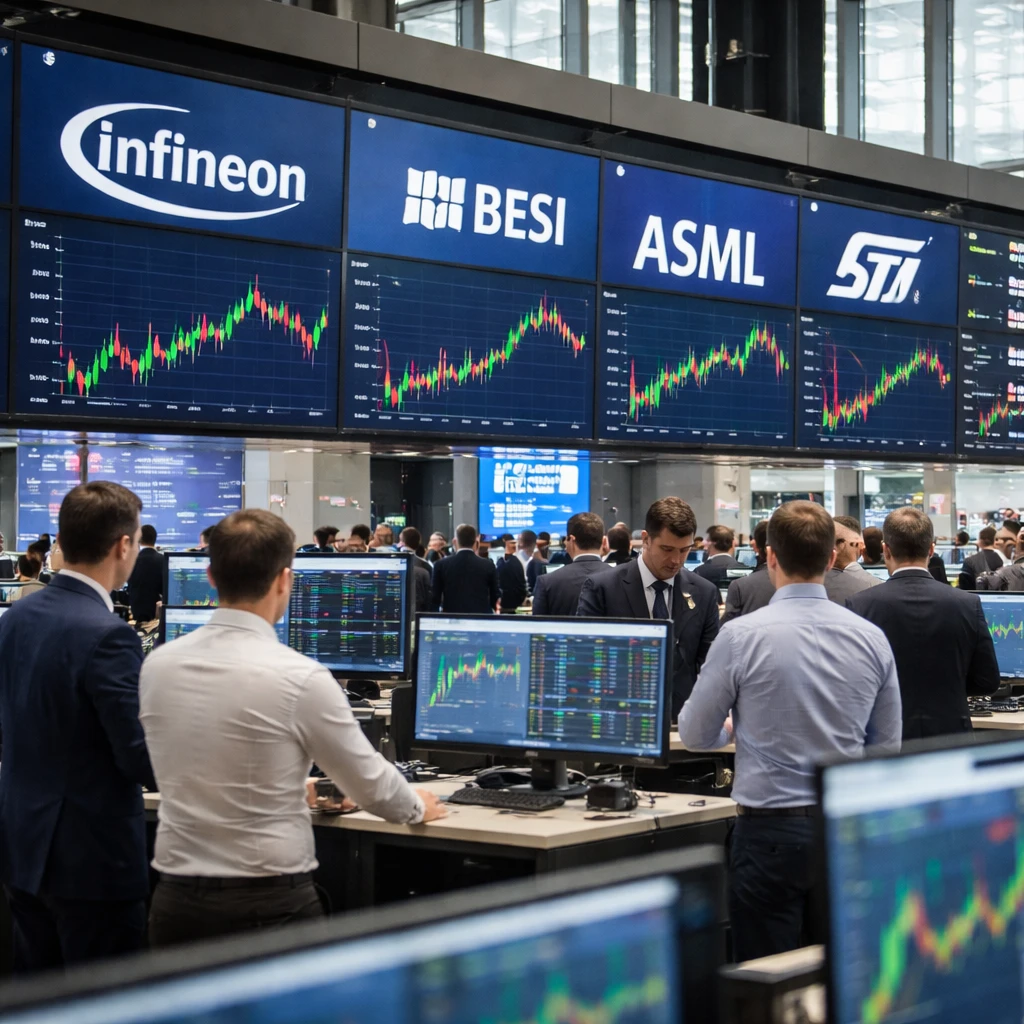
European semiconductor equities recovered modestly on Tuesday after several sessions of heavy selling that followed a weak quarterly report from Broadcom last week. By 07:49 GMT, Infineon Technologies had climbed more than 2% and BE Semiconductor Technologies had added 1.9%, while ASML, ASM International and STMicroelectronics each rose in a narrower band of roughly 0.5% to 1%.
The rebound came after a global selloff in chip stocks that started when Broadcom's most recent quarterly report indicated demand for its custom AI chips had not met lofty expectations. Broadcom elected to keep its fiscal 2027 AI revenue target unchanged at $100 billion, a decision that disappointed investors who had been expecting an upward revision given recent momentum in custom chip sales.
The Broadcom update hit U.S. chip names hard, with the Philadelphia semiconductor index plunging 10.3% on Friday - a single-day fall described in the report as the worst since the pandemic-driven market turmoil of March 2020. That rout erased a substantial amount of market value from U.S.-listed chipmakers.
U.S. technology and chip stocks staged a recovery on Monday, with the S&P 500 technology sector rising 1.5% to lead sector gainers and the Philadelphia Semiconductor Index jumping 5.6% as part of a partial rebound from the earlier selloff that had eliminated roughly $1 trillion in market value for U.S. chip companies. Investor attention was also drawn to a sizable move in Intel shares, which surged 11.2% after a report that Google had placed an order to have more than three million tensor processing units manufactured for 2028.
Market sentiment received an additional lift from developments in the Middle East, where Iran and Israel said they had halted attacks on each other after an appeal from U.S. President Donald Trump, who asked both parties to immediately stop shooting. That easing of regional tensions was cited in market commentary as supporting broader investor risk appetite.
Taken together, the patchy recovery in European chip stocks on Tuesday reflected a market still processing conflicting signals: near-term demand concerns stemming from a major supplier's report, offset by signs of stabilization in U.S. technology and semiconductor sectors and a reduction in geopolitical risk.