
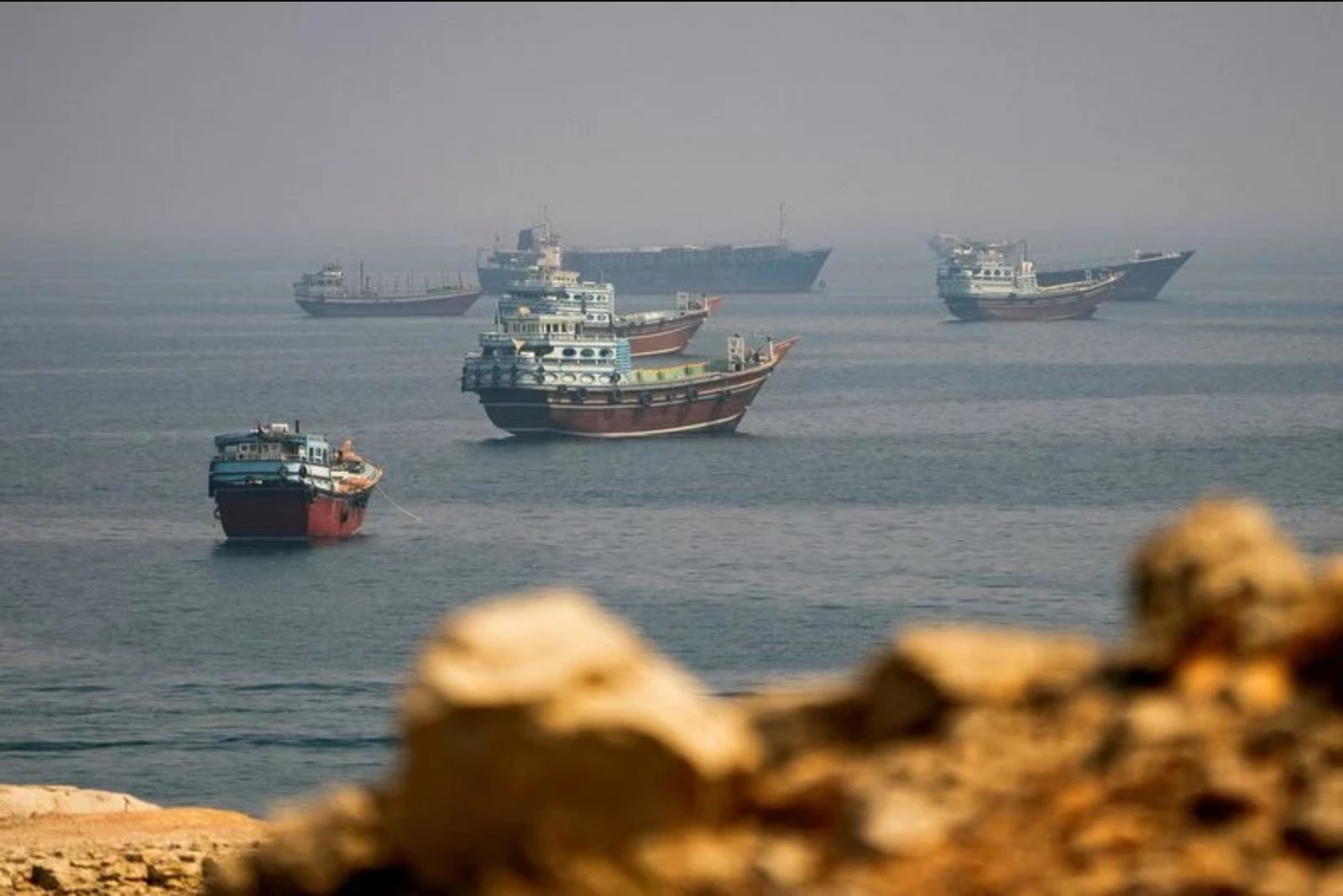
Orders for new supertankers have surged in 2026, in what industry data show is the largest purchasing wave in at least 25 years. Shipping analytics firm Signal Group reports 217 Very Large Crude Carriers (VLCCs) ordered so far this year, compared with 93 in 2025. Allied Shipbroking tracks a similar rise, recording 164 VLCC orders this year versus 83 last year. Taken together, the buying spree is worth more than $20 billion.
The pace of contracting reflects a marked reorientation of crude shipping patterns as the US-Iran war alters traditional routes and prompts buyers to source oil from further afield. A VLCC typically carries about two million barrels of oil, and the recent orders signal that a growing share of cargoes are expected to travel longer distances - particularly from the Atlantic basin to Asia - rather than move from Middle Eastern suppliers via shorter voyages.
"We believe owners betting on increased long-haul shipments from the Atlantic to Asia are playing a large part in the renewed demand for VLCC ordering," said Rebecca Galanopoulos, senior analyst at Veson Nautical, pointing to owners' strategic responses to changed trade flows.
Trade-route disruption and supply realignment
Industry participants say the virtual closure of the Strait of Hormuz is a central driver of the new ordering surge. Before the conflict, roughly one-fifth of global oil and liquefied natural gas supplies transited the strait; with that route compromised, Asian and European refiners are replacing volumes from other sources.
U.S. crude exports have reached record highs, while additional Atlantic basin producers are expanding output. Ioannis Papadimitriou, an analyst at Vortexa, said that countries on South America's east coast - notably Brazil, Guyana and Argentina - will be important contributors to further export growth. "Regional production could grow by around 2.5 million barrels per day through 2030, largely feeding European and Asian markets and favouring longer-haul trades," he said, adding that he also sees expectations growing of longer-haul trades on bigger vessels.
Shuttle trades, pipeline damage and owner responses
Another dynamic boosting demand for both VLCCs and Suezmax tankers is the expanding shuttle trade within the Gulf - moving crude out of the Gulf through the Strait of Hormuz for reloading onto larger ships in the Gulf of Oman. Middle Eastern producers face vessel availability constraints and safety concerns: some shipowners have become reluctant to send ships through the strait amid Iranian attacks, prompting producers to acquire or commission their own tonnage to ensure exports can continue.
Lars Barstad, CEO of tanker group Frontline, told a conference in Norway that damage to a Saudi pipeline running west to the Red Sea has increased the need for Saudi Arabia to take a more active role in shipping crude by sea. "Saudi (Arabia) will need to participate in this business to a much greater degree ... at least temporarily," he said.
Shipbroker reports show that the cost of employing the largest tankers has climbed sharply since the pipeline was damaged. Allied Shipbroking notes VLCC spot rates recently rose above $500,000 per day, up from roughly $132,000 per day in February before the war. The additional voyage legs and transshipment activity tied to shuttle trades both occupy vessels for longer and add port waiting times, reinforcing demand for more ships.
Fleet age, renewal and the shadow market
Beyond immediate route shifts, structural factors are supporting the ordering wave. Each new VLCC costs about $130 million to build, according to Allied Shipbroking, and the VLCC fleet includes a material share of older tonnage. Veson Nautical estimates about 20% of VLCCs are more than 20 years old, creating a need for renewal after years of oversupply and industry crisis.
Recent contracts include delivery slots in 2029 and 2030, which market analysts say indicates owners expect elevated demand to persist into the medium term. Pavlos Fakinos, a freight market analyst at Allied Shipbroking, noted that these later delivery dates reflect confidence among buyers that the ordering is not only a short-lived reaction but a longer-term positioning.
At the same time, not all older VLCCs are being scrapped. Data firm Kpler reports that ageing tankers are being absorbed into a so-called "shadow fleet" that serves to transport sanctioned crude from countries such as Russia, Iran and Venezuela outside mainstream Western shipping and insurance networks. That secondary market is keeping older tonnage active rather than retired.
Market pricing, secondhand values and builder economics
Price signals in both the charter and secondhand markets have shifted sharply. Brokers at Pareto Securities estimated at a recent conference that buying a 10-year-old tanker has become more expensive in some cases than contracting a newbuild. This dynamic, combined with materially higher spot rates and the capital cost of new ships, is reshaping owner decisions on fleet composition and replacement timing.
The scale of the ordering wave - more than twice the number of ships ordered this year versus last, per the Signal Group benchmark, and a comparable jump in Allied Shipbroking's count - underscores how geopolitical disruption, route substitution and fleet-age dynamics are interacting to produce the largest VLCC ordering tally seen in at least a quarter-century.
Implications
The current build-up of contracted VLCCs speaks to an industry positioning for sustained long-haul crude flows, larger vessel utilisation and a tighter available fleet in the near term. Higher freight rates and the economics of replacing aging tonnage are central to owner strategies, while the shadow fleet and charter market distortions remain relevant for sanctioned flows. The durability of these patterns will depend on the evolution of the conflict, repairs to damaged pipeline infrastructure and how producers and charterers ultimately reconfigure supply chains.