
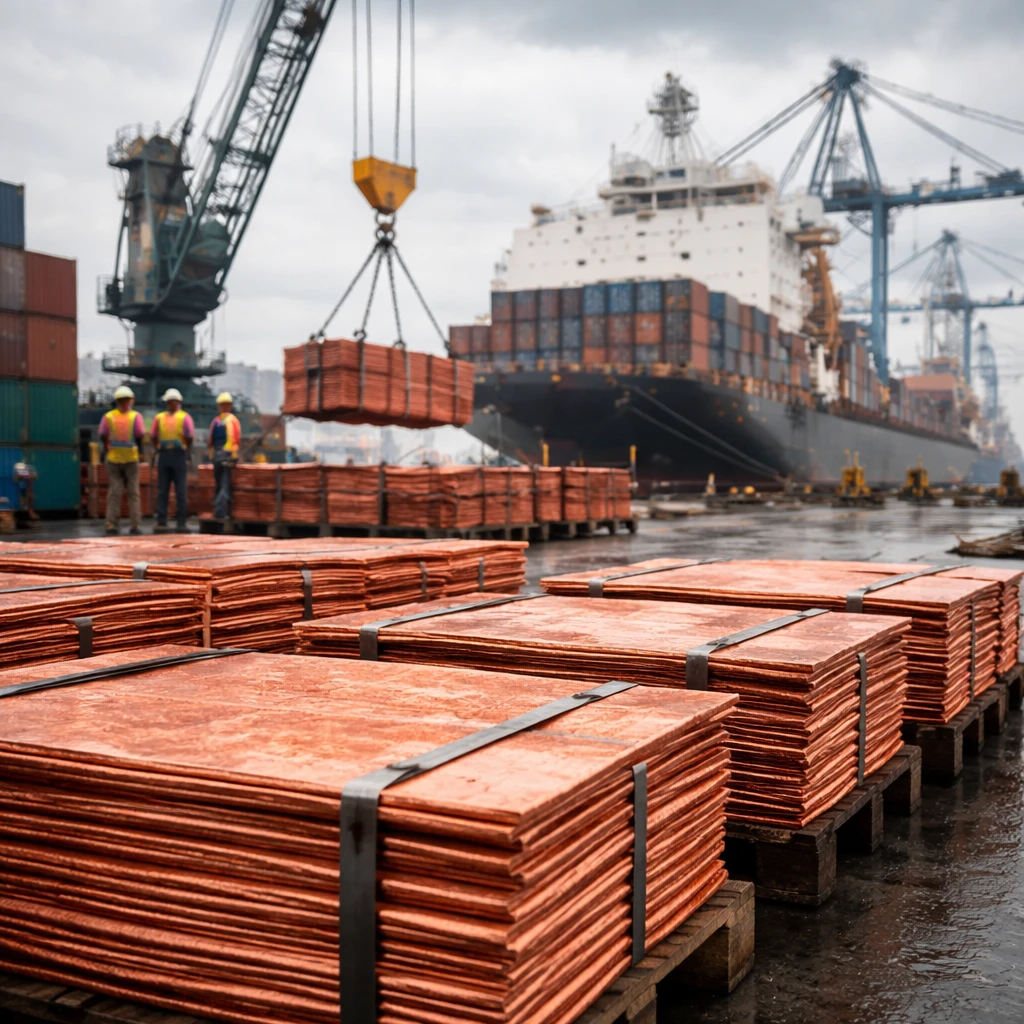
Copper has retraced toward what some analysts view as more fundamental valuations, but buying the dip may not be straightforward, according to the latest analysis from BCA Research. The firm's chief commodities strategist, Roukaya Ibrahim, points to two main drivers behind copper's steeper slide relative to other metals this month: a cooling in artificial intelligence-related sentiment and diminishing prospects of U.S. tariffs on refined copper imports.
Ibrahim says copper has become increasingly correlated with hyperscaler and other large technology stocks this year, reducing its sensitivity to some traditional macro drivers such as movements in the U.S. dollar and indicators tied to the Chinese economy. In that context, the recent equity pullback tied to AI optimism represents a meaningful headwind for copper, albeit one she views as more likely a temporary correction than the onset of a broader bear market.
"A recovery in technology shares could help underpin copper prices," Ibrahim notes, framing the AI-led equity weakness as a potentially transitory factor. By contrast, uncertainty around U.S. tariff policy on refined copper is characterized as a more durable challenge for the market.
Expectations that Washington might impose import levies had prompted what Ibrahim describes as aggressive copper stockpiling in the United States. That accumulation has drawn inventories away from other parts of the world, effectively tightening available supplies outside the United States.
On a global-exchange basis, inventories have risen sharply year-on-year, up 75% relative to the same period last year. Within that increase, COMEX warehouses now represent a substantial 69% share of total reported exchange inventories, compared with an average share of 15% over the 2020-2024 period. By contrast, the Shanghai Futures Exchange's portion of exchange stocks has fallen markedly to about 3% from near 40%, a shift that has contributed to pronounced supply tightness in China.
Ibrahim expects refined copper ultimately to be exempted from U.S. import tariffs. If that materializes, it could prompt a redistribution of the accumulated U.S. stockpiles back into global trade flows. The strategist models two scenarios: one in which American stockpiling eases going forward, and another in which existing U.S. inventories are shipped abroad. Either pathway would increase inventories outside the United States to seasonally elevated levels and thereby limit the metal's near-term recovery potential.
There are already early signs that such a reversal may be under way, with reports that traders are exploring shipments of copper from U.S. warehouses to consumers in China. Against this backdrop, Ibrahim holds a neutral stance on copper over the next three months, reflecting the risk that rebalanced inventories and weaker AI sentiment could cap a quick rebound. Over a longer horizon - the coming year - she anticipates prices to trend higher, presenting a comparatively more favorable entry for investors with a longer-term outlook.
Impacted sectors: Metals and mining, industrials, technology hardware and data center operators tied to hyperscaler demand, and commodity trading/logistics.