
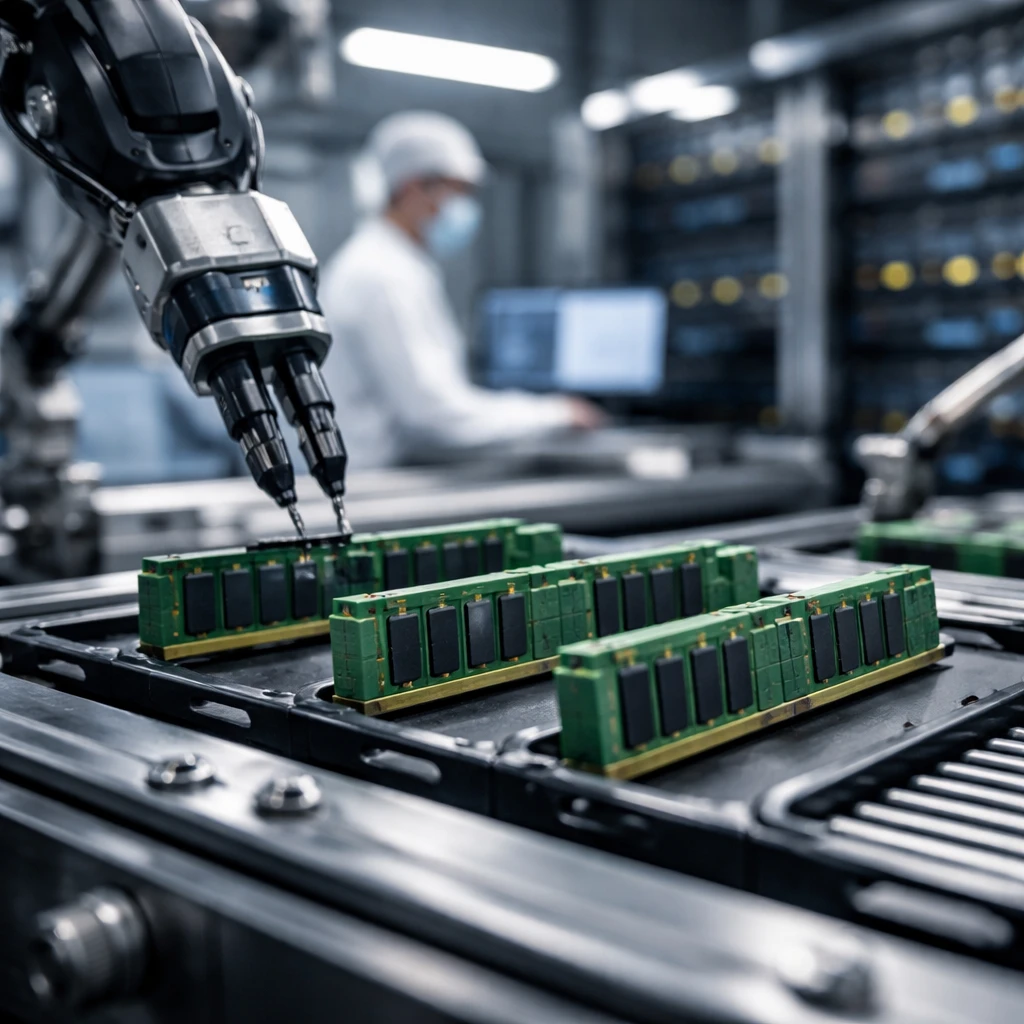
China's leading Android handset manufacturers have dramatically reduced their shipment ambitions for 2026, cutting targets by up to 30% as a global memory shortfall reshapes component allocation across devices and data centers.
Micron Technology Inc reported exceptionally strong results consistent with that dynamic. The company posted record Q3 fiscal 2026 revenue of $41.46 billion and earnings per share of $25.11, both figures exceeding analyst expectations. The firm's gains reflect heavy purchases of memory by AI infrastructure customers, which have taken supply that otherwise would have been available to smartphone assemblers. Micron shares have surged more than 820% over the last year and were trading around $1,137.87 early Tuesday, a little under the prior close of $1,145.28.
The most prominent impact has been at Xiaomi Corp. The company, which had already pared back its 2026 plan to about 135 million units from the 170 million it shipped in 2025, has reportedly trimmed that forecast by another 30% to roughly 95 million units. Suppliers were warned the number could decline further if component availability does not improve. Oppo and Vivo have also lowered their 2026 shipment forecasts to below 90 million units apiece. Meanwhile, Honor - which recorded 71 million phone shipments in 2025 - has informed suppliers it may be unable to maintain that level of growth in 2026.
Industry participants point to a structural reallocation of memory product rather than a short-term cyclical movement. According to the reporting, a single tray of Nvidia AI processors consumes low-power DRAM chips in quantities that would have previously been routed to smartphones. At the same time, cloud service providers have secured large blocks of memory output through long-term agreements, effectively moving handset makers back in allocation queues with limited immediate recourse.
Responses vary across the device ecosystem. Apple Inc, Microsoft Corporation, and HP have opted to raise end-device prices to pass higher component costs through to customers. Chinese original equipment manufacturers selling primarily into price-sensitive markets have instead curtailed volumes.
Independent estimates illustrate the scale of the disruption. Gartner projects the memory shortage will cut global smartphone shipments by 8.4% in 2026 and lift average smartphone prices 13% compared with 2025 levels. The PC market is expected to feel similar pressures, with forecasted PC shipment declines of 10.4% and average prices rising 17%, according to reporting of Gartner data.
Gartner senior director Ranjit Atwal framed the current episode as both larger in magnitude and longer in duration than past memory price cycles. "What's happening this time around, compared to previous times that memory prices have gone up, is the extent with which prices of memory is increasing. Secondly is the length of time that we think prices will remain high. This one is looking like it won't be until the end of 2027 before we get to any type of regional pricing," he said on June 26.
Market action on Tuesday highlighted the divergence the shortage is creating across the supply chain. Xiaomi's Hong Kong-listed shares dipped as low as HKD 21.34 - within a few cents of their 52-week low at HKD 21.30 - on volume of about 174 million shares, surpassing the three-month average of 157 million. The stock has fallen roughly 64% over the past year. Conversely, Samsung Electronics gained 3.41% to KRW 334,000 in Seoul trading, supported by reports noting the Korean chipmaker's large-scale AI-related capital investments and the margin benefit from persistent memory tightness.
Investors and industry watchers are now focused on upcoming earnings and guidance from memory suppliers as the next public checkpoints for pricing and allocation trends. Micron's Q4 fiscal 2026 results, currently slated for September 29, were identified as the next major reporting moment. If Micron's guidance signals prolonged tightness stretching into 2027 - consistent with Gartner's assessment - the Chinese handset makers that have already trimmed their volume targets could face further downward revisions before year-end.
Another open question for markets is whether Xiaomi will translate its lower unit outlook into a formal change to revenue guidance. That remains unanswered publicly as of now and will be a closely monitored development for investors in the stock.
Summary
China's top Android smartphone makers have scaled back their 2026 shipment targets by as much as 30% amid a memory shortage driven by surging AI-server demand and long-term cloud provider allocations. Micron has been a primary beneficiary, reporting record quarterly revenue and earnings, while OEM responses range from price increases to volume cuts. Market participants await Micron's next earnings as a key indicator of how long tightness may persist.
Key points
- Xiaomi cut its 2026 shipment target to about 95 million units after an earlier reduction to roughly 135 million units; Oppo and Vivo lowered forecasts to under 90 million units each.
- Micron posted record Q3 fiscal 2026 revenue of $41.46 billion and EPS of $25.11 as AI-infrastructure demand absorbs memory supply.
- Gartner estimates the memory crunch will reduce smartphone shipments by 8.4% in 2026 and raise average smartphone prices 13% year-over-year; PC shipments and prices are also projected to be adversely affected.
Risks and uncertainties
- Continued tight memory supply could force additional shipment cuts among handset makers, pressuring consumer electronics volumes and revenues.
- If memory prices remain elevated through 2027 as some analysts expect, device makers that cannot pass costs through to customers may face margin compression or further product cancellations.
- Upcoming earnings guidance from major memory suppliers - particularly Micron's Q4 fiscal 2026 report - could confirm prolonged tightness and trigger further market re-pricing across smartphone and PC supply chains.