
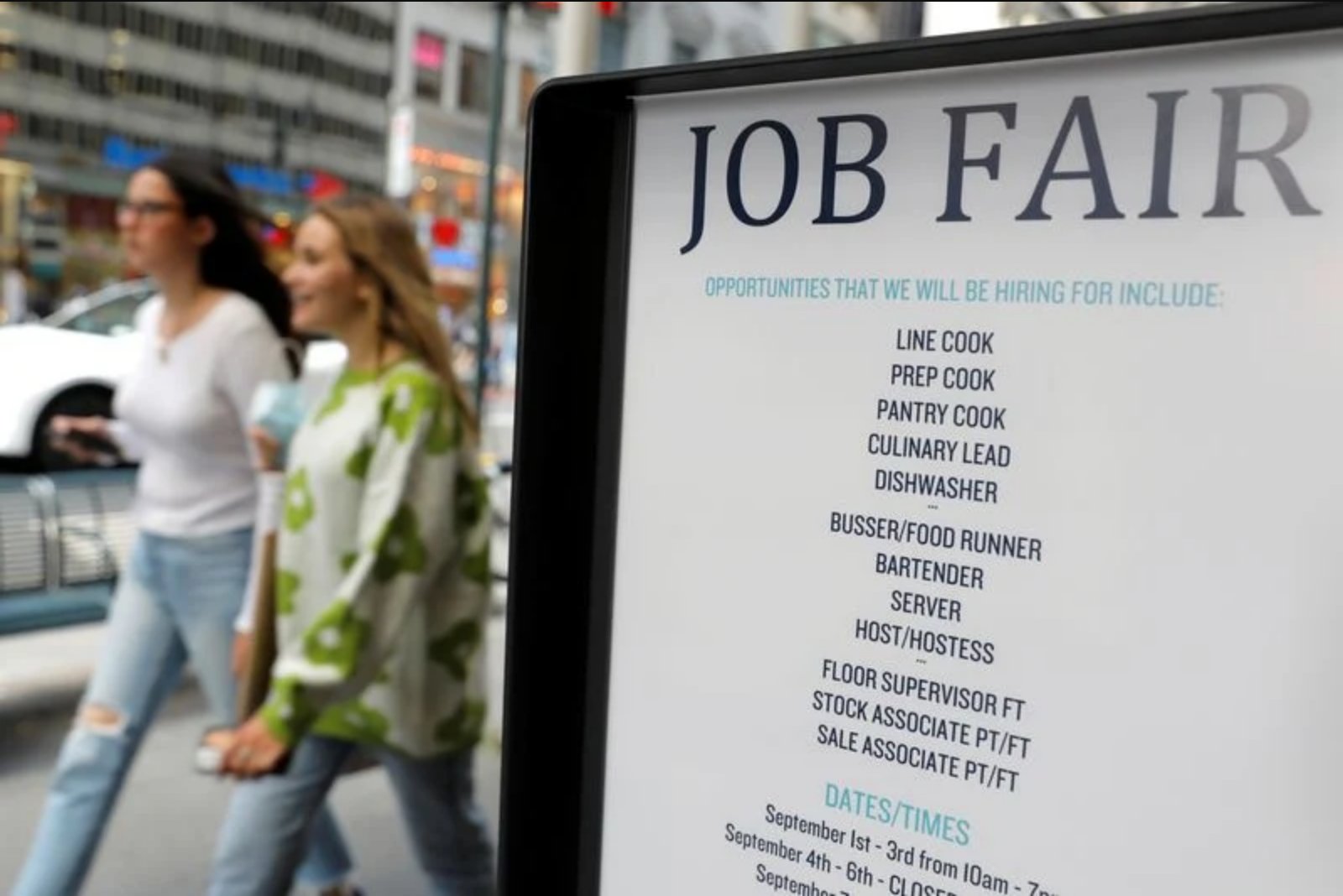
The number of U.S. job openings climbed marginally in May, even as hiring softened, according to the Labor Department's Job Openings and Labor Turnover Survey (JOLTS) released on Tuesday. The data indicate the labor market is neither accelerating nor contracting sharply, but holding steady after several months of stronger payroll gains.
Measured change in vacancies
Open positions rose by 9,000 to reach 7.594 million on the last day of May. April's count was revised downward to 7.585 million unfilled jobs, a change from the previously reported 7.618 million. Economists surveyed by Reuters had expected about 7.30 million vacancies for May.
Where openings concentrated
The JOLTS report shows the largest share of April's vacancies was in the professional and business services sector, and many openings were at firms with fewer than 10 employees. The job openings rate remained unchanged at 4.6%.
Hiring and separations
Despite the slight uptick in vacancies, hiring fell by 45,000 in May to 5.170 million, while the hiring rate held steady at 3.3%. The broader employment picture has shown three consecutive months of robust job gains, a pattern that has encouraged some optimism that momentum is returning after a slowdown earlier in the year. Part of the recent strength in payrolls has been linked to fewer layoffs and resignations in the labor market.
However, layoffs and discharges rose by 41,000 in May to 1.708 million, nudging the separations rate up to 1.1% from 1.0% in April. These measures remain at relatively low levels even after the increase.
Near-term outlook and market context
The next headline employment report, covering June and due on Thursday, is expected to show a payroll gain of 110,000 following a 172,000 increase in May, based on a Reuters survey of economists. The unemployment rate is forecast to remain at 4.3% for a fourth consecutive month.
Financial markets are pricing in additional Federal Reserve rate increases this year amid concerns about inflation connected to the U.S.-Israeli war with Iran. The Fed earlier this month kept its policy rate in the 3.50% to 3.75% range but its updated quarterly projections indicated policymakers anticipate raising borrowing costs later in the year.
Data points in this article are drawn directly from the Bureau of Labor Statistics JOLTS report and related market expectations as reported in the release.