
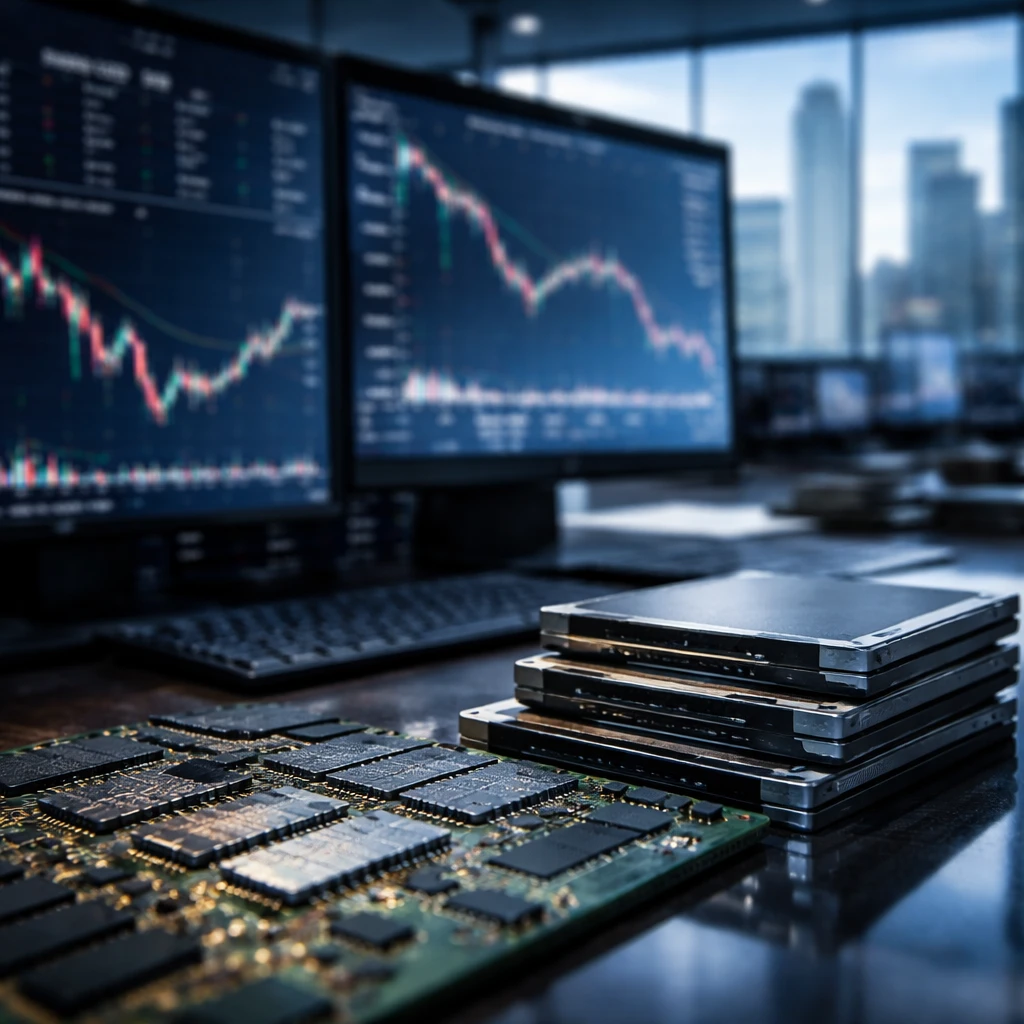
Deutsche Bank's equity strategists argue that the largest U.S. technology stocks - commonly grouped as the "Mag-7" - have acted as a drag on broader U.S. equity performance over the last nine to ten months, and that this drag accelerated notably in June. The bank's analysis underscores an unusual dynamic: weakening performance among these megacap names occurring at a time when global interest in artificial intelligence remains high.
Strategist Jim Reid described the trend as not entirely new, noting the beginning of a rotation out of these holdings in late October of the prior year. Reid also highlighted that the market narrative through the first half of 2026 was dominated by two major themes - the conflict in Iran and widespread global enthusiasm for AI - making the Mag-7's relative lagging performance appear counterintuitive in that context.
Deutsche Bank identifies four primary factors behind the June underperformance:
- Extreme positioning reverting to neutral: At the end of May, exposure to large-cap technology was at what the bank characterizes as an extreme level. That positioning moved back toward neutral, reducing concentration in those names and weighing on their prices.
- Hyperscaler capital expenditure concerns: The bank points to growing apprehension about capital spending plans among the largest hyperscalers. Worries about future capex can affect expectations for revenue and margins across the tech ecosystem.
- Federal Reserve policy shift: Deutsche Bank notes that a more hawkish pivot by the Fed may have had a negative impact on growth-oriented stocks, which include many members of the Mag-7.
- Rising memory and storage costs: Surging prices for memory and storage chips are creating margin concerns for portions of the technology sector, even as higher chip prices benefit chipmakers. The bank highlighted this pressure with reference to recent price increases from Apple across a wide range of products - a development Deutsche Bank's Research Institute had anticipated in its earlier analysis of memory demand.
Reid adds that market leadership has shifted away from the Mag-7 for the time being, even though AI-related enthusiasm persists globally. As an illustration of the divergence in performance, the KOSPI index has gained more than 100% year-to-date, according to the bank's discussion, underscoring the uneven nature of market rewards in the current environment.
The bank's assessment ties the pocketed underperformance to a combination of investor positioning, concerns about the capital spending outlook for major cloud operators, monetary policy developments, and cost pressures tied to components such as memory and storage. These factors together help explain why large-cap tech underperformed in June despite continued thematic interest in AI across markets.