
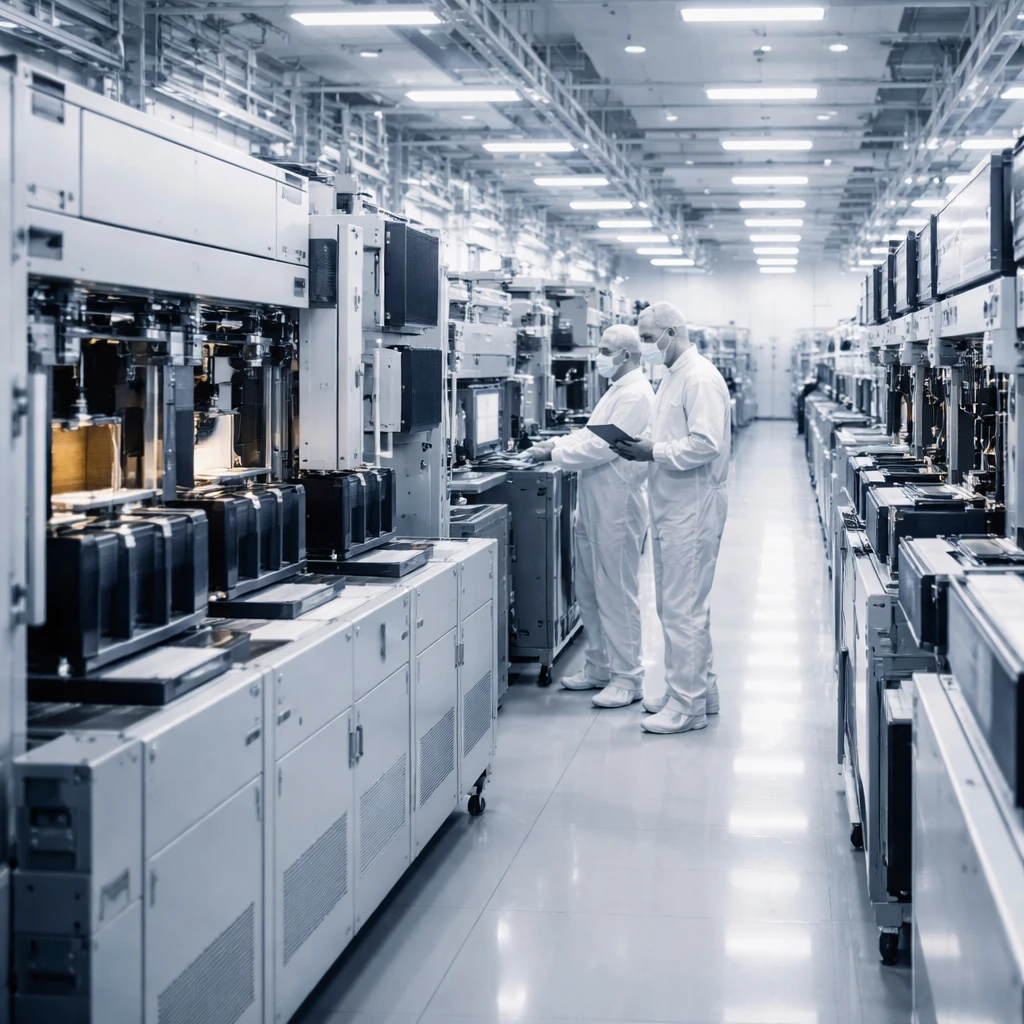
China imported $4.76 billion of semiconductor production equipment in August, a 16% increase compared with the same month a year earlier, according to an analysis by Jefferies of Chinese customs data released last week.
The August figure marks a departure from a sustained pattern of year-on-year decreases that began in November 2025. June and July had shown roughly flat import values versus the prior year before August produced the first double-digit monthly increase in that interval.
Through the first eight months of 2026, cumulative imports of semiconductor production equipment into China amounted to $30.69 billion, which remains 5% below the total for the same period in 2025. Jefferies' data indicate that the pace of the year-to-date decline has been moderating in recent months.
Product categories
Breakdowns by equipment type for August show divergent trends:
- Front-end processing equipment: $3.26 billion, up 24% year-over-year.
- Inspection and testing equipment: $457 million, up 12% year-over-year.
- Packaging equipment: $178 million, up 34% year-over-year.
- Parts: $591 million, down 13% year-over-year.
Country sources and trade flows
On a country basis, Japan remained the single largest supplier to China in August, although shipments from Japan fell 6% from a year earlier to $1.04 billion. For the January-through-August window, imports from Japan declined 12% to $7.38 billion.
Imports from the Netherlands, which include equipment from ASML, totaled $932 million in August, a 4% decrease year-over-year. Jefferies' figures note that this was the first monthly decline from the Netherlands in four months.
Singapore emerged as an important conduit in August, ranking as the second-largest source of equipment after Japan. August shipments from Singapore were $725 million, up 52% year-over-year, and January-through-August imports from Singapore reached $6.25 billion, up 16% year-over-year.
U.S.-origin equipment imports to China totaled $358 million in August, an 8% decline from the same month a year earlier. Over the January-to-August period, imports from the United States fell 24% to $2.60 billion. Jefferies observed that U.S.-based equipment manufacturers appear to be redirecting exports to China via intermediary locations such as Singapore and Malaysia.
Policy backdrop
The U.S. Congress is debating the bipartisan Multilateral Alignment of Technology Controls on Hardware bill, which would seek to require allied countries, including Japan and the Netherlands, to apply export restrictions similar to those the United States has imposed. The bill's passage remains uncertain.
Given the data and the ongoing legislative discussions, the August rebound illustrates a shift in monthly import flows, but the year-to-date totals remain lower than last year. The country- and product-level splits highlight both recovery areas and continuing weakness in parts imports.
Data note
The figures cited above are drawn from Jefferies' analysis of Chinese customs data released last week.