
Donna, Texas - Sept 23
Long highways stitch together South Texas ranchland, small towns and border cities where pump jacks punctuate flat horizons and mesquite trees offer sparse shade. Along that corridor, from the outskirts of San Antonio to McAllen, local voters describe daily economic pressures and frustrations with immigration policy that are testing a Republican strategy built on last year’s election results.
Traveling more than 360 miles (580 km) and speaking with more than 30 Latino voters across the region, the consistent refrain was that as president Donald Trump had an opportunity to ease costs that matter in these communities and did not. Many of those interviewed said they no longer feel the Republican Party is reliably looking out for people like them, a shift that complicates the state party’s bet that Latino support from 2024 would hold through the 2026 cycle.
National approval metrics underscore the political headwinds. A recent tracking poll put the president’s approval rating at 33%, the lowest since returning to the White House. That decline feeds into questions for Texas Republicans after they redrew congressional maps last year with the expectation that Latino voters who backed Trump in 2024 would remain in the GOP camp heading into 2026.
Rather than dispersing Latino voters, the redistricting process left many districts with strong Latino populations intact. Texas’ 15th Congressional District, in its new form, has Latinos accounting for 74.5% of the citizen voting-age population. The 35th District is 51.6% Latino on that same measure, according to the state’s redistricting analysis. Yet both districts have tightened politically. Political handicappers rate them as more competitive than their demographic profiles alone might suggest - Sabato’s Crystal Ball lists the 15th as a Toss-up and the 35th as Lean Republican, while Cook Political places the 15th in the Lean Republican column.
Local and institutional polling also points to vulnerability. An August 2026 Texas Southern University poll found Democrats leading in three South Texas districts, including the 15th. Interviews with nearly 50 analysts, activists, pollsters and voters reinforced the idea that some Latinos who supported Trump in 2024 appear open to Democratic candidates in the coming cycle.
Several voters described a mix of economic strain and disapproval of tough immigration enforcement as factors shifting their views. In McAllen, Saúl Guajardo, 53, who said he voted for Trump three times, described a personal reorientation. "I used to be a conservative, far-right," he said. "I’m more open than ever before to vote Democrat." Guajardo and his wife Terrie said they live paycheck-to-paycheck despite steady employment, and Terrie pointed to strict immigration enforcement as too harsh for people seeking work, saying the crackdown had permanently separated some families attempting to make a life in the United States.
Economic costs are tangible to voters in the region. Gasoline prices are an immediate pain point: the average cost per gallon in the McAllen area was reported at $4.09 as of September 22, according to AAA data cited by residents. That kind of expense weighs on household budgets where driving and truck use are central to daily life and work.
Polling focused on Latino voters reflects this discontent. In a September survey of 1,000 Latinos in Texas conducted for Cook Political and TelevisaUnivision, 18% of Latinos who voted for Trump said they no longer supported him, and nearly two-thirds of Latino respondents said they would be less likely to back candidates who endorse the president’s immigration policies. Those figures illustrate both the promise and fragility of Latino voters for either party, and they suggest support often hinges on whether voters believe elected officials will improve their economic circumstances.
"It’s not one of these that you’re talking to a wall because they’re all going to vote Democrat or they’re all going to vote Republican," said Daniel Alegre, CEO of a Spanish-language media company. "They’re all going to vote for the person who is going to make their lives better."
Republican operatives reject the idea of a wholesale shift away from their party. Christian Martinez, the National Republican Congressional Committee’s national Hispanic press secretary, said Democrats had years of responding to waning support among Hispanic voters with what he characterized as denial and condescension, rather than addressing the concerns that drove many working-class voters to the GOP.
The risks of redistricting are most visible in the 15th District, where the new borders would have produced an 18-point Trump advantage in 2024, compared with a two-point margin in 2020 and a 14-point loss in 2016. That volatility has opened the seat to intensified attention. The incumbent Republican Monica De La Cruz faces Democratic challenger Bobby Pulido, whose celebrity in the region predates his run for office.
Pulido, a singer whose signature song "Desvelado" has nearly 610 million streams on Spotify and who has won two Latin Grammy Awards, has leveraged name recognition and a message focused on local economic concerns to draw attention to the race. An August Texas Southern University poll showed Pulido leading De La Cruz by five percentage points.
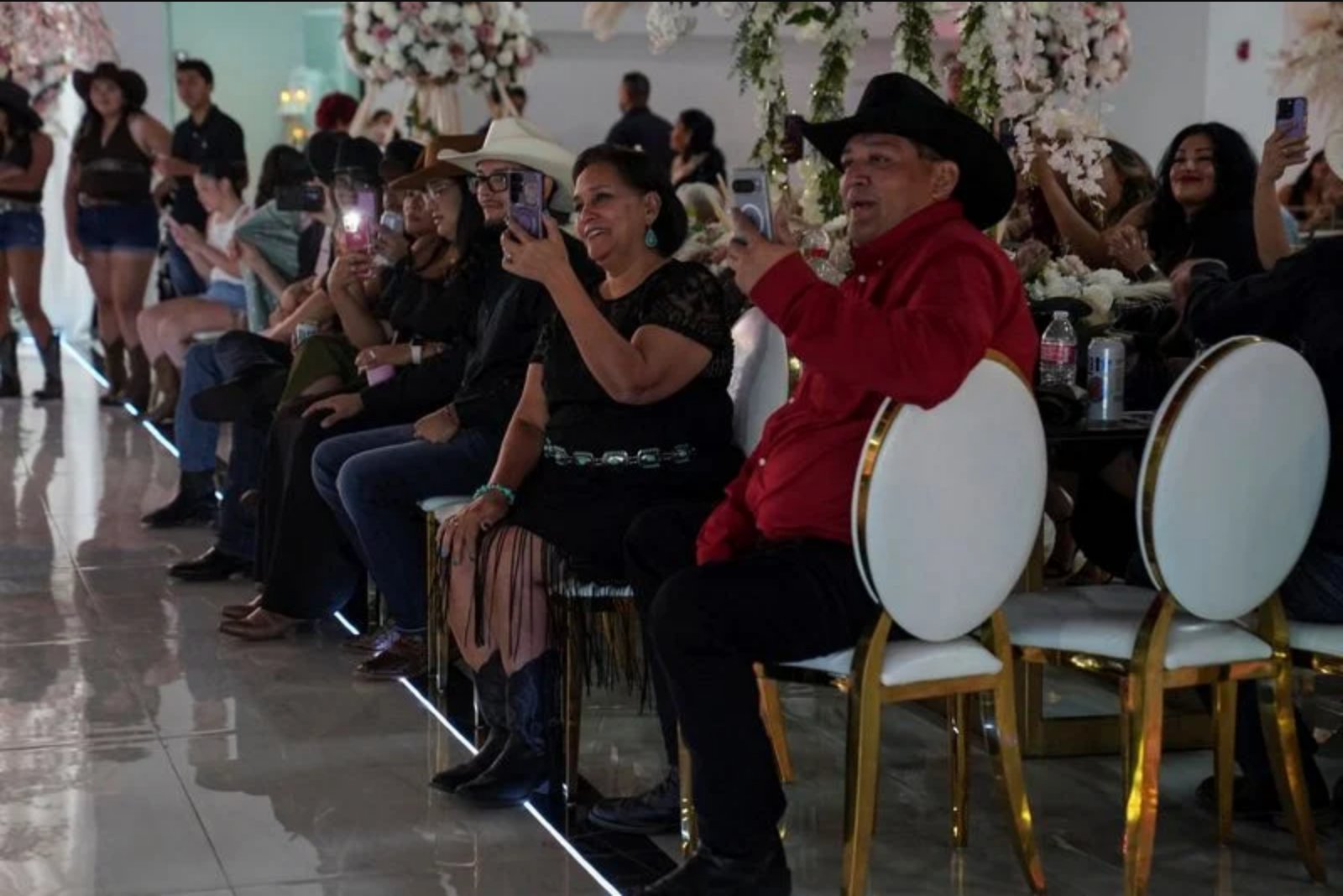
Pulido spends weekends moving through South Texas on a campaign rhythm that taps into cultural traditions. Dressed in a cowboy hat, blue jeans and boots, he makes surprise appearances at celebrations such as quinceañeras. At one such event on August 1, he surprised Melody Silva and roughly 200 friends and family; attendees erupted when he appeared and cheered when he mentioned his congressional bid. Pulido said Democrats lost ground in South Texas because they failed to address the economic issues most relevant to working families, and he criticized both major parties for misreading voters. "We don’t want handouts, we’re very proud. We just want an opportunity to go work and make something and provide for our families," he said.
Those appearances resonate with voters for whom personal connections and recognition matter. Michael Silva, Melody’s father and a McAllen police officer, said Pulido has deep roots in the Rio Grande Valley and represents "the raza," the local community.
Pulido’s name recognition and cultural connections appear to be a key asset. At a monthly outdoor market roughly 180 miles (290 km) north in rural Beeville, his name came up repeatedly among a dozen voters Reuters spoke with, signaling familiarity across a broad geographic area.
Monica De La Cruz’s campaign did not respond to requests for comment on the record for this reporting.
Other local voices reflect a similar reconsideration of party allegiance. Ramon Barrera, 36, a social media commentator known as "The Texas Tea Guy," travels South Texas to discuss community issues and politics. A first-time Trump voter in 2024, Barrera describes himself as conservative but not firmly attached to either major party. He said Trump’s presidency disappointed him and that he is now open to voting for Democrats, including Bobby Pulido and Gina Hinojosa, the Democrat challenging Republican Greg Abbott in the gubernatorial race. "The S&P 500 looks great, but our wallets don’t," he said, capturing the disconnect some residents describe between headline economic indicators and day-to-day household finances.
Local sentiment, polling and the configuration of electoral districts together create a political picture in which economic pressures and immigration policy are central themes for Latino voters in South Texas. For Republican strategists who redrew maps to reflect 2024 voting patterns, that evolving electorate introduces uncertainty ahead of 2026.
Context note - Reporting involved interviews with more than 30 Latino voters and nearly 50 analysts, activists and pollsters, and cited polling and demographic figures as provided by local polling organizations, the state’s redistricting analysis and AAA gas price data.