
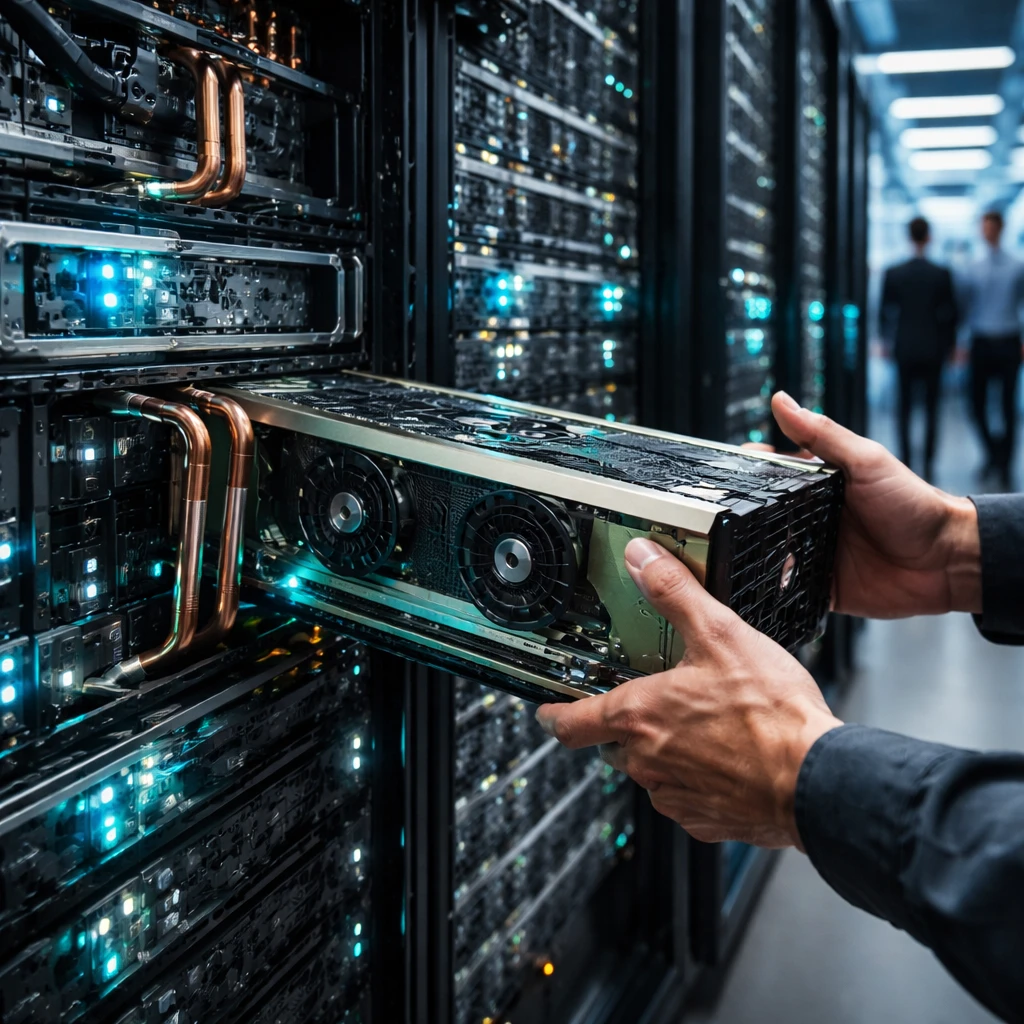
Advanced Micro Devices reported a classic beat-and-raise quarter for Q2 FY2026, but the market response was muted. The company posted revenue of $11.54 billion, up 50% year-over-year, and non-GAAP earnings per share of $1.66, both above Street estimates. For Q3 management set revenue guidance near $13 billion, roughly 4% ahead of consensus. Still, the shares slid -6.28% to $486 following the results, in what looks like a "sell the news" reaction after a year-to-date rally of about 142%.
Key financials
- Q2 revenue: $11.54 billion vs. $11.25 billion est.
- Q2 non-GAAP EPS: $1.66 vs. $1.60 est.
- Data Center revenue: $6.7 billion, up 107% year-over-year and representing 58% of total revenue (up from 42% a year ago).
- Gross margin: 56%, a 200 basis-point improvement year-over-year; Q3 guidance set at 56%.
The company has now recorded six consecutive quarters of revenue growth above 30% year-over-year, a notable achievement for a business at AMD's scale.
What the earnings call resolved
Management and the quarter provided answers to several central investor questions about AMD's enterprise trajectory and competitive posture.
- Is the Data Center momentum sustainable? The Data Center segment is clearly a self-sustaining core business. With record quarterly revenue of $6.7 billion, Data Center now accounts for a majority of sales. Server CPUs (EPYC) grew roughly 70% year-over-year, and Instinct accelerator GPU revenues more than doubled, underscoring a structural shift in AMD's revenue mix.
- Can AMD compete with NVIDIA in AI workloads? The company is making meaningful inroads. Strategic customer wins with major hyperscalers, including OpenAI and Anthropic (the latter supported by a $5 billion AMD investment), and traction for the MI350/MI355X accelerator family suggest hyperscalers are actively multi-sourcing AI compute. That supports the view that AMD is a credible alternative in select AI workloads.
- How should investors read the 2027 outlook? Management reiterated ambitious growth for Data Center, guiding revenue to more than double by calendar year 2027 and forecasting server CPU growth north of 70% year-over-year in that timeframe. AMD also adjusted its long-term EPS ambition to exceed $20, down from an earlier 2030 range of $25 to $30.
- Is the EPYC CPU narrative durable? Yes according to management commentary. AMD has secured long-term server CPU agreements with Chinese customers alongside Intel (INTC), and the roadmap includes a sixth-generation EPYC - Venice - built on a 2nm process (Zen 6) that the company says will deliver greater than 2x performance-per-watt versus leading x86 processors.
- Where will gross margins settle? Margins held at 56% for Q2 and the company guided Q3 to the same level. Management believes a long-term gross margin range of 55% to 58% is attainable given the evolving product mix toward higher-value Data Center offerings.
Issues left unresolved
The most prominent unsettled item is the so-called warrant overhang. As noted by Morgan Stanley, AMD is issuing in excess of $15 billion in warrants to several major customers as part of commercial arrangements tied to securing roughly $15 billion to $20 billion of future revenue. If those warrants are treated akin to a cash expense, they could materially suppress near-term reported profitability and create multi-year dilution to EPS. Morgan Stanley retained an Equalweight rating and a $465 price target, citing a three- to four-year EPS dilution risk tied to this program.
Upcoming catalysts to monitor
- Helios rack-scale initial shipments - Q3 2026: a successful ramp would validate AMD as a full-stack AI vendor; failure could raise execution risk on a first rack-scale product.
- MI450 GPU launch - H2 2026: could deliver a step-change in performance beyond the MI350; a strong NVIDIA response (e.g., the GB300) would narrow any comparative advantage.
- EPYC Venice (2nm) - 2027: >2x performance-per-watt could drive additional CPU share gains, though foundry capacity constraints remain a potential headwind.
- OpenAI/Anthropic ramp - H2 2026-2027: expected to materially contribute to Data Center GPU revenue, with management noting a multi-year contribution ramp.
- Core Scientific infrastructure (529 MW, up to 2.5 GW) - multi-year: could secure dedicated AI compute capacity for AMD customers but also represents a meaningful capital commitment.
- Q3 FY2026 earnings - ~Nov 3, 2026: the quarter when the first Helios revenue could be recognized; the current guide implies roughly $13 billion in revenue, setting a high bar for execution.
Why shares fell despite upside results
The market reaction reflects valuation and expectation dynamics rather than a simple reading of the quarter. AMD entered the print having risen roughly 142% year-to-date, far outpacing NVIDIA's roughly 13.6% rise and the S&P 500's approximate 13% gain. Consensus estimates for FY2027 EPS were revised higher to $14.49 at Truist; applying a 41x multiple to that projection yields an implied fair value near $594, a level analysts such as Truist used in raising their target. With much of the positive data already priced in, the post-earnings pullback looks like a normalization of elevated expectations rather than an immediate sign of fundamental deterioration.
Analyst positioning after the print
- Roth/MKM - Buy, target $650 - bullish on Helios ramp and 2027 Data Center doubling.
- Stifel - Buy, target $635 - emphasizes second-half server growth above 80% year-over-year.
- Truist - Buy, target $594 - raised CY27 EPS estimate to $14.49 and lifted target accordingly.
- Morgan Stanley - Equalweight, target $465 - focused on warrant-related dilution risks.
Bottom line
AMD delivered a quarter that met or exceeded the principal financial and operational metrics investors have been watching: top-line beat, margin resilience, and a continued shift to Data Center revenue dominance. Yet headline strength did not eliminate investor concerns about long-term EPS dilution from warrants and the challenge of meeting very high market expectations after an outsized rally. The coming quarters will hinge on execution across rack-scale products, GPU roadmaps, and how warrant-related economics are reflected in reported results.