
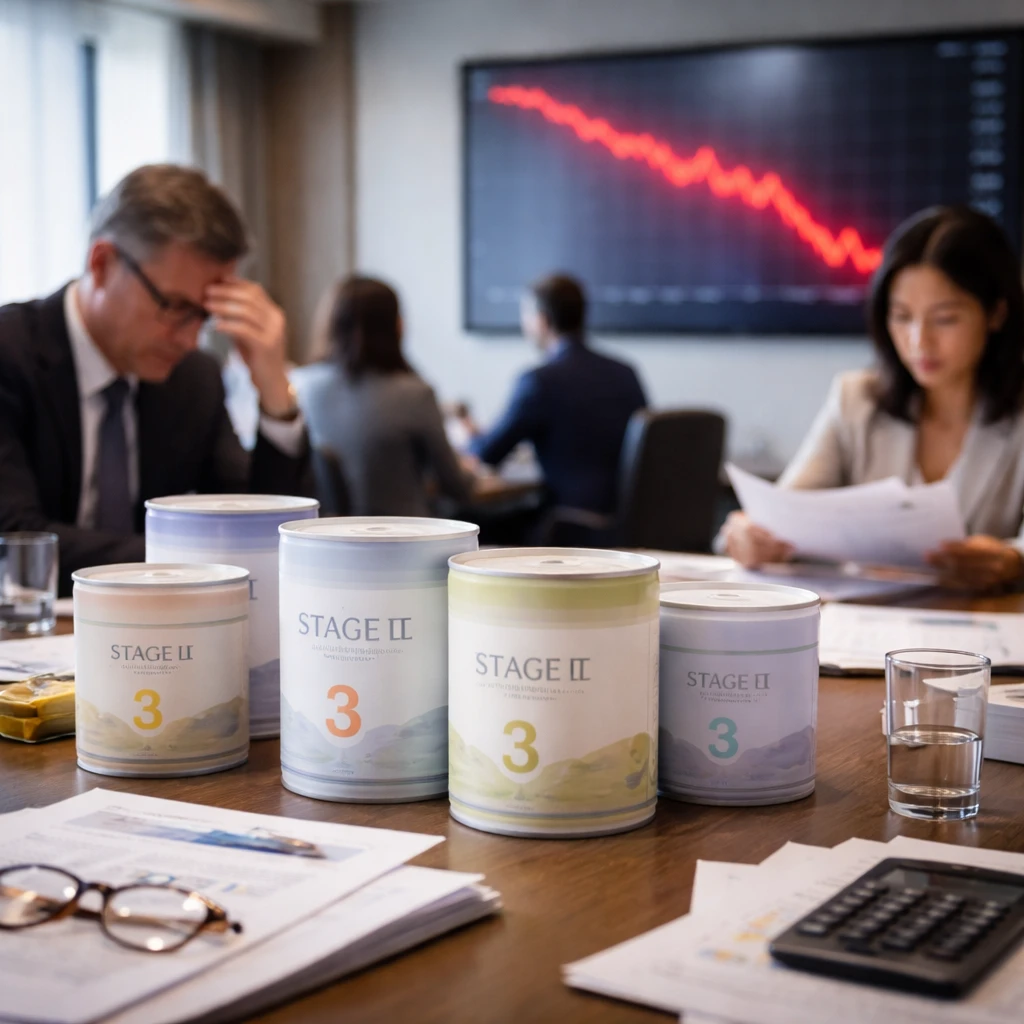
Shares of A2 Milk Company Ltd tumbled 11.0% to A$6.45 after management used its Annual General Meeting in Auckland to trim its revenue outlook for the first half of FY27 and provide fresh detail on the status of its China infant milk formula business.
The company shifted its H1 guidance from revenue being "broadly in line" with the prior year to being "slightly lower", a downgrade that surprised investors and precipitated sustained selling pressure across the stock's Australian Securities Exchange and New Zealand listings.
Management pointed to a supply chain breakdown in the fourth quarter of FY26 as the origin of the shortfall. Shortages of China-label infant milk formula products materially reduced in-market availability and prompted a sizeable share of existing customers to move to rival brands, a dynamic the firm says remains a drag on sales.
Company statements indicated that China-label offtake has rebounded to approximately 50% of pre-disruption volumes, an improvement from about 40% in August 2026, but the pace of recovery was insufficient to avoid a first-half revenue shortfall. The business also disclosed that English-label infant milk formula sales were separately affected by a May 2026 recall of the U.S.-label a2 Platinum product. In addition, the company flagged roughly $15 million in one-off transformation costs for FY27.
Observers have said the central investor worry is not that recovery has stalled entirely, but rather the heightened execution risk attached to a recovery now concentrated in the second half of the financial year. One analyst put it as being "about the increased execution risk" of a recovery that must be delivered later in the fiscal year.
Market context offered little reprieve for the stock. The S&P/ASX 200 closed down 91.4 points, or 1.04%, marking its sixth straight session of declines. The broader index move was driven by a prolonged rout in mining and materials names, which provided an unfavourable backdrop for risk assets generally.
Domestic economic data released the same morning added to investor nerves. Australia's October employment report showed the unemployment rate rising to 4.9% - its highest level since October 2021 - as the economy shed about 43,500 jobs, a clear miss versus expectations for a 25,000 gain. The Reserve Bank of Australia has already lifted the cash rate five times in 2026, taking it to an 18-year high of 4.85%. Although the weak employment print briefly sparked hopes that the central bank might pause further hikes, it did not measurably improve market sentiment.
The intersection of a company-specific guidance downgrade, a slower-than-anticipated recovery in China-label volumes, elevated FY27 transformation costs, and a deteriorating domestic macroeconomic picture set the stage for today's sharp drop in the stock. With the company's full-year FY27 growth prospects now heavily dependent on a second-half recovery that has not yet shown material progress, investors appear to be repricing the shares to reflect greater uncertainty around the China turnaround timeline.
For stakeholders focused on production rates, mix and backlog conversion, the recent disclosures underscore the operational challenge of converting improving offtake into near-term revenue when a significant portion of recovery is backloaded to H2. The one-off costs flagged for transformation and the lingering effects of the May product recall add to the complexity of returning to pre-disruption sales levels in a predictable fashion.