
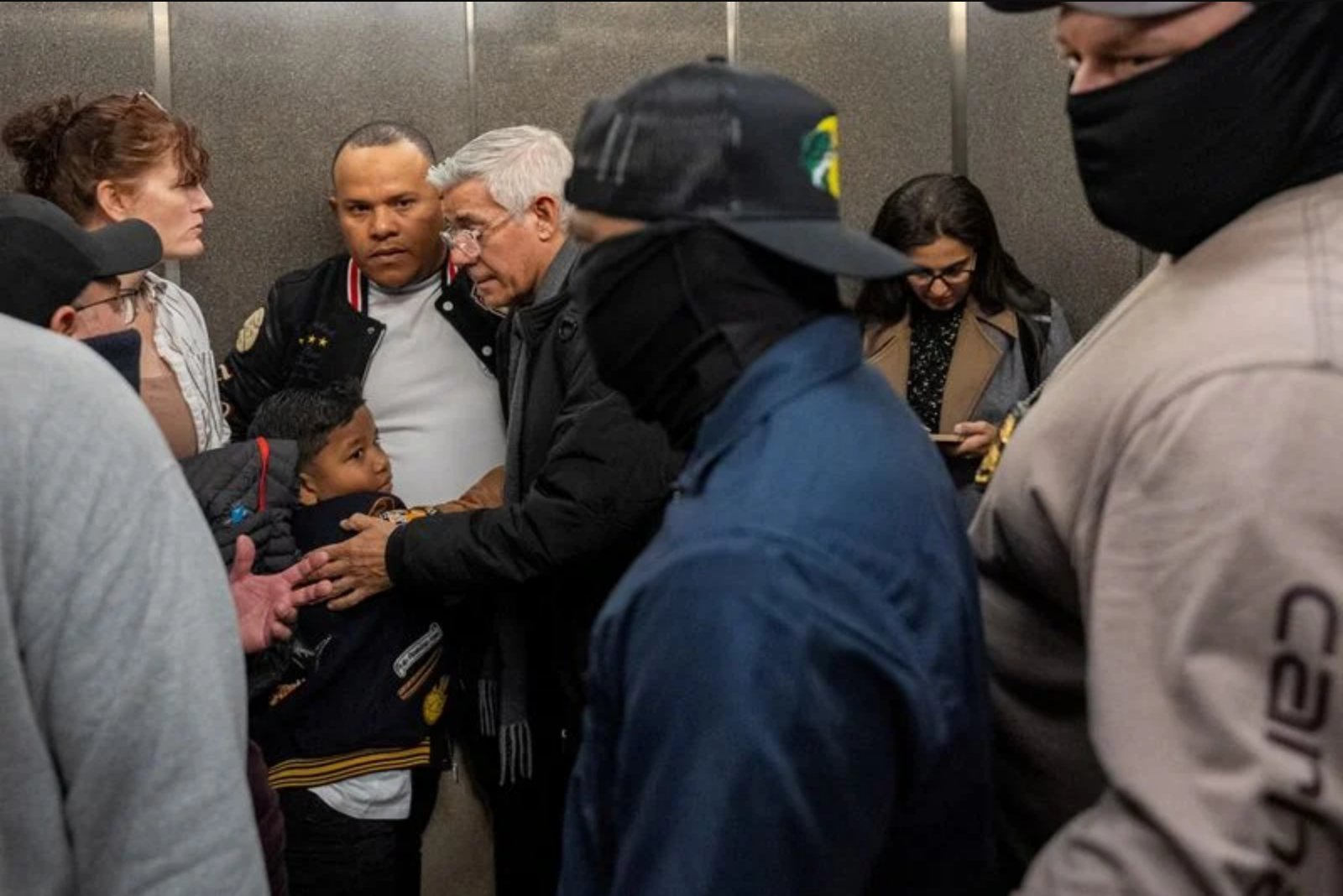
A federal judge in California on Tuesday set aside key Trump administration immigration enforcement policies that broadened arrests at immigration courthouses and lengthened permissible short-term detention by immigration authorities.
U.S. District Judge P. Casey Pitts of the Northern District of California found the actions taken by U.S. Immigration and Customs Enforcement (ICE) and the Executive Office for Immigration Review within the U.S. Department of Justice to be "arbitrary and capricious." In a 71-page opinion, Judge Pitts vacated ICE policies that rescinded prior limits on courthouse arrests and allowed detainees to be held in short-term facilities for up to 72 hours. He also vacated the DOJ office's similar policy that removed restrictions on courthouse arrests.
The litigation was brought by an asylum seeker who was arrested after leaving a routine hearing at a San Francisco immigration court. The ruling effectively reinstates Biden-era guidance that limited arrests at immigration courts to a narrow set of circumstances and imposed a 12-hour cap on detentions in short-term facilities.
The judge described the agencies' actions as lacking the reasoned explanation required under the Administrative Procedure Act. The opinion noted that previous guidance had limited courthouse arrests to situations such as national security threats, imminent danger and the "hot pursuit" of someone posing a public safety risk. The court concluded the Trump administration did not provide adequate justification for rescinding those earlier restrictions.
In his opinion Judge Pitts wrote, "For 80 years, Congress has commanded federal agencies to think before they act," adding that the law requires "an agency at least provide sound reasons for following its chosen course."
The shift in enforcement practice followed the return of U.S. President Donald Trump to office in January of last year, after which his administration increased arrests of immigrants suspected of being in the country unlawfully as part of a broader deportation push.
Reacting to the ruling on the social platform X, U.S. Department of Homeland Security General Counsel James Percival criticized the decision as "naked judicial activism in service of an anti-American, open borders agenda."
Context and legal effect
The court's decision vacates policies that had removed prior limits on when arrests could be made at immigration courthouses and that permitted up to 72 hours of holding in short-term detention facilities. By vacating those policies, Judge Pitts restored the prior, narrower framework that restricted courthouse arrests to specified circumstances and limited short-term detention to 12 hours.
The ruling centers on the Administrative Procedure Act's requirement that agencies provide reasoned explanations when changing established policies, and it signals the court's view that the agencies failed to satisfy that standard in these instances.