
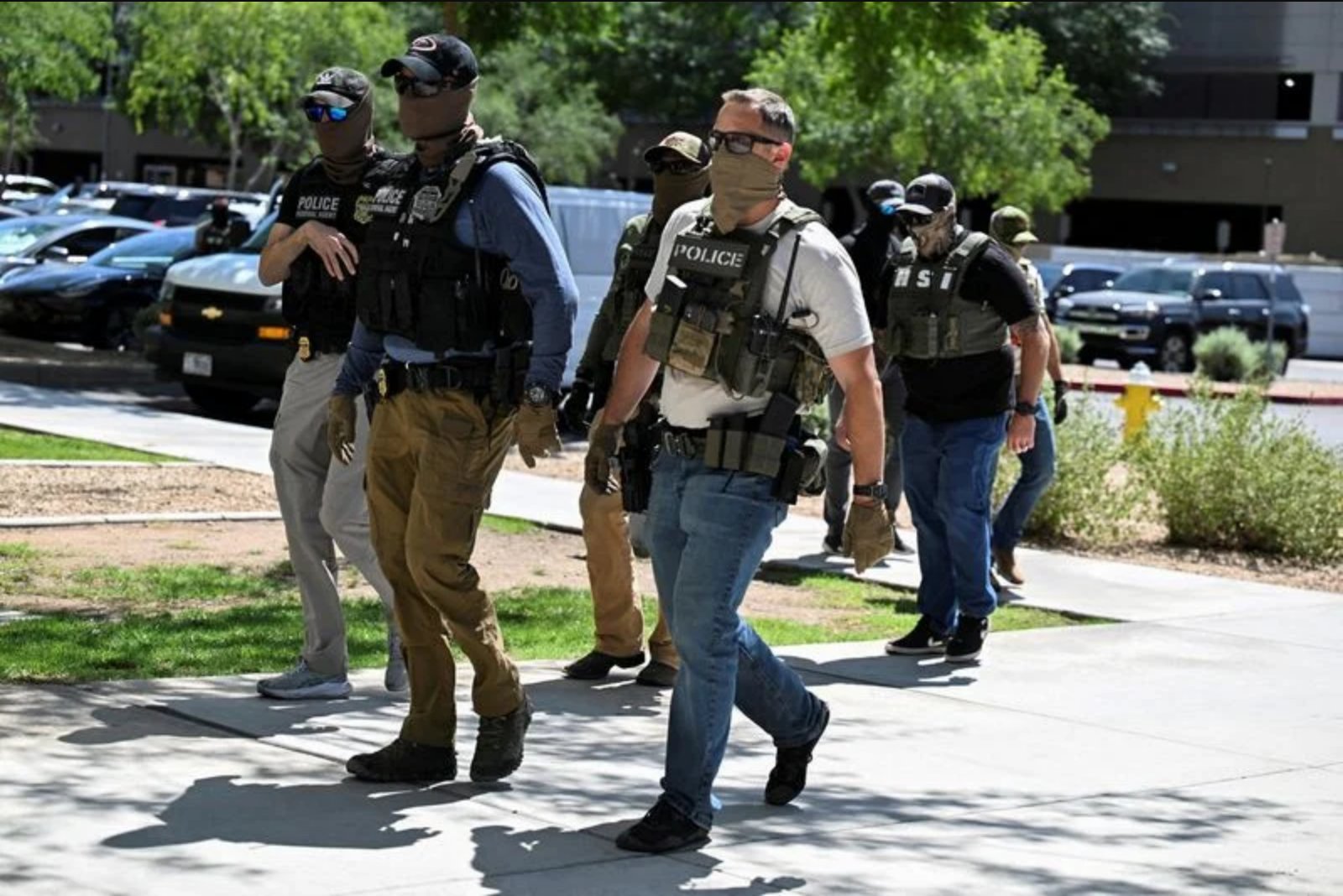
On July 2, a federal judge granted a preliminary injunction that prevents the City of Philadelphia from implementing core components of a new ordinance aimed at curbing masked conduct by federal law enforcement officers. The action, taken at the request of the U.S. Department of Justice, stops enforcement of provisions the city approved as part of an "ICE Out" legislative package.
U.S. District Judge Chad Kenney, an appointee of former President Donald Trump, wrote that Philadelphia cannot direct how federal officers carry out their duties and therefore cannot impose the challenged restrictions. The order blocks the law's key measures from taking effect ahead of the scheduled implementation date.
The local measure would have prohibited federal officers from wearing masks or hiding identifying information while on duty, mandated visible badges and marked vehicles, and created potential civil and criminal penalties for violations. The Justice Department argued that forcing agents to disclose their identities could jeopardize officer safety, compromise undercover work, and hinder ongoing investigations.
Philadelphia's elected officials included exceptions in the ordinance intended to preserve surveillance and undercover operations, according to the city. Nevertheless, Kenney wrote that allowing a municipality to set such rules for federal agents would be constitutionally impermissible. "This type of direct regulation of the federal government by a municipality is blatantly impermissible," he wrote.
The judge expanded on that view by warning of the practical consequences if municipalities could impose their own rules on federal conduct. He noted that endorsing the city's position would effectively permit each locality to decide "how, when, where, and whether federal law enforcement officers can conceal their identities," language he presented as inconsistent with constitutional separation of powers principles.
The Justice Department and the City of Philadelphia did not immediately respond to requests for comment following the ruling.
This dispute is part of a broader wave of litigation over municipal and state attempts to limit mask use by federal officers—most notably those involved in immigration enforcement operations that have prompted criticism from local leaders and immigrant rights groups. Recent court actions include a federal judge in Virginia blocking a similar statute there, and a separate federal injunction in Los Angeles that halted a California law banning masked federal officers. The Justice Department has also sued to block comparable legislation in New Jersey.
In issuing the injunction, Kenney emphasized the constitutional limits on local power over federal operations and the potential national implications of allowing municipalities to regulate the manner in which federal agents perform law enforcement duties. The preliminary ruling prevents Philadelphia from enforcing the most consequential parts of its ordinance while the legal challenge proceeds.
For investors and observers, the case highlights recurring tensions between municipal policy-making and federal enforcement authority, and the legal uncertainty created when cities attempt to adopt operational controls over federal agents. The litigation is ongoing, and the preliminary injunction preserves the status quo while courts evaluate the constitutional arguments.