
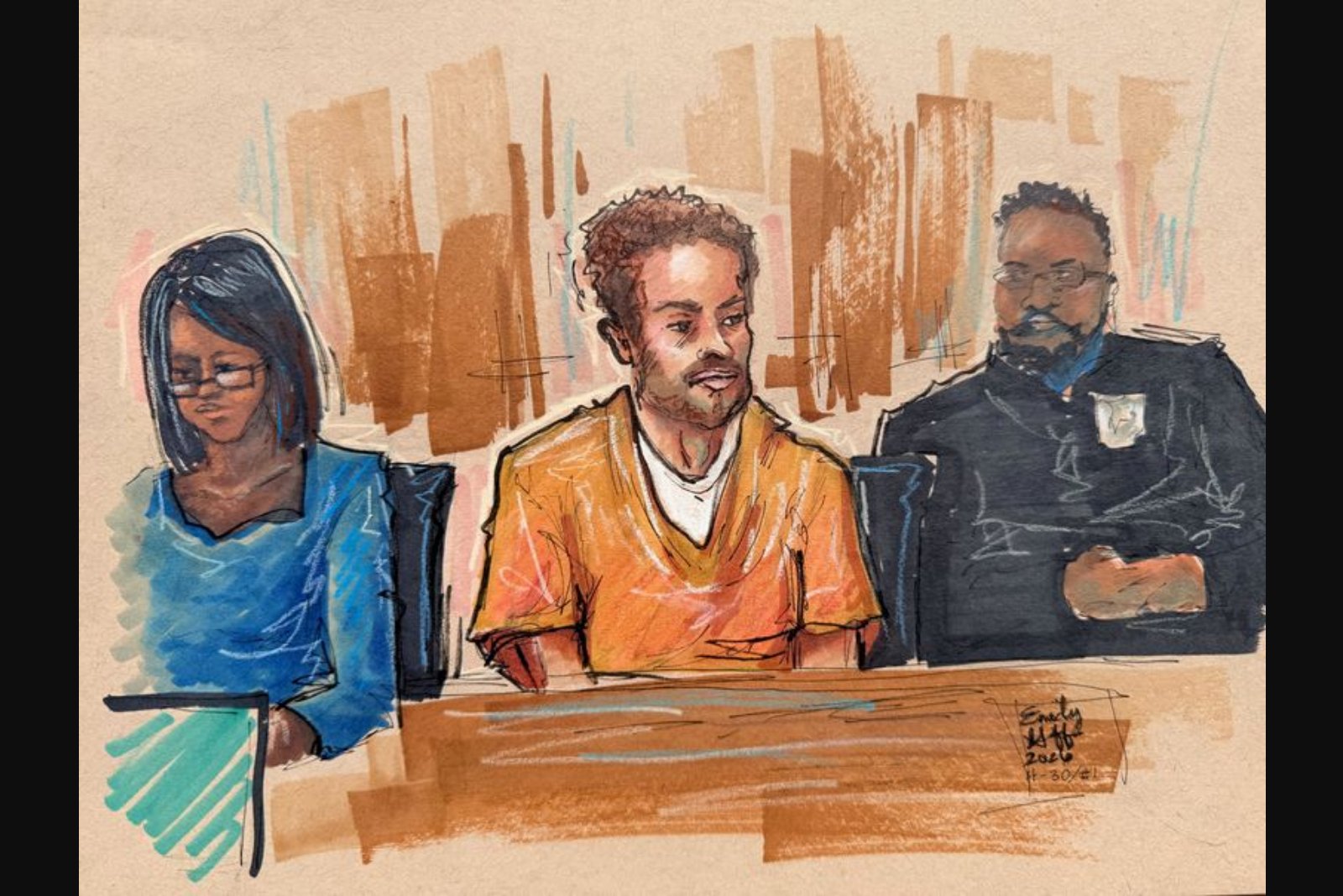
A preliminary intelligence note from the U.S. Department of Homeland Security suggests that the U.S.-Israeli war with Iran could have been a motivating factor for the suspect accused of opening fire at the White House Correspondents’ Dinner last month.
The April 27 assessment, produced by the DHS Office of Intelligence and Analysis and labeled a "Critical Incident Note," concluded that Cole Allen exhibited "multiple social and political grievances" and that the Iran conflict "may have contributed to his decision to conduct the attack," citing social media posts in which Allen criticized U.S. actions in that conflict.
The document was obtained through open records requests by the transparency nonprofit Property of the People and shared with news organizations. Spokespeople for DHS and the U.S. Justice Department did not immediately respond to requests for comment. The FBI declined to comment.
What the assessment says
The DHS preliminary assessment frames Allen's motive as complex and multifaceted. While it stops short of declaring a definitive cause, it points to his public expressions of anger over U.S. policy in the Iran conflict as a potential contributing factor to the attack on April 25.
The report’s central judgement is cautious: it links Allen’s stated grievances, drawn in part from his social media outputs, to a possible motivation for the assault rather than asserting a direct, single-cause explanation.
Legal developments and charges
On Tuesday, the U.S. Justice Department added an additional charge of assault on a federal officer, alleging that Allen fired at a U.S. Secret Service agent at a security checkpoint. That charge was added to existing counts of attempted assassination, discharge of a firearm during a crime of violence, and illegal transportation of a firearm and ammunition across state lines. Allen has not yet entered a plea.
FBI probe of online activity
Federal investigators have been conducting a detailed review of Allen’s social media activity and broader digital footprint in an effort to better understand motive. A senior law enforcement official, speaking on the condition of anonymity, said the FBI’s examination is "being closely looked at."
The probe includes review of a Bluesky account linked to Allen that posted and reshared a variety of anti-Trump content in the weeks before the attack. Those posts ranged from criticism of U.S. actions in Iran to denunciations of the Trump administration’s immigration enforcement, commentary about Elon Musk, and posts concerning Russia’s war on Ukraine.
Among the material the FBI reviewed was a shared post calling for Trump to be impeached in response to an April 7 statement in which Trump had threatened to "destroy Iranian civilization" - a post that came hours before Trump agreed to a ceasefire, according to the reporting in the assessment. The account also shared criticism of reporters who planned to attend the press dinner.
The FBI additionally reviewed a 2024 post tied to an account connected to Allen that, while quoting a Bible verse, "appears to call Trump 'the devil'" in response to a message from Trump’s daughter Tiffany. The phrasing in the assessment preserves uncertainty over the intent and meaning of the post.
Prosecutors’ characterization and Allen’s own communications
Federal prosecutors have pointed to an email Allen sent to relatives on the night of the incident, which officials described as a manifesto. That email expressed anger at the administration and said he intended to target the "traitor" giving a speech, without naming President Trump specifically.
Court filings allege Allen "disagreed" with Mr. Trump politically and "wanted to 'fight back' against government policies and decisions that he found morally objectionable." Those statements echo the broader picture of political grievance depicted in the DHS assessment and the FBI’s review.
Why online activity matters to investigators
Officials say the emphasis on studying Allen’s social media is in part intended to limit the spread of unfounded theories about the shooter’s motives and network. Department and law enforcement officials have cited prior incidents in which speculation about an attacker’s online footprint spawned widely disseminated conspiracy theories.
At this stage, investigators are continuing to piece together Allen’s digital history and public statements to determine the extent to which any single grievance - including opposition to U.S. actions in the Iran conflict - factored into his decision to carry out the shooting.
Reporting on this developing matter includes information drawn from a DHS intelligence assessment dated April 27, court filings, and statements by federal law enforcement agencies as reflected in official documents and the recently added charges by the U.S. Justice Department.