
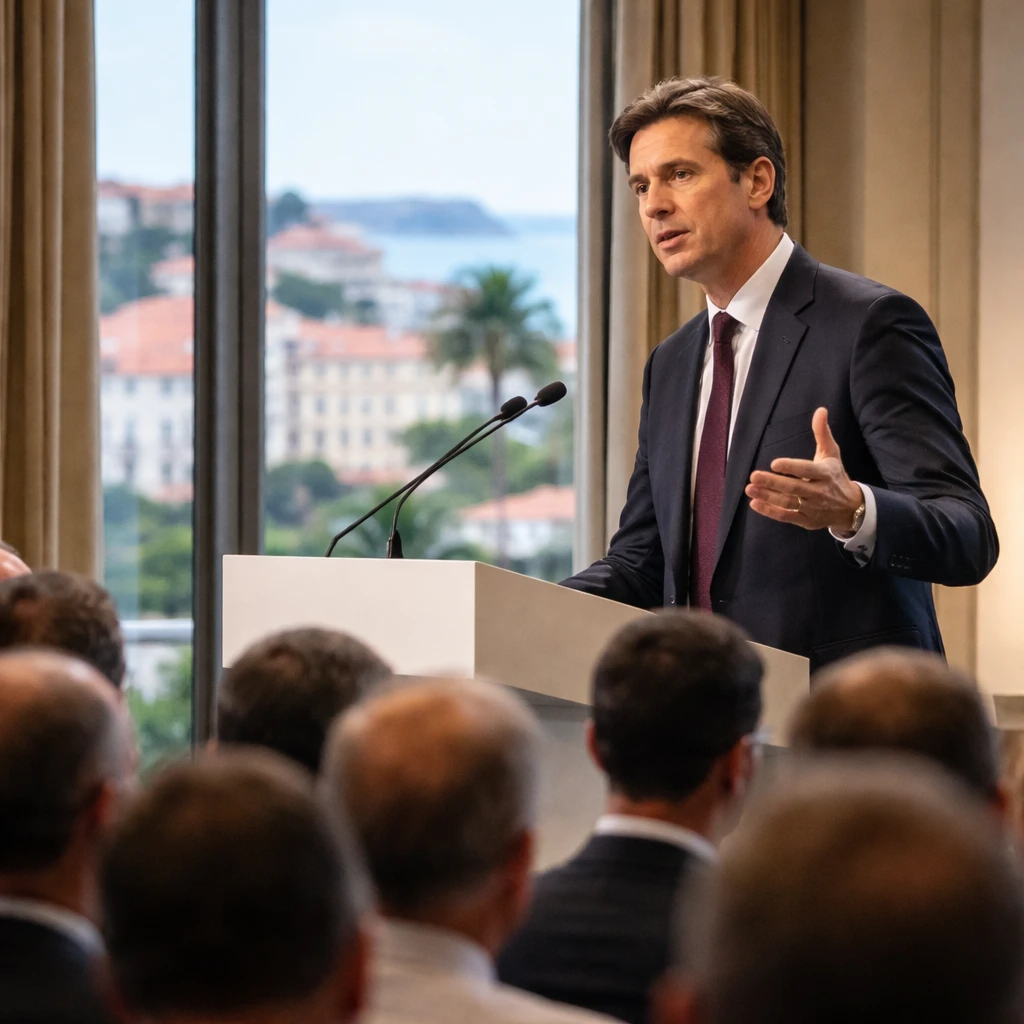
Federal Reserve Chairman Kevin Warsh said in Sintra, Portugal, that inflation expectations and the risks tied to inflation have declined in recent weeks, and he reiterated the central bank's commitment to returning inflation to its 2% objective.
Speaking at an event in Sintra, Warsh said that expectations of inflation "over the first four weeks of the current period have come down." He used the remarks to underscore the Fed's independence and its primary focus on price stability.
On the central bank's inflation goal, Warsh was explicit about the Fed's stance: "If there were people in households or the business sector, in the financial markets, who thought that this central bank was going to be comfortable with an inflation objective above 2% - well, I guess they'd be disappointed: We're going to deliver price stability in the U.S.," he said.
Beyond the inflation outlook, Warsh said labor markets remain steady and that supply-side conditions are solid, observations he offered while refraining from mapping out the Fed's future policy path. He declined to give forward guidance on monetary policy, saying instead that the Fed will "chart a new course to make better decisions."
Warsh also addressed developments in artificial intelligence, stating that the AI boom is manifesting first and most prominently in the United States. He said the U.S. is likely to be a major beneficiary of AI development and described the current moment as either the first or second inning of the technology's revolution. On the potential macroeconomic effects, Warsh noted that it is ultimately for the central bank to determine whether AI is inflationary.
This string of comments covered three interlinked themes: recent softening in inflation expectations, the Fed's determination to reach its 2% target while preserving institutional independence, and uncertainty about how AI will affect the economy and inflation. Warsh's refusal to provide explicit forward guidance leaves the future policy path open as the Fed assesses incoming data.