
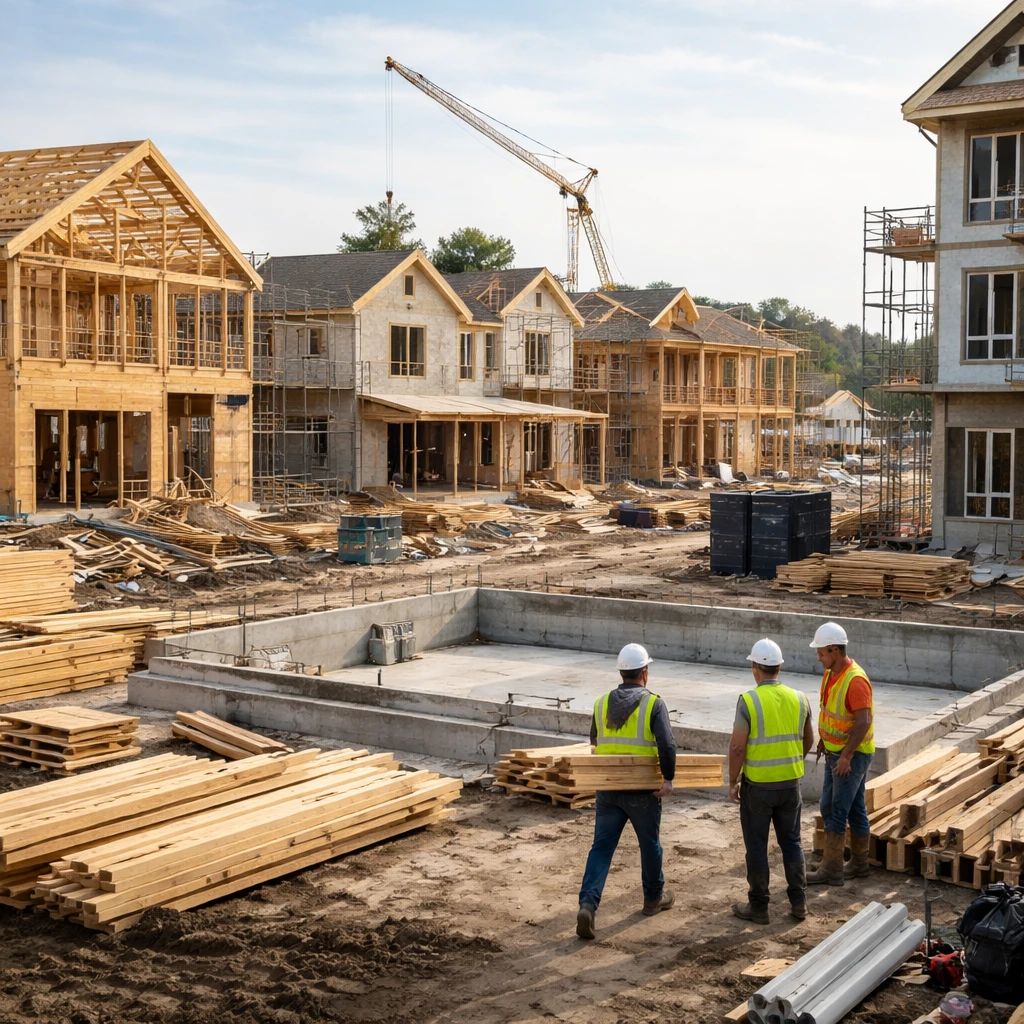
U.S. construction spending decreased by 0.1% in June, the Commerce Department’s Census Bureau reported on Monday, as persistent upward pressure on mortgage rates continued to constrain the homebuilding segment.
The outcome surprised economists surveyed by Reuters, who had been expecting a 0.2% increase. In addition, May’s previously reported 0.1% gain was revised to show no change for that month.
Measured versus the same month a year earlier, overall construction activity was down 3.2%.
Private-sector construction outlays fell 0.1% in June following a 0.2% decrease in May. Within private spending, residential construction investment contracted by 0.3% for the month. Spending on new single-family housing projects was weaker, declining 0.6% in June. On an annual basis, single-family construction spending was 3.3% lower than a year earlier.
Mortgage rates have climbed notably since late February. The average rate on a 30-year fixed-rate mortgage rose by nearly 70 basis points since the period when the US and Israel attacked Iran at the end of February, and last week reached a one-year high of 6.66%, according to Freddie Mac data. That increase in borrowing costs has been cited in the data as weighing on housing demand.
Multi-family housing outlays, which account for a smaller share of the housing market, fell by 0.7% in June. The government also reported last week that residential investment expanded in the second quarter, ending a run of five consecutive quarterly contractions. At the same time, renovation and remodeling spending has increased as higher borrowing costs reduce demand for new home purchases.
On the nonresidential side, private investment in nonresidential structures rose 0.1% in June. However, not all components of that category were positive: spending on factory projects declined 1.2% for the month. The Census Bureau noted that nonresidential structures investment contracted over the second quarter overall, marking the tenth consecutive quarterly decline for that category.
Public construction investment was unchanged in June after a 0.6% increase in May. Both state and local government construction spending and federal government project outlays showed no change for the month.
Contextual note - The monthly figures reflect the Census Bureau’s current estimates and revisions to prior months; May’s data were adjusted to show no change rather than the previously reported 0.1% gain.