
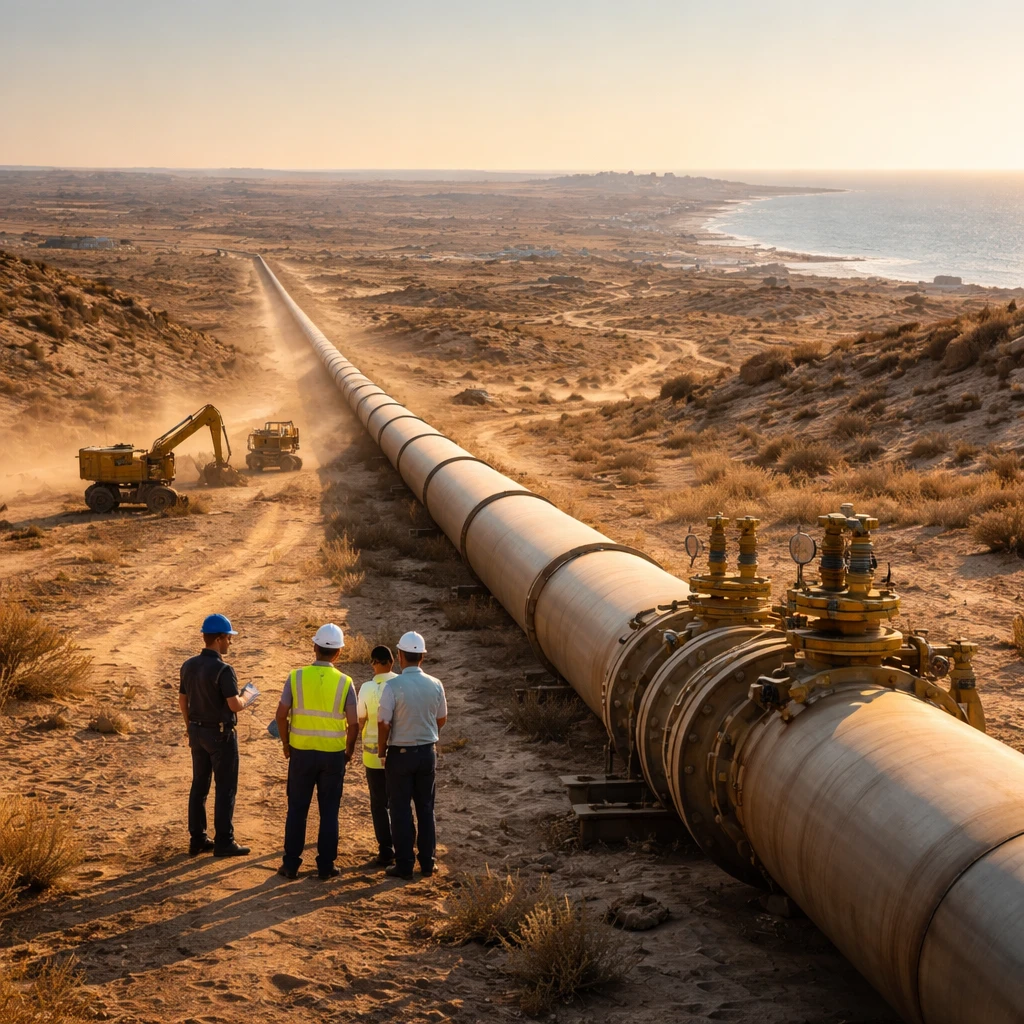
The United States is pressing ahead with conversations aimed at reestablishing an oil conduit from Iraq into Syria that would provide an export path circumventing the Strait of Hormuz and potentially dilute Iran's leverage over global energy shipments.
Thomas Barrack, the U.S. special envoy for Syria and Iraq, has convened meetings that include officials from both countries as well as representatives of energy companies, among them Chevron Corp. These discussions are focused on restarting a pipeline to Syria's western coastline that has been out of service for years, according to people familiar with the talks.
The primary project under consideration is the rehabilitation of the Kirkuk to Baniyas pipeline, which has been closed for more than two decades. Sources said that while the Kirkuk-Baniyas line is central to the conversations, a range of alternative routes and new connection options are being examined as part of the planning process.
Officials at the U.S. State Department confirmed that the U.S. government is supporting efforts by Iraq and Syria to restore trade links through reconstruction of the pipeline between the two countries. The State Department also signaled an expectation that American companies will take part in the construction work, though details of firm commitments or contracts were not provided.
Earlier on the same day, President Donald Trump met with Iraqi Prime Minister Ali Al-Zaidi at the White House. After that meeting, the president said that "massive" new oil partnerships will be announced this or next week, a comment that reflected broadened engagement on prospective energy deals.
Clear summary
U.S. envoys, Iraqi and Syrian officials, and energy industry representatives are engaged in talks about reopening an oil pipeline from Iraq to Syria that would bypass the Strait of Hormuz. The Kirkuk to Baniyas pipeline - closed for over twenty years - is a central option, although several alternative routes are also under consideration. The U.S. government has expressed support for the restoration effort and anticipates involvement from U.S. companies. President Trump indicated imminent announcements regarding substantial new oil partnerships.
Key points
- High-level coordination: U.S. special envoy Thomas Barrack has organized discussions involving Iraqi and Syrian officials and industry participants, including Chevron.
- Project focus and options: The talks center on rebuilding the Kirkuk to Baniyas pipeline - closed for more than two decades - while evaluating multiple potential routes for renewed connections.
- U.S. backing and industry participation: The State Department confirmed U.S. support for restoring the pipeline and indicated that American companies are expected to take part in the reconstruction effort.
Sectors potentially impacted
- Energy - oil production, transportation and export infrastructure.
- International trade - cross-border oil transit and associated logistics.
- Oil markets - supply routes for seaborne crude exchange and company project pipelines.
Risks and uncertainties
- Reconstruction challenge: The pipeline under discussion has been inactive for more than two decades, posing technical and rehabilitation uncertainties for the project.
- Route selection: Multiple routes are being considered, indicating uncertainty over the final path and related approvals or logistical requirements.
- Commercial commitments: While the State Department anticipates U.S. company participation, firm contractual commitments and the extent of private-sector involvement remain unclear.