
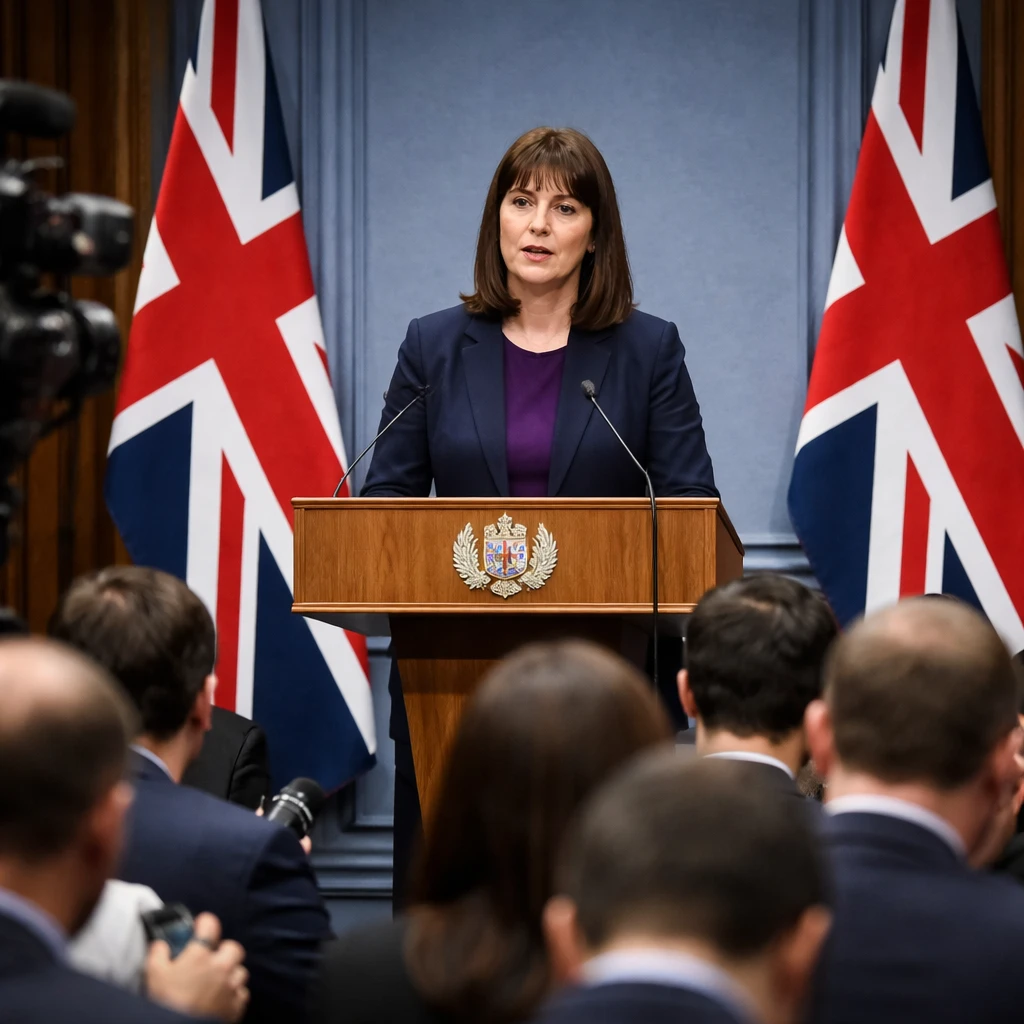
Summary: Britain will provide targeted financial backing to its chemicals and ceramics industries, allocating a total of £470 million to help companies weather market pressures tied to the Iran war. The package comprises a £350 million Critical Chemical Resilience Fund and a separate £120 million allocation for ceramics. Finance Minister Rachel Reeves said the government is prepared to take further action if conditions deteriorate and indicated that those who profit from swings in energy costs should contribute.
In a statement on Thursday, the finance minister detailed the two funds designed to shore up capacity and resilience in sectors identified as being affected by geopolitical developments. The larger of the two vehicles, a £350 million Critical Chemical Resilience Fund, is intended specifically for chemical industry needs. A distinct £120 million fund will support the ceramics sector.
Ms. Reeves also said the government would accelerate planned changes to the taxation of foreign branch profits. She described those reforms as likely to deliver "hundreds of millions of pounds" in additional revenue each year. No further numerical guidance or implementation timetable was provided in the announcement.
The finance minister framed the package as both a precautionary and conditional set of measures. She noted the government remains ready to act further if market conditions worsen later in the year. In addition, she emphasized a principle that entities benefiting from volatility in energy prices should bear part of the cost, signaling a policy intent to target support while addressing distributional effects linked to energy-market movements.
The package combines direct sector support with fiscal measures expected to increase receipts. Beyond the headline numbers, the statement did not include detailed eligibility criteria for firms or the mechanics by which funds will be allocated, nor did it specify precise timing for the tax changes beyond the intent to bring them forward.
Markets and companies operating in the chemicals and ceramics supply chains will be watching for further guidance on fund rules, timing and the scope of the tax reforms. The announcement links an immediate fiscal response with longer-running revenue-raising reforms, reflecting the government's dual approach of stabilization and fiscal adjustment.
Key points
- The government announced £470 million in targeted support split into a £350 million Critical Chemical Resilience Fund and a £120 million ceramics fund.
- Officials plan to bring forward changes to the taxation of foreign branch profits, with reforms expected to raise hundreds of millions of pounds annually.
- The measures are conditional - the government said it stands ready to act further if market conditions deteriorate later in the year. Impacted sectors include chemicals and ceramics, and related market segments sensitive to energy-price swings.
Risks and uncertainties
- Further deterioration in market conditions later this year could require additional government intervention - creating uncertainty for firms and investors in the chemicals and ceramics sectors.
- Details on how the funds will be distributed and the timing of the tax changes were not provided, leaving implementation risk for affected companies and market participants.
- Policy measures tied to the distribution of costs from energy-price volatility may influence corporate earnings for firms benefiting from those price moves, with potential implications for related supply chains.